When shopping with diabetes in mind, the French Federation of Diabetics advises choosing fruit preserved in juice or water rather than syrup. The format you choose then depends on how much you want to serve: individual pots let you portion it out, while a larger tin means you’ll need to decide how much to serve each time. Either way, compare the carbohydrate and sugar content for the amount you’ll actually eat. As Anses points out, ‘no added sugars’ does not mean ‘sugar-free’.
Who are these formats for?
People who track carbohydrates per portion
If you compare the nutritional content with the amount you actually serve, ‘no added sugars’ isn’t enough. France’s public health insurance system recommends checking nutritional information against the amount consumed.
Families who prefer individual pots
A multipack of individual pots makes it easy to serve dessert without dishing it out of a large tin. Carrefour France, for example, stocks St Mamet products in packs of six; remember to check the weight of each pot.
Households sharing a larger tin
For dessert at the table, a non-individual format lets everyone choose how much to put in their pot. Nutritional values should then be calculated for that amount, not the whole tin.
What should you check before choosing?
First, check the preserving liquid and ingredients, then compare the nutritional values with the amount you plan to serve. Finally, choose between individual pots and a larger tin to share.
| Priority |
What to check |
Who it matters to |
| Recipe and sugars |
Check whether the fruit is preserved in juice, water or syrup, then read the ingredients and the ‘of which sugars’ line. |
If I want to avoid confusing ‘no added sugars’ with sugar-free, the recipe matters more than the format. Around 50% of consumers are said to prioritise the ingredients and composition. |
| Individual pots |
Compare the number of pots and the weight of each one; a single pot may not be the portion you want. |
If I want to serve dessert without dishing it out of a large tin, I prefer individual portions. Around 30% of consumers are said to prioritise this convenience. |
| Larger format |
Check the weight of the tin and calculate the carbohydrates per 100 g for the portion served. |
At the table, I want to be able to divide the contents of one tin between several people. Around 20% of consumers are said to prefer serving this way. |
Common misconceptions to avoid
-
Taking ‘no added sugars’ to mean ‘sugar-free’
According to Anses, this claim does not rule out sugars that are naturally present in the ingredients. On its own, it doesn’t tell you how much sugar is in your portion.
Read the ingredients and the ‘carbohydrates’ and ‘of which sugars’ lines, then calculate the values for the amount you serve.
-
Assuming light syrup is the same as juice
‘In light syrup’, ‘in juice’ and ‘no added sugars’ describe different recipes. For canned fruit, the French Federation of Diabetics advises choosing fruit in juice or water rather than syrup.
Check the liquid listed in the ingredients and the nutritional values for the specific product, rather than relying on the word ‘light’ alone.
-
Comparing the figures per 100 g without checking the portion
An individual pot and a tin to share won’t necessarily lead you to serve the same amount. France’s public health insurance system recommends checking nutritional information against the amount consumed.
Use the per-100 g figures to compare recipes, then work out the values for the amount you put in your bowl or pot.
Brands and retailers to know
St Mamet
Carrefour France lists St Mamet fruit with ‘no added sugars’ in packs of six individual pots, including pineapple at 6 × 120 g and fruit cocktail at 6 × 113 g.
- These two products let you choose individual pots in different sizes.
- The ‘no added sugars’ claim doesn’t mean you can skip checking the carbohydrate and sugar content of each recipe.
Carrefour Classic'
Carrefour France lists a ‘no added sugars’ orchard fruit cocktail in four pots, each with a drained net weight of 70 g.
- The drained net weight per pot gives you a useful point of comparison with other individual pots.
- Check the amount you’ll actually eat and the nutritional values for this product before comparing it with a pack of six.
Auchan
Auchan France’s canned fruit range includes individual pots in light syrup, as well as other fruit recipes.
- The product descriptions make it easier to identify recipes that should be compared separately.
- ‘Light syrup’ doesn’t mean a product is in juice or has no added sugars. Check the label of the product you choose.
Fruits in syrup available on Joybuy
These Joybuy products are fruits in syrup, sold in multipacks or larger tins to share. If you’re shopping with diabetes in mind, compare them with the options in juice or water mentioned above, and check the nutritional values for the amount you plan to serve.
 Image unavailable
St Mamet Fruit Cocktail in Syrup, 850 g
This 850 g tin can be divided up when serving dessert to share. As the fruit is in syrup, check the recipe and calculate the nutritional values for the amount you serve.
View on Joybuy
 Image unavailable
St Mamet Fruit Cocktail in Syrup, 3 × 125 g
The three 125 g tins divide the multipack into separate units, but one tin doesn’t have to be your portion. Check the ingredients and nutritional values for this fruit cocktail in syrup, based on the amount you eat.
View on Joybuy
 Image unavailable
St Mamet Fruit Cocktail in Syrup, 425 g
This 425 g tin is suited to serving a dessert where you decide how much to dish out. It’s a fruit cocktail in syrup, so check the label before comparing it with a recipe in juice or water.
View on Joybuy
 Image unavailable
AROY-D Rambutans in Syrup, 565 g
This 565 g tin can be shared by deciding how much to serve each person. To compare these rambutans in syrup with other canned fruit, check the ingredients and nutritional values on the label.
View on Joybuy
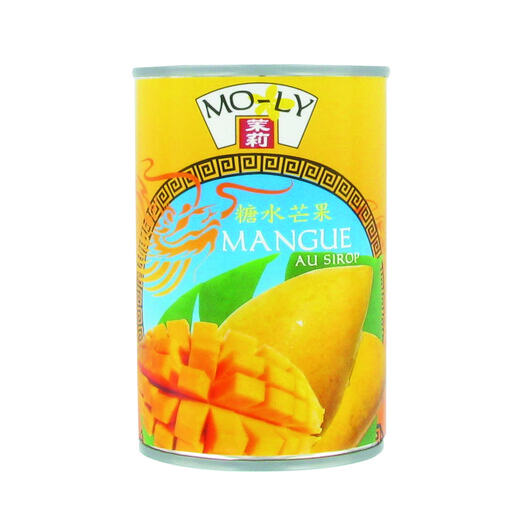 Image unavailable
MOLI Mangoes in Syrup, 425 g
This 425 g tin can be divided between several pots. The way sugars are presented in the product information means it’s worth checking the label carefully: read the ingredients and nutritional values before working out a portion.
View on Joybuy
Frequently asked questions
Does ‘no added sugars’ mean ‘sugar-free’?
No. Anses explains that ingredients may contain naturally occurring sugars even when no sugar has been added. Check the ingredients and the ‘carbohydrates’ and ‘of which sugars’ lines too.
Should you choose fruit in syrup when shopping with diabetes in mind?
The French Federation of Diabetics recommends choosing fruit preserved in juice or water instead. It says rinsing fruit in syrup may help reduce excess sugar, but it doesn’t make its recipe equivalent to one in juice or water.
How do you compare an individual pot with a larger tin?
First compare the carbohydrates and sugars per 100 g, then calculate these figures for the amount you’ll actually serve. This is the approach recommended by France’s public health insurance system: the weight of a pot or tin won’t necessarily match your portion.
Do you have to avoid fruit if you have diabetes?
No. The French Federation of Diabetics does not exclude fruit from the diets of people with diabetes. However, the amount you eat counts as part of your meal. For advice tailored to you, speak to your healthcare team.


