What should you look for before buying?
For a starter before pancakes, first work out how many people will have soup. Then distinguish between the volume that’s ready to serve and the volume you’ll get after preparation. Don’t choose cartons, sachets or tins based only on the number of packs.
| What to consider |
What to check |
Who is it for? |
| Quantity to serve |
Volume ready to serve or final volume after preparation; number of portions stated for the specific product. |
I’m planning a starter for everyone and want to know whether one pack will be enough. Around 42% of consumers would prioritise having the right quantity for a family meal. |
| Portions and leftovers |
Whether portions can be prepared separately; storage instructions after opening a pack. |
With pancakes to follow, I’d rather prepare soup only for the guests who want it. Managing leftovers would be the main concern for around 33% of consumers. |
| Ingredients |
Ingredient list, allergens and salt content in the nutritional information for each recipe. |
I need to choose a recipe that suits my guests, rather than relying on the flavour on the front of the pack. For around 25% of consumers, ingredients and nutritional information would come first. |
Brands and retailers to know
These examples give you an idea of the different formats available. A retailer or brand may offer recipes with different portion sizes and ingredients.
Liebig
Carton soups, including a 1 L leek and potato velouté that Auchan lists as serving four people.
- The stated portion count for this product makes it easier to plan a family starter.
- Carrefour’s listing for this velouté mentions fresh cream and possible traces of allergens, so check each recipe individually.
Royco
Dehydrated soups, including multipacks of sachets. Carrefour lists a 12-vegetable velouté in four sachets, each stated to make 800 mL.
- You can prepare the sachets separately if not everyone wants soup.
- Read the instructions and check the volume made before comparing these sachets with ready-to-serve soup.
Carrefour
Retailer offering liquid Carrefour and Carrefour Classic' soups in 1 L formats, among other pack sizes.
- The range of sizes gives you options to suit the number of guests.
- A 1 L volume alone doesn’t tell you what ingredients a recipe contains or how many portions it provides.
Auchan
Retailer offering, among other products, 1 L Maggi and Liebig soups listed as serving four people.
- These listings give you a portion guide for the specific products.
- Check the recipe and its allergens: the same portion count doesn’t mean the soups have the same ingredients.
ALDI
Retailer whose French soup range includes examples in 1 L and 500 mL formats, as well as dehydrated soup.
- These formats give you the choice of a larger pack or a smaller quantity to suit your meal.
- Check which products are available when you shop: catalogue listings don’t guarantee a permanent range.
Portion soups on Joybuy
These three soups come in individual portions that need to be reconstituted. They’re handy for serving soup as needed, but they shouldn’t be confused with a family-sized carton of ready-to-serve soup. Check the instructions to find out how much water to add.
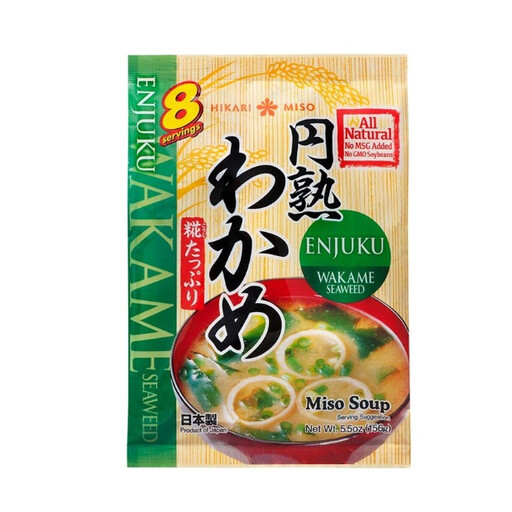 Image unavailable
Hikari Enjuku Miso Soup Wakame, 156 g, 8 portions
The individual portions let you make soup just for the guests who want it. This miso and seaweed soup needs hot water, so check the pack for how much to add per portion. Also check the label if any guests need to avoid soya, gluten or wheat.
View on Joybuy
 Image unavailable
Hikari Instant Miso Soup Enjuku Tofu, 8 pieces
This pack of individual portions lets you make soup as you need it, using hot water. Check the instructions to find out how much soup each portion makes before deciding how much to serve. Check the label for soya and any mentions of gluten or wheat.
View on Joybuy
 Image unavailable
Royco dehydrated noodle soup with carrot and mushroom, 3 × 20 cl
The three sachets let you make a few portions without opening a large pack. The pack states 3 × 20 cl, giving 600 mL of prepared soup in total. Check whether that’s enough for your group. The recipe contains noodles, so check the allergen information too, particularly if any guests need to avoid gluten, celery or milk.
View on Joybuy
Frequently asked questions
Is a 1 L carton enough for a family at Candlemas?
Some 1 L cartons are listed as serving four people on Auchan’s product pages, but that only applies to the products in question. For your meal, consider how many guests will actually have soup as a starter and check the portion count for the soup you choose.
Can you compare soup sachets directly with a carton?
No. Dehydrated sachets need to be reconstituted, while liquid soup in a carton is ready to serve. Check how much water to add and the final volume before comparing the number of portions.
What should you check if a guest has a food allergy?
Check the ingredients and allergen information for the exact product, rather than assuming what it contains from the recipe name. Carrefour’s listing for the Liebig leek and potato velouté mentions fresh cream and possible traces of soya, celery and mustard.
How should you store soup once it’s been opened?
Follow the storage instructions and use-by time after opening shown on the packaging. The DGCCRF points out that the date originally shown on a product is no longer enough to guide storage once it has been opened.
Can you still use unopened soup after its best-before date?
Not necessarily a problem: according to the DGCCRF, a best-before date indicates how long the product is expected to retain its flavour and smell. Check the exact wording on the label, and don’t apply this guidance to packaging that’s been opened or damaged, or to a product that looks unusual.


