What should you check before buying?
For Candlemas, first decide whether you’re making crêpes in a frying pan or a tart in the oven. Then compare the labels of products made for the same purpose.
| Criterion | What to check | Who this matters to |
|---|
| Suitable for crêpes |
Read the product name and preparation instructions. Shortcrust, puff or sweet pastry designed for oven baking is not a substitute for thin crêpe batter. |
When I’m cooking crêpes in a frying pan, I want a suitable batter rather than a tart case to bake in the oven; around 50% of consumers would make suitability for the recipe their top priority. |
| Fat content |
Compare the ‘fat’ and ‘of which saturates’ figures per 100 g for products of the same type and intended use. |
If I want to compare fat content, I need comparable nutritional values rather than a claim on the packaging; around 30% of consumers would put this comparison first. |
| Allergens and storage |
Check the allergens on the packaging and, for frozen pastry, the storage and defrosting instructions. |
If certain ingredients are unsuitable for anyone in my household, or I’m buying frozen food, I need to be able to use the product as directed; around 20% of consumers would prioritise these considerations. |
A crêpe mix on Joybuy
This mix is a dedicated crêpe option, not a frozen tart pastry. If you want to compare the fat content of the finished recipe, check the packaging to see which form of the product the nutritional values refer to.
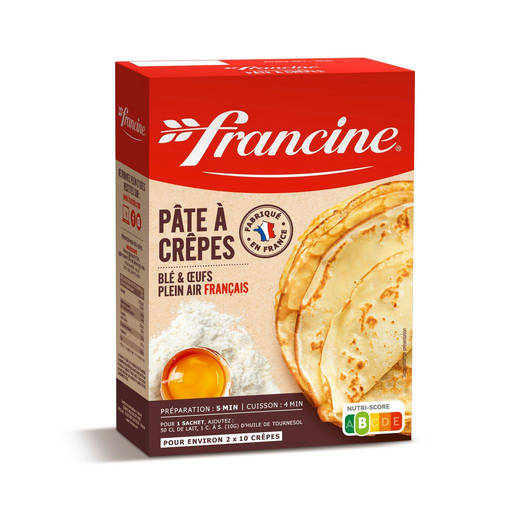 Image unavailable
FRANCINE Light and Fluffy crêpe mix, 2 × 190 g
A mix made for crêpes rather than tart cases. The pack contains 2 × 190 g. If allergens or fat content affect your choice, check the ingredients and nutritional values on the packaging.
View on Joybuy
Frequently asked questions
Can frozen tart pastry be used instead of crêpe batter?
No, not for crêpes cooked in a frying pan: the shortcrust, puff and sweet pastry featured by Picard is designed for oven baking. Choose a crêpe mix or make a thin batter yourself.
How can I compare the fat content of two products?
Compare the ‘fat’ value per 100 g for products of the same type and intended use. If needed, check the saturates and ingredients too. For a mix that needs to be prepared, check whether the values apply to the product as sold or to the prepared recipe.
Which allergens should I check in tart pastry?
Read the ingredients and allergen information on the pack of the product you choose. The frozen sweet pastry described by Picard contains wheat, milk and egg, among other ingredients, but you should not assume the same applies to other pastry products.
Can you refreeze tart pastry after defrosting it?
Do not refreeze Picard sweet pastry after defrosting it: the product information says not to. More generally, Anses recommends eating defrosted food promptly and not freezing it again; always follow the instructions for the specific product too.
Is the Nutri-Score enough to choose a product with less fat?
No. For this specific criterion, compare the ‘fat’ value per 100 g directly on the labels of similar products. Check the ingredients too and, for a mix that needs to be prepared, the basis on which the nutritional values are given.


