
Same-day & Next-day Delivery

Quality Guaranteed

Unlock Your Welcome Offers: FREE Delivery | Up to 80% OFF | Free 30-day JoyPlus trial
Download the APP
A night under canvas can quickly turn into a nightmare when the ground is uneven, the mattress loses air or it takes up half your rucksack. Choosing a camping air mattress is therefore not simply a matter of comparing its price or stated thickness. To avoid unpleasant surprises, look at its dimensions, inflation system, materials and intended use.
Hiking, camping, van trips or extra sleeping space at home: here are the criteria to review before reaching for your bank card.
A thick mattress is not necessarily the best choice in every situation. Greater height improves insulation from the ground and makes getting settled more comfortable, but it generally increases the weight and packed size. Conversely, a very thin hiking mattress helps keep your rucksack light, although it may provide less convincing support on stony ground.
Compare three details side by side: thickness when inflated, weight and packed dimensions. A 15 cm-thick model may be perfectly suitable for a family tent or car. For a walking route, a compact inflatable sleeping mat will often be more practical.
The stated time depends on the method used, the pressure applied and the level of firmness required. A mattress described as self-inflating may, in practice, require several steps or an additional pump.
Check whether it has an integrated foot pump, whether an electric pump is included and whether the valve is compatible with your equipment. For regular use, a dual-layer valve can also make deflation easier and speed up packing.
Leaks do not always come from the mattress surface: a poorly closed or difficult-to-operate valve may be the cause. The covering must also withstand rubbing against the floor of the tent, branches and items in the boot.
Details such as 50D nylon, polyester or TPU coating provide an initial indication of how the mattress is made. However, they do not eliminate the need to use a groundsheet or protective mat, especially on uneven ground. Before setting off, inspect the surface and check that the valves close properly.
For one person, a length between 190 and 200 cm will generally suit most adults. Width deserves just as much attention: a 58 cm model prioritises compactness, while a wider mattress offers more room for sleeping on your side or changing position.
A 2-person air mattress is generally between 140 and 155 cm wide. It will be more comfortable in a family tent, van or spare bedroom than in a hiking rucksack. For use in a car, measure the exact width between the wheel arches and the length of the rear area.
An ultralight camping mattress must remain compact enough to fit in with the rest of your equipment. Weight is crucial when hiking, while packed volume often becomes the main consideration in a car or van.
Do not compare weight alone: also check the dimensions of the carry bag. A model that packs down to the size of a bottle can easily fit into a rucksack. A double sleeping surface will naturally require more space.
An integrated foot pump means you do not have to blow directly into the mattress and saves you from carrying an extra accessory. Firmness still has to be adjusted manually, however: inflate it gradually and check that your body is not touching the ground directly.
In a tent, allow enough space around the sleeping area to access the valves. After use, let the surface dry completely, wipe it with a damp cloth and avoid compressing it for long periods while stored.
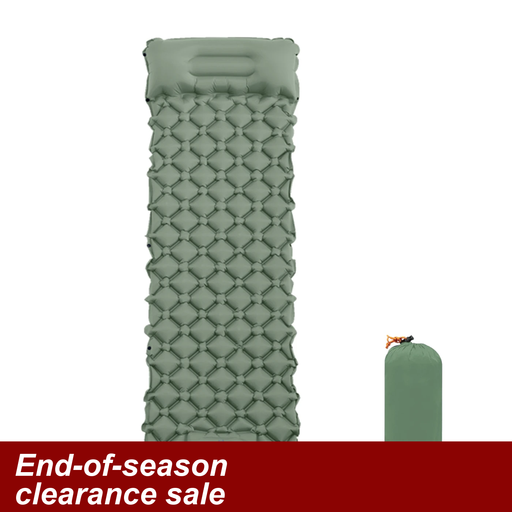
Why this choice suits this profile : Its single-person format is ideal for your first nights under canvas, festivals and getaways where every gram counts in your rucksack.
The integrated foot pump means you do not need to buy a separate pump straight away. The dual-layer valves are designed to speed up deflation.
Dimensions of 192×58×15 cm, stated weight of 690 g, integrated pillow and 26×10 cm carry bag.
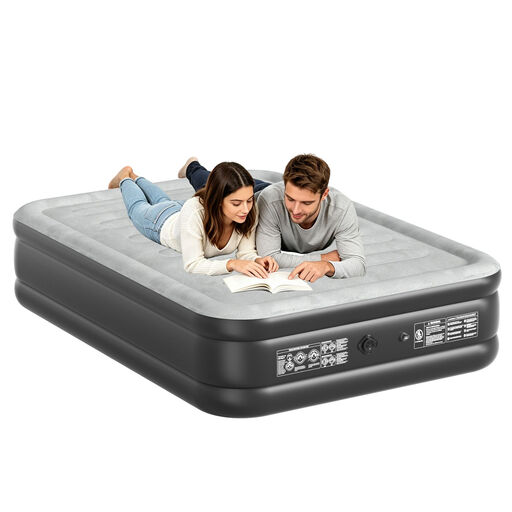
Why this choice suits this profile : Its two formats allow you to adapt the sleeping arrangement for one person, a couple or use as a spare bed.
The included electric pump means you do not need to buy extra equipment and makes it easy to set up at home, in a van or in a large tent.
Two widths to choose from: 98 cm or 155 cm. The model is foldable and designed for easy transport.
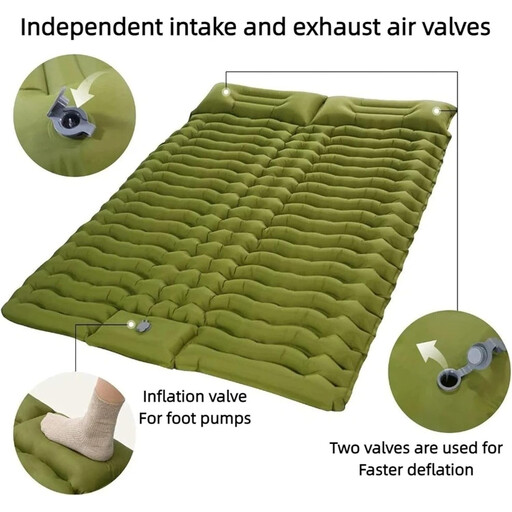
Why this choice suits this profile : Its double sleeping surface is suitable for couples, families and longer stays under canvas, in a van or as a spare bed.
The integrated foot pump means you do not have to inflate the mattress by mouth. The manufacturer also states that the dedicated valve enables rapid deflation. Ground protection is still recommended.
200×140×8 cm surface, stated weight of 1.7 kg, structured air cells and side buttons for connecting two mattresses.
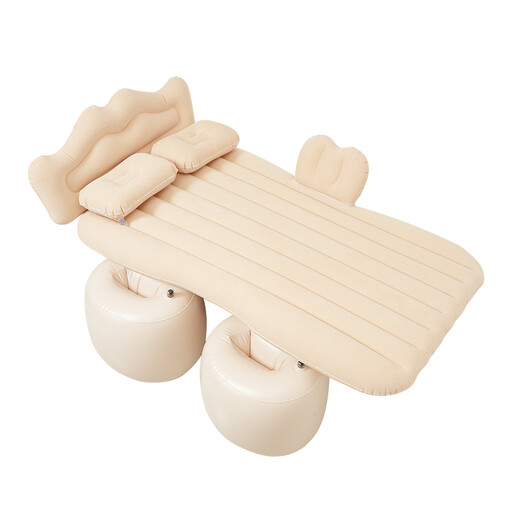
Why this choice suits this profile : This compact format is ideal for breaks, occasional nights in the car and journeys where the bedding needs to be stored easily.
Its 133×76 cm dimensions clearly make it suitable for use in a car. However, check the available width and seat configuration before ordering.
Single-person format, portable design and white colour. A blue version is also available.
We have selected a comprehensive, up-to-date range of products that meet these demanding criteria, in line with European safety regulations.
To limit wear and tear on your car air mattress or camping mattress:
A properly stored mattress can remain usable for several seasons. Its lifespan nevertheless depends on how often it is used, rubbing, heat and storage conditions. Occasional repairs may be possible only if the leak is localised and the material is suitable for repair.
Choose a model with an integrated foot pump or use a manual pump compatible with the valve. Inflate the mattress gradually so you can adjust the firmness. Avoid blowing directly into it when the manufacturer has provided a pump system.
Yes. Some models are designed for versatile use in a bedroom, living room, van or tent. At home, check the mattress height, available space and how easy it is to store. For two adults, a double model will naturally be more suitable than an individual hiking mattress.
The self-inflating mattress generally prioritises ease of set-up. An inflatable sleeping mat focuses more on low weight and a compact packed size. In both cases, compare the weight, packed volume, thickness, valve type and width before making your choice.