
Livraison le jour même ou le lendemain

Qualité garantie

Débloquez vos offres de bienvenue: Livraison GRATUITE | Jusqu'à -80 % | 30 jours d'essai gratuits à JoyPlus
Téléchargez l'application
Solo hiking in the Alps, a family weekend by the lake, or your first music festival with friends... Whatever the adventure, choosing the right camping tent can quickly become a challenge. Faced with a jungle of models, sizes, and technical specs, it's easy to feel lost.
Don't worry, this guide is here to help you see things more clearly. We'll break down the essential criteria for making the right choice before presenting our selection of the best tents on the market, tailored to every need and budget.
Before you dive in, it's crucial to clearly define your needs. Here are three key points to examine closely to ensure you make the right decision.
Be aware that the capacity advertised by manufacturers often refers to the number of people who can sleep shoulder-to-shoulder, with no room for luggage.
Weight is a decisive factor that will depend entirely on how you travel.
The waterproof rating, measured in Schmerber (or mm), indicates the fabric's resistance to water pressure.
Now that we've covered the basics, here are three tents that caught our eye, each designed for a specific use.
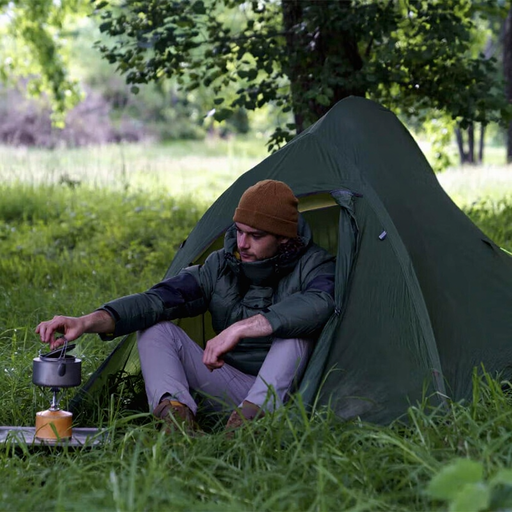
Why it stands out: This is the featherweight of our selection. At just 1.5?kg on the scale (all-inclusive), it's the ideal companion for adventurers counting every gram.
Key features:
Who is it for? The quintessential backpacking tent. It's aimed at trekkers, bike-packers, and solo adventurers looking for high performance on their 3-season expeditions.
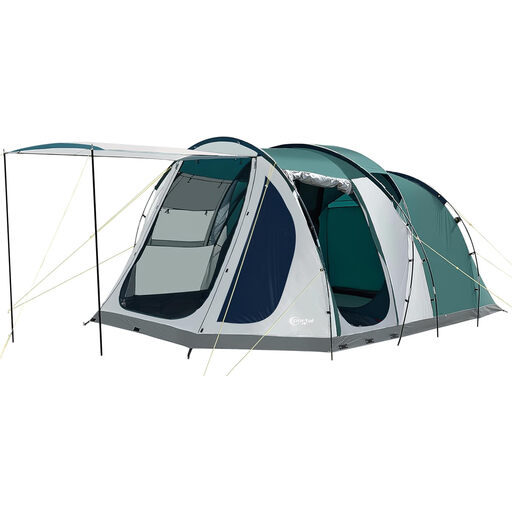
Why it stands out: Here, the name of the game is space and comfort. A true home away from home for camping.
Key features:
Who is it for? Families and groups of friends who are car camping and want a spacious and comfortable base camp for their holidays.
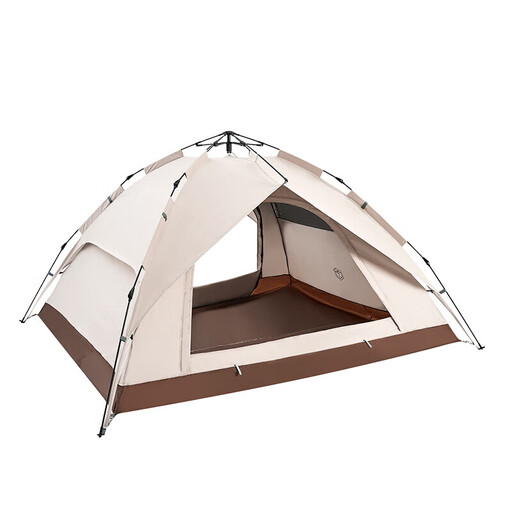
Why it stands out: Its killer feature? It's disarmingly simple to use.
Key features:
Who is it for? Weekend campers, festival-goers, and families who are primarily looking for a pop-up tent that is ultra-fast and hassle-free to set up.
Our selection covers three distinct uses, but the world of camping is vast, and your needs might be even more specific.
To explore a wider range, including other 2-person tents, 4-person models, or more specialised shelters, feel free to browse our complete Camping Tents category.
1. How can I be sure a tent is truly waterproof? Waterproofing is measured in Schmerber (mm). The higher this number, the more water-resistant the fabric. A rainfly with a 2,000?mm rating is already considered highly waterproof for most situations. The models in our selection, which range from 3,000?mm to 4,000?mm, offer even greater protection.
2. What is the difference between a 3-season and a 4-season tent? A 3-season tent is designed for spring, summer, and autumn. Its goal is to provide a good balance between ventilation and protection from rain and wind. A 4-season tent, on the other hand, is built to withstand winter: it must be able to support the weight of snow and handle strong winds. Its materials are tougher, and its design minimises heat loss.
3. Is a pop-up tent as durable as a classic dome tent? Generally, classic dome tents (like the NatureHike) with their pole-sleeve assembly have a more aerodynamic and robust structure, making them perform better in the wind. That said, modern pop-up tents, like the ochama×J.ZAO model with its double-wall design, offer perfectly respectable durability for typical 3-season use. Their unbeatable advantage, of course, remains their speed of installation.