
Livraison le jour même ou le lendemain

Qualité garantie

Débloquez vos offres de bienvenue: Livraison GRATUITE | Jusqu'à -80 % | 30 jours d'essai gratuits à JoyPlus
Téléchargez l'application
Choosing a camping tent may seem simple: a capacity, a colour, a promise of waterproofing and the job is done. Yet a few details can turn a bargain into an impractical purchase. Whether you are preparing a mountain bivouac, a family weekend or an occasional trip to the coast, the criteria that really matter are not always those highlighted in product descriptions.
The stated weight may refer to the tent alone, excluding the pegs, guy lines, bag and storage cover. For a hiking tent or an ultralight model, always check the complete weight, along with the packed dimensions.
A difference of a few hundred grams becomes noticeable after several hours of walking. By contrast, a family tent for 3 to 4 people is generally bulkier and heavier. This compromise is still acceptable if you are travelling to the campsite by car or if the tent will remain pitched in the same place.
Expressed in millimetres, the waterproof rating indicates the water pressure that the fabric can withstand under specific testing conditions. On its own, it is not enough to summarise the tent’s level of protection. You should also check:
A waterproof tent that is poorly pitched may let water in at the joins or encourage condensation. The stated figures should therefore be interpreted according to how you intend to use the tent.
A tent that is completely closed and watertight is not necessarily comfortable. Without sufficient airflow, moisture from breathing condenses on the walls. For a trek or bivouac, look for an inner tent made from breathable mesh, adjustable vents and, where appropriate, a separate flysheet.
Also examine the floor dimensions. A 2-person tent measuring 200 × 130 cm may be suitable for sleeping two people, but leave very little room for bags. The advertised sleeping capacity does not always correspond to the level of comfort you are looking for.
Choose the capacity according to the number of occupants, but also the equipment you need to shelter. A 1-person tent keeps weight down when travelling alone. A 2-person tent may suit a couple or someone who wants more space. For a family, a 3- to 4-person tent makes organising easier, especially when it has a porch or awning.
An automatic or pop-up tent speeds up pitching, but its frame can make the whole tent heavier and increase its packed size. This type of tent is particularly well suited to camping trips, extended picnics and users who want to minimise handling.
A 3-season tent is generally designed for spring, summer and autumn, with ventilation suited to changing temperatures. It is not intended for the harshest winter conditions. A 4-season tent often has a more enveloping structure and materials designed for more demanding conditions. In return, it may be heavier and bulkier.
For trekking, aluminium poles offer an appealing balance between low weight and rigidity. Fibreglass frames are common on quick-pitch models and family tents.
Silicone- or polyurethane-coated nylon helps reduce weight, while polyester is often used for more spacious camping tents. Check the rating of the flysheet and the groundsheet separately: the latter is particularly exposed to moisture and abrasion.
A tent with UV protection or blackout fabric can improve comfort in bright sunshine. However, bear in mind that a reference such as UPF or a filtration percentage describes a feature stated by the manufacturer, not a guarantee of identical comfort in all conditions.
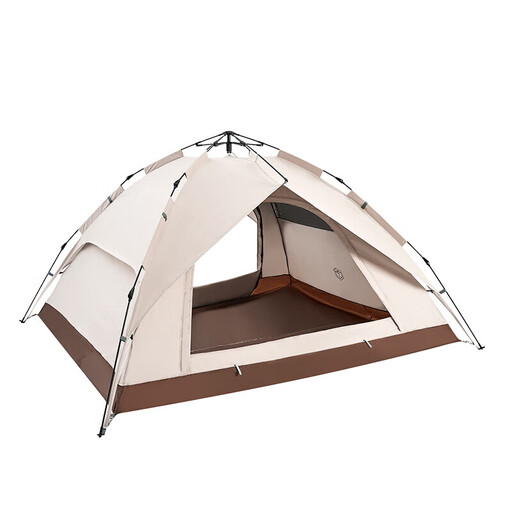
Why this choice suits this profile: Its one-touch pop-up mechanism makes pitching simple, which is a real advantage for a first purchase or an occasional family outing.
The double-layer design separates the inner space from the coated outer fabric, while the product description states a 3 000 mm hydrostatic head for the outer coating.
A capacity of 3 to 4 people, automatic pitching and a double-layer design.
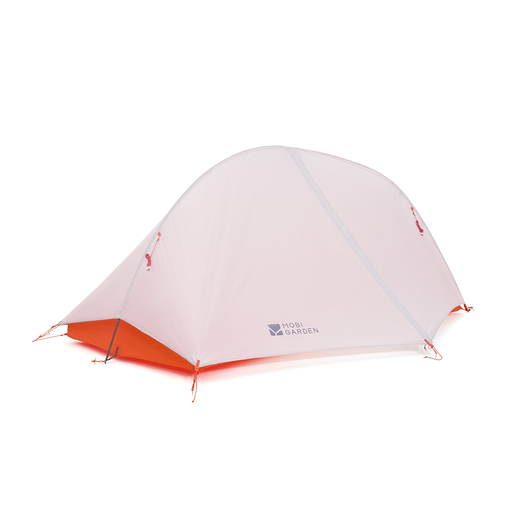
Why this choice suits this profile: This model is aimed at hikers who monitor their pack weight without giving up two entrances or a well-ventilated inner tent.
The product description distinguishes between the net weight of approximately 1.18 kg and the packed size of 48 × 11 × 11 cm, making it easier to compare the specifications with what you will actually carry in your pack.
20D ripstop nylon, ultralight aluminium poles and a double door.
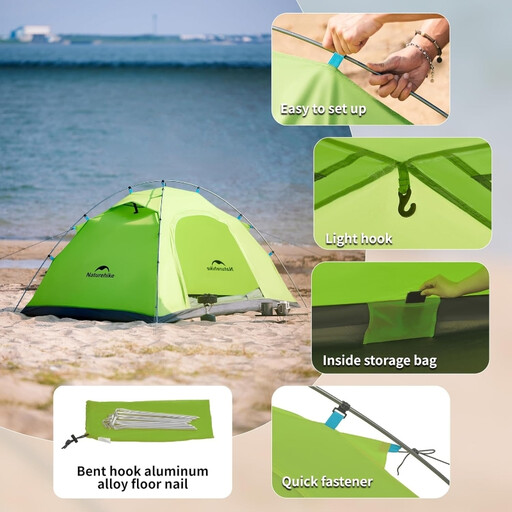
Why this choice suits this profile: Its 4-season design and stated UV protection make it a versatile option for trips where minimum packed volume is not the top priority.
The product description provides precise dimensions of 200 × 130 × 100 cm and a weight of 1.65 kg. It also lists waterproofing and UV protection separately.
A 4-season structure, aluminium poles, a groundsheet and pegs included.
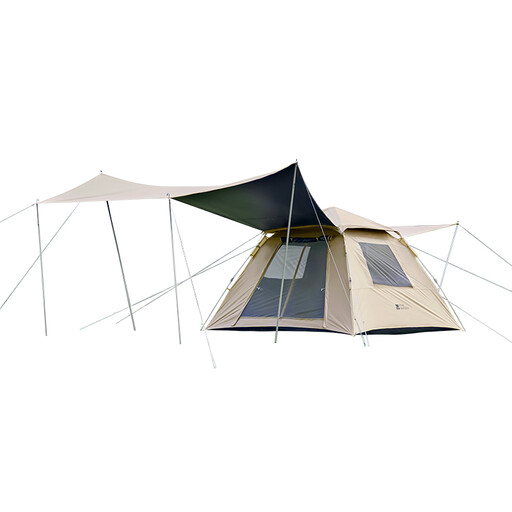
Why this choice suits this profile: Its capacity for 2 to 5 people and quick-opening design are ideal for camping trips and outdoor outings when you do not want to spend too long pitching the tent.
The product description specifies a weight of approximately 7.8 kg, the dimensions when the tent is open, blackout fabric and a PU2000 mm hydrostatic head, helping you plan for transport and the conditions in which it will be used.
A pop-up opening, blackout fabric, stated UPF50+ protection and a 240 × 240 × 155 cm interior.
Pitch the tent on flat ground, away from dead branches, cliffs and areas exposed to runoff. Even an automatic model should be secured with pegs and guy lines when the wind picks up. Handle a lightweight tent with care: avoid pulling sharply on the nylon and keep sharp objects away.
After every trip, remove dust, sand and grass. If necessary, clean the tent with clean water and mild soap, then leave it to air-dry completely before storing it. Storing a damp tent encourages mould and can damage the coatings. Never use a flame, camping stove or heat source inside the tent.
We have brought together a complete, real-time selection of products that meet these exacting criteria, as well as European safety standards.
Start by choosing flat, clear ground. Unpack the inner tent, assemble the poles, secure the corners, then attach the flysheet and guy lines. Tension the fabric without distorting it and position the entrance away from the prevailing winds. For a pop-up tent, follow the locking and anchoring steps provided by the manufacturer.
Prioritise the total weight, packed size, groundsheet durability and ventilation. A 1-person or 2-person tent made from lightweight nylon is often suitable for routes where every gram counts. If you are heading out in winter conditions, do not rely solely on the word “waterproof”; check the stated seasonality as well.
Dry it before every time you store it, clean it by hand with a mild product and avoid abrasive ground. Regularly vary the way you fold the fabric so that you do not weaken the same areas repeatedly. Also inspect the seams, poles and pegs before every trip.