
Livraison le jour même ou le lendemain

Qualité garantie

Débloquez vos offres de bienvenue: Livraison GRATUITE | Jusqu'à -80 % | 30 jours d'essai gratuits à JoyPlus
Téléchargez l'application
Choosing a camping tent can be overwhelming with so many options on the market. Capacity, waterproofing, weight, materials… the criteria are numerous, and it's easy to get lost. This guide is here to help you see things more clearly and find the model perfectly suited to your needs, whether you're a solo hiker, a couple on a weekend camping trip, or a parent looking for the ideal shelter for a family holiday.
Before you start comparing models, take a moment to define your priorities. Three main criteria will guide you to the right choice.
Capacity is often the first criterion that comes to mind. But be aware, the larger a tent is, the heavier it is—a crucial factor if you have to carry it on your back.
Your tent's ability to keep you dry and sheltered from the wind is obviously essential. There are two main categories:
The waterproof rating, measured in Schmerber (mm), is a technical detail that should never be overlooked. For peace of mind during downpours, aim for a waterproof tent with a rating of at least 2?000?mm for the flysheet and 3?000?mm for the groundsheet.
Your activities will directly influence the type of tent you should choose. A hiking tent must be lightweight, compact, and quick to set up. Conversely, a family camping tent will prioritise space, headroom, and overall comfort.
After reviewing dozens of models, here are the ones that caught our attention for their excellent value and performance.
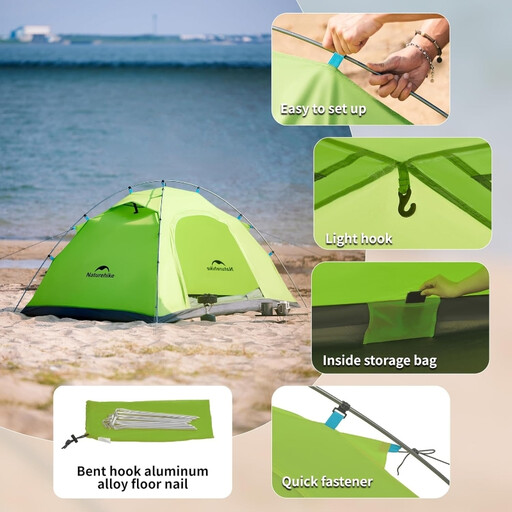
The standout feature: This model successfully combines a 4-season design with a feather-light weight, making it a remarkably versatile tent. Its polyester fabric is treated to resist both rain and UV rays.
Pros:
Who is it for? For adventurous duos looking for a reliable and lightweight 2-person tent that can accompany them on all their excursions, from summer hikes to autumn backpacking trips.
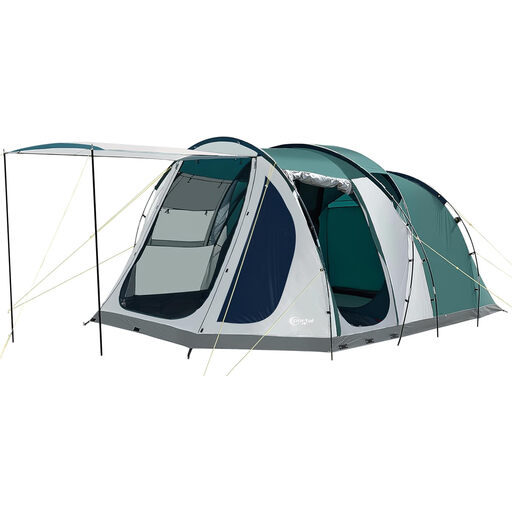
The standout feature: Simply put, its living space. With a 7.05 m? bedroom and a separate 5.8 m? living area, it feels almost like a small canvas bungalow.
Pros:
Who is it for? For families and groups of friends who go car camping. This is the ultimate family tent, designed for those who refuse to choose between the great outdoors and comfort.
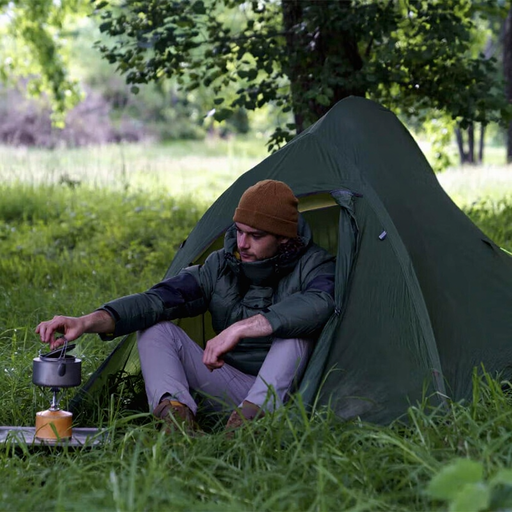
The standout feature: A true powerhouse of technology dedicated to lightness. The use of 20D silicone-coated nylon and 7001 aluminium poles achieves a record-breaking weight without sacrificing durability.
Pros:
Who is it for? For hikers, trekkers, and solo adventurers for whom every gram counts. This is the ultimate backpacking and hiking tent for 3-season adventures with complete autonomy.
Is your project bigger than just a camping trip? If you're organising a reception, a market stall, or any other outdoor gathering, a standard camping tent won't be enough.
Discover our selection of party tents and gazebos to find more spacious models suited for events.
A 3-season tent is designed for mild conditions (spring, summer, autumn). It promotes ventilation with large mesh panels. A 4-season tent, on the other hand, is built for year-round use, including winter conditions. Its fabrics are thicker, its poles are stronger, and its design minimises cold air entry to better retain heat and withstand wind and the weight of snow.
Waterproofing is measured in Schmerber (or mm). This unit indicates the height of a water column that a fabric can withstand before water penetrates it. A fabric is considered waterproof from 1?500?mm. For reliable protection, we recommend a rating of at least 2?000?mm for the flysheet and 3?000?mm (or more) for the groundsheet.
Proper maintenance can double your tent's lifespan. Here are the best practices to adopt: