
Livraison le jour même ou le lendemain

Qualité garantie

Débloquez vos offres de bienvenue: Livraison GRATUITE | Jusqu'à -80 % | 30 jours d'essai gratuits à JoyPlus
Téléchargez l'application
Whether for a weekend getaway, a family picnic, or a barbecue with friends, the camping table is that little extra that makes all the difference, transforming a simple outing into a truly social occasion. The catch? The market is flooded with models making tempting promises, but disappointment often follows. A weight advertised as 'feather-light' can hide frustrating instability, and materials that gleam in photos can rust after the first downpour.
As a Product Specialist at Joybuy, my mission is to help you see things more clearly. Let's break down the pitfalls to avoid and the criteria that truly matter to choose a folding camping table that lives up to your expectations, far from the siren song of marketing.
Buying outdoor gear might seem trivial, but a few poorly thought-out details are enough to render a product practically useless. Here are the two most common mistakes we see.
Many tables boast of being "ultra-lightweight," a compelling argument (no pun intended) for hikers. The problem? This weight saving almost always comes at the expense of the structure. The result: a frame that's too thin or poorly designed legs, and your table becomes wobbly on the slightest blade of grass or on gravel. A simple gust of wind or a slightly heavy dish can then tip everything over. Remember this: a lightweight camping table must, above all, be stable.
An outdoor table takes the full brunt of humidity, UV rays, and temperature shocks. A particleboard top or low-grade steel can swell, warp, or rust in the very first season. The same goes for poor-quality fabric, which will fade and stretch in record time. The choice of materials is not a technical detail; it's the number one guarantee of your camping furniture's longevity.
To avoid these disappointments, focus on three objective criteria. They are what define the true quality and suitability of a portable camping table.
A table's stability depends entirely on its frame design.
The tabletop is the most exposed area. Its material should therefore be chosen based on your primary use.
Never trust the promotional photos. Always check these three measurements:
To illustrate these criteria in practice, here are three models that cater to well-defined user profiles.
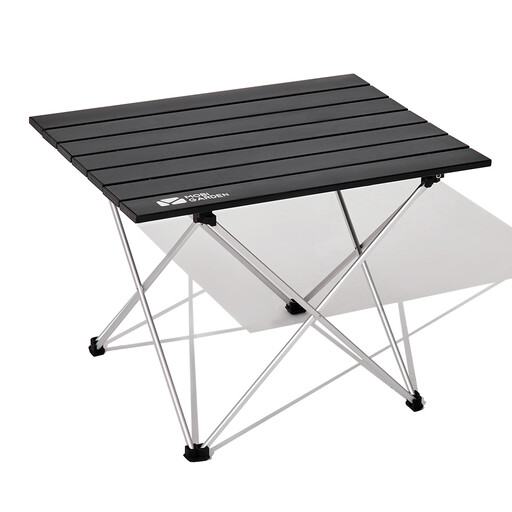
Why it stands out: With its feather-light weight of 1.25 kg and ultra-compact packed size, this table is tailor-made for those who count every gram in their backpack.
Despite its light weight, its X-frame structure and aluminum top give it impressive stability for its category. Say goodbye to the wobbly effect of cheap, ultra-light tables.
Its masterstroke: an unbeatable weight-to-stability ratio. The aluminum top is corrosion-resistant and provides a rigid surface, perfect for preparing a meal or setting down your gear.
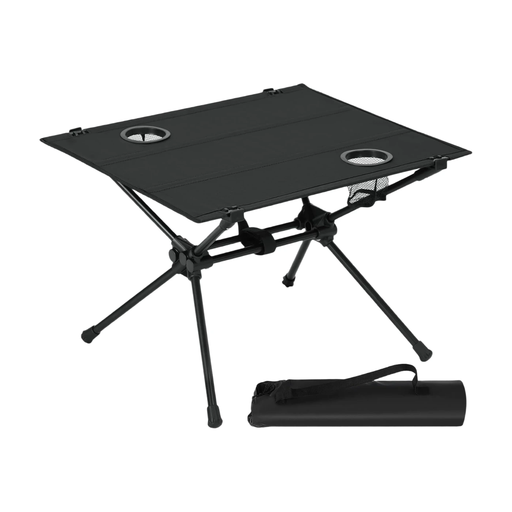
Why it stands out: This is the ultimate practical solution for car trips. Lightweight (2.5 kg), it sets up without tools and includes cup holders—the small detail that makes all the difference during a picnic.
This model counters the instability trap with its cross-brace metal structure and four non-slip feet, which ensure a good footing on grass as well as on sand.
The combination of a quick setup, manageable weight, and practical details (cup holders, carry bag) makes it an ultra-versatile choice for occasional use.
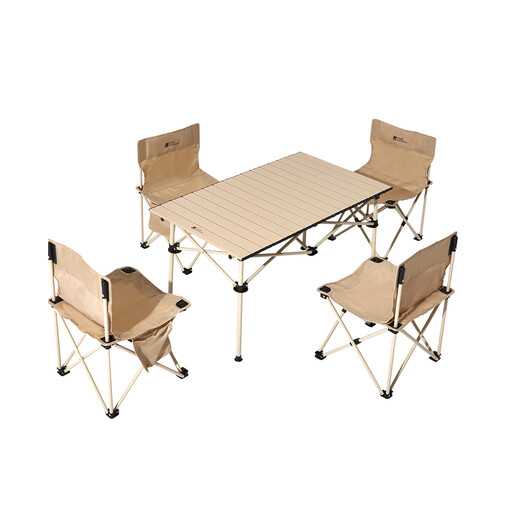
Why it stands out: This all-in-one set is the turnkey solution for families or groups. It combines a large table and four comfortable chairs, all packed into a single carry bag.
Here, there's no compromise on sturdiness. The steel frames of the table and chairs guarantee rock-solid durability and stability, avoiding the pitfall of fragile materials that don't survive heavy use.
The benefit of a complete and cohesive solution. No more juggling mismatched chairs: everything is designed to work in harmony and be stored in an optimised way.
We have put together a complete selection of products that meet our quality criteria and current safety standards.
It all depends on the tabletop material. We strongly advise against placing a stove on a fabric or plastic top. Aluminum or steel tabletops, on the other hand, are much more suitable as they are heat-resistant. In any case, use an insulating mat and never leave a lit stove unattended.
If your table doesn't have adjustable legs, the good old-fashioned method of using shims (pieces of wood, rigid coasters) under the shorter legs is still the best solution. Also, before setting up, try to find the flattest possible area and clear it of any rocks or branches that could destabilise it.
Its longevity directly depends on the materials and maintenance. A model with a treated aluminum or steel frame and a quality tabletop can last for many years. The secret to making it last? Clean it after each outing with a damp cloth and, most importantly, make sure it is completely dry before storing it in its bag, away from moisture and sunlight.