
Livraison le jour même ou le lendemain

Qualité garantie

Débloquez vos offres de bienvenue: Livraison GRATUITE | Jusqu'à -80 % | 30 jours d'essai gratuits à JoyPlus
Téléchargez l'application
Choosing a camping stove? It seems simple enough. Yet, between the marketing jargon and tempting promises, a bad purchase is just around the corner. The wrong stove can turn your entire adventure into a logistical nightmare. Our mission: to guide you step-by-step in finding the ideal bivouac companion—one that will never let you down, cutting through the purely commercial hype.
Before we get into specific models, let's break down the 3?classic pitfalls that too many campers and hikers fall into:
To avoid these disappointments, focus on the features that make a real difference in the field, well beyond the spec sheet of a camping stove.
For hiking, the gas stove is king. It runs on pressurised canisters containing a blend of butane, isobutane, and propane.
Power, measured in watts (W), indicates the burner's ability to generate heat. A powerful hiking gas stove will bring water to a boil faster, but it can also drain your canister at lightning speed.
When bivouacking or trekking, every gram counts. There are two main design philosophies:
Let's get practical with a few models that caught our eye, each tailored to a specific user profile, always keeping our criteria of performance and reliability in mind.
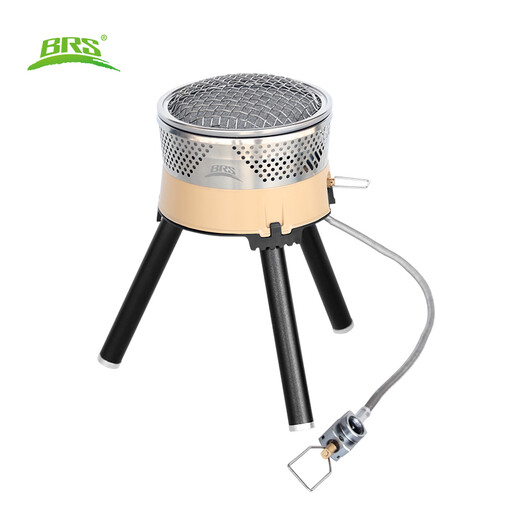
Why you'll love it: Ideal for those who want instant results. A hot coffee or a freeze-dried meal ready in the blink of an eye? That's its specialty. Its firepower is perfect for short outings where speed is more critical than fuel autonomy.
Its robust stainless steel and aluminium alloy construction ensures excellent stability, unlike wobbly, featherweight stoves. Fully compatible with standard canisters, it prevents you from getting stranded without fuel in the wild.
A 1900 W output capable of bringing 1 litre of water to a boil in just 3 minutes. A real time-saver when hunger or cold sets in.
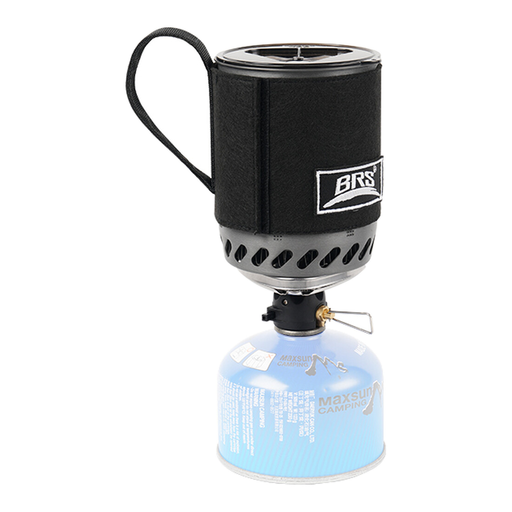
Why you'll love it: Designed for the ultimate optimisation of space and weight. It's the perfect solution for the solo trekker or minimalist for whom every gram is an enemy and compactness is a religion.
Its integrated system architecture guarantees maximum efficiency: not a single calorie of gas is wasted. The pot locks onto the burner, offering rock-solid stability.
An ultra-compact all-in-one design: all components (burner, pot, lid) nest together for a featherlight weight of 360 g. The fine flame control, ideal for real cooking, is the icing on the cake.
Explore our complete selection of stoves and cooking systems, all rigorously chosen for their reliability, performance, and adherence to safety standards.
Burn time varies enormously depending on the canister size (100?g, 230?g, or 450?g), your stove's power, its efficiency, as well as wind and temperature. To give you a rough idea, a standard 230?g canister can boil between 10 and 15?litres of water with a high-performance system. Our advice: for a multi-day trek, do a test run at home to estimate your actual fuel consumption.
NEVER. This is a golden rule. Using a gas stove in a confined space like a tent is incredibly dangerous. The risk of fire is immense, not to mention the invisible and deadly danger: carbon monoxide poisoning, an odourless gas that shows no mercy. Always cook in the open air, or at a push, under your tent's vestibule if it is wide open and well-ventilated.
Proper maintenance is the secret to longevity and safety. It's simple: after each trip, let it cool down completely, then wipe it clean with a cloth. Before you leave, always inspect the canister's connection seal—it's your key safety feature. Finally, store your mini gas stove in a dry place to protect it from corrosion. A well-maintained stove is an adventure companion you can always count on.