
Livraison le jour même ou le lendemain

Qualité garantie

Débloquez vos offres de bienvenue: Livraison GRATUITE | Jusqu'à -80 % | 30 jours d'essai gratuits à JoyPlus
Téléchargez l'application
Choosing a camping stove might seem simple, but the selection is so vast it's easy to get lost. The wrong choice can quickly turn your wilderness getaway into a culinary nightmare. To help you see things more clearly, we've broken down the common pitfalls to avoid and the essential criteria to check before you buy.
Don't be blinded by marketing hype. Here are the 3 most common mistakes and how to outsmart them.
An impressive watt count is the ultimate marketing pitch. However, a powerful gas stove with poor wind protection is an incredible energy sieve. In the field, a well-designed 1500?W model with an integrated windscreen will boil your water much faster than a 3000?W monster at the mercy of the slightest breeze. The takeaway: thermal efficiency always trumps raw power.
Shaving off every last gram is an obsession for many hikers, who naturally gravitate towards an ultralight camping stove. While a 25-gram titanium stove looks great on the scale, it can quickly become an unstable nightmare with a pot larger than one litre. For a backpacking stove, the right balance between weight and stability is crucial. Nothing is worse than spilling your dinner after a 10-hour hike!
Be warned: not all gas canisters are compatible with all stoves. The most common standard in Europe is the threaded valve canister ( EN 417 standard), but you can still find clip-on or puncture-style models. Double-check this before purchasing, or you could end up with a useless stove in the middle of nowhere.
To select the right gear, focus on objective features that meet your actual needs.
Expressed in watts (W), power measures the energy the burner can deliver. A fast boil time (often listed for 1 litre of water) is an excellent indicator of overall performance. For all-around use, a power output between 1500 and 3000?W is an excellent compromise. For more extreme conditions (melting snow, cooking for a group), a power output over 3000?W should be considered.
On a long-distance hike or backpacking trip, every gram counts.
Safety largely depends on the stove's stability.
Rather than searching for a one-size-fits-all model, it's smarter to choose a stove that's tailored to your activities.
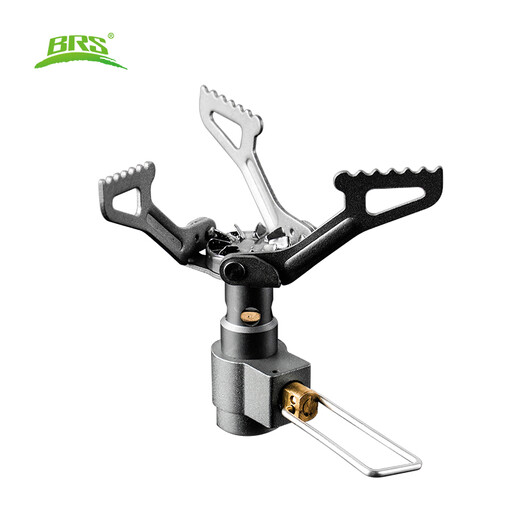
Who is it for ? For gram-counters and minimalist backpacking enthusiasts. Its mission: boil water in record time for a freeze-dried meal or a coffee, and that's it.
It embraces its minimalism: designed for a mug or a small solo pot, it doesn't pretend it can handle a large cauldron. Its use is ultra-specific, and that's its strength.
A featherlight weight of 26 grams and a titanium construction make it the absolute benchmark for portability.
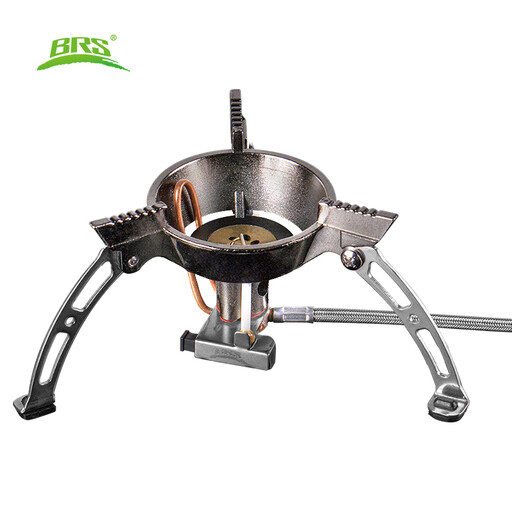
Who is it for ? Perfect for family camping or trips with friends where you want to cook real meals. Its remote canister design allows you to use large pots safely.
It checks all the boxes: its wide, remote base guarantees perfect stability, and the included adapter solves the canister compatibility headache.
Its comfortable 3240 W power output and rock-solid stability let you cook for a whole group with formidable efficiency.
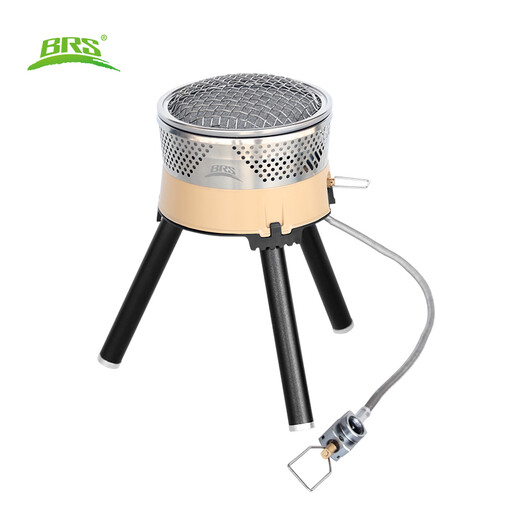
Who is it for ? For those who don't want to waste a single second or molecule of gas. This integrated cooking system is optimised for maximum performance, even in high winds or cold weather.
It's the perfect answer to the power vs. efficiency dilemma. Its "reactor" style design with a heat exchanger protects the flame and concentrates heat, making its 1900 W incredibly efficient.
Exceptional thermal efficiency that translates to a record-breaking boil time (1 L of water in 3 minutes according to the manufacturer) and minimal gas consumption.
Explore our full selection of stoves that meet our criteria for performance, reliability, and safety.
The runtime depends on its capacity (in grams), your stove's power, and the weather conditions (wind, cold...). As a guideline, a 230?g canister can boil between 10 and 15 litres of water. As a precaution, always carry a spare canister, especially if you're going out for several days.
That's a categorical NO. Never use a gas stove inside a tent, van, or any other confined space. Combustion releases carbon monoxide, an invisible, odourless, and deadly gas. Always cook outside or in a very well-ventilated area, far from any flammable materials.
Maintenance is simple but crucial. After each trip, once the stove is completely cool, wipe it down with a dry cloth. Before your next trip, check the condition of the seals and make sure the jet is not clogged. Store everything in a cool, dry place, away from direct sunlight.