
Livraison le jour même ou le lendemain

Qualité garantie

Débloquez vos offres de bienvenue: Livraison GRATUITE | Jusqu'à -80 % | 30 jours d'essai gratuits à JoyPlus
Téléchargez l'application
Preparing a hot meal in the great outdoors is one of the simple pleasures of bivouacking or hiking. Yet, choosing a camping stove can quickly become a headache. Between marketing promises and confusing spec sheets, it's easy to end up with gear that's poorly suited to your needs. Before you commit, let's review the most common pitfalls that could spoil your trips and drain your budget.
Our mission: to help you find the reliable stove that truly matches your style, whether you're a solo trekker or enjoy family camping weekends.
The outdoor gear market is saturated with options, and it's easy to focus on the wrong criteria. To avoid buyer's remorse, here are the points to watch closely.
To make the right choice, it's best to master a few key concepts. Don't worry, we'll decode the technical jargon for you so you can find the perfect portable stove for your adventures.
Power, expressed in Watts (W), indicates how quickly your stove heats up. A model between 2000W and 3500W is a good compromise for bringing water to a boil in a few minutes. But be aware, raw power isn't everything. For dishes that need to simmer, fine and precise flame control becomes essential.
The main types of fuel:
The weight-size-stability trio is at the heart of the decision. For a bivouac stove or a multi-day hike, every gram counts. A titanium mini camping stove then becomes a powerful ally. Still, check that its supports are wide and sturdy enough to hold your pot without wobbling.
For car camping or group outings, weight becomes a secondary criterion. You can then opt for a more substantial but much more stable camping cooking system, with a wide base and non-slip feet, capable of supporting large, heavy pots.
Rather than an endless list, we've matched leading models with specific user profiles. Each stove has been chosen for its perfect fit for a particular type of adventure.
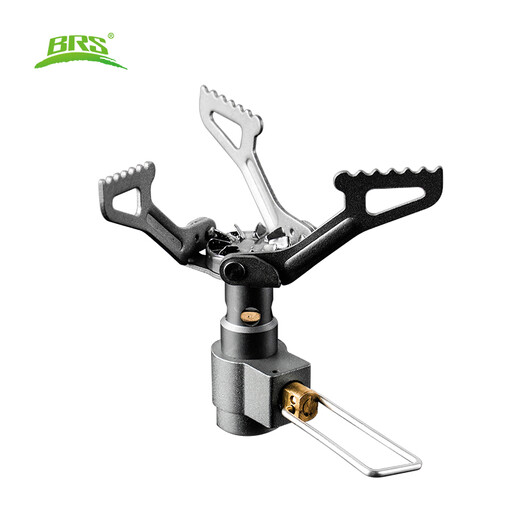
The ideal user: For those who count every gram in their backpack. Perfect for solo treks and bivouacs where lightness is the absolute priority. Its tiny size fits anywhere.
Despite its feather-light weight, its folding pot supports are cleverly designed to provide a stable base for a small, individual pot. It thus sidesteps the instability trap that plagues many low-end ultralight stoves.
Feather-light weight of only 26 grams. Power of 1940W, perfect for one person. Titanium alloy construction ensures robustness.
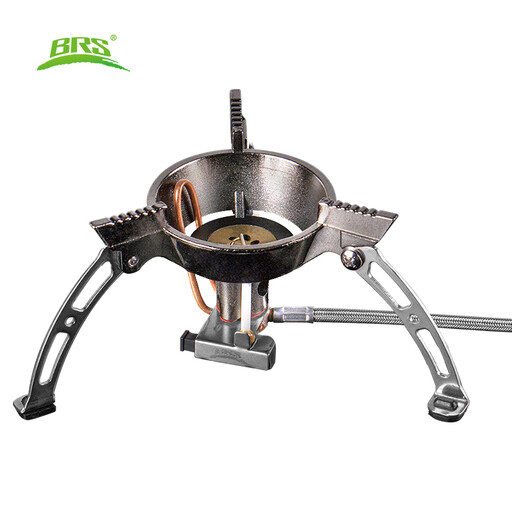
The ideal user: For the adventurer seeking powerful, do-it-all gear that performs in all conditions and with different types of gas canisters.
It eliminates compatibility issues with its included adapter, making it compatible with both EN 417 canisters and 1 lb propane bottles. Its design with an integrated windscreen ensures a stable and high-performance flame.
High power of 3240W for express boiling. Great fuel versatility. Integrated piezoelectric ignition for added convenience.
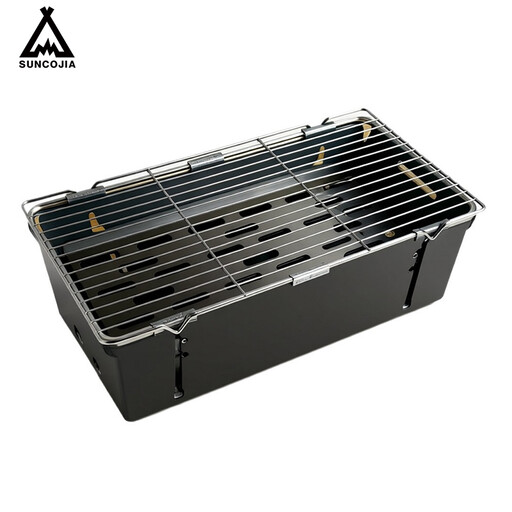
The ideal user: The ally for family meals, barbecues with friends, or car camping where weight is not a concern. Its large cooking surface allows you to cook for the whole crew.
This model doesn't compete in the featherweight category. It bets everything on sturdiness with its carbon steel frame and stainless steel grate. Its design prioritizes stability and durability for intensive, hassle-free use.
Ultra-sturdy construction. Very large cooking surface. Compatible with solid fuels (wood, charcoal).
Explore our full selection of stoves that meet our quality criteria and safety standards.
1. What is the burn time of a camping gas canister? The burn time depends on the canister's capacity (in grams), the stove's power, the weather (wind, cold), and the altitude. On average, a 230g canister can boil between 10 and 15 litres of water. Always pack a spare canister or leave a safety margin.
2. Can a camping stove be used indoors or on a balcony? Absolutely not! It is strongly discouraged and extremely dangerous to use a camping stove (gas, wood, or other) in an enclosed space like a tent, vehicle, apartment, or even a poorly ventilated balcony. Combustion releases carbon monoxide, an odourless and deadly gas. Always use your equipment outdoors, on a stable, non-flammable surface.
3. How do I maintain my hiking stove to make it last? After each use, wait for the stove to cool down completely. Clean any food residue from the pot supports. For a gas stove, periodically check the condition of the gasket seal at the canister connection and replace it if necessary. Store your stove in a dry place to prevent corrosion. Simple but regular maintenance is the secret to its reliability and longevity.