
Same-day & Next-day Delivery

Quality Guaranteed

Unlock Your Welcome Offers: FREE Delivery | Up to 80% OFF | Free 30-day JoyPlus trial
Download the APP
Camping promises a total disconnect. But let's be honest: without a minimum of organisation, the adventure can quickly turn into a logistical nightmare. The camping storage box is your best ally for keeping everything organised, dry, and within easy reach. The problem? The market is flooded with models making alluring marketing promises that often prove disappointing in the field. To avoid investing in a crate that won't survive its first season, here's how to sidestep the most common pitfalls.
Navigating the jungle of storage crates isn't easy. Too many campers end up with boxes that crack at the first impact or turn a simple downpour into a flood. Here are the 3 pitfalls you absolutely need to know.
To make the right choice, forget the marketing and focus on the features that truly matter. These are what determine the quality and longevity of your future outdoor storage trunk.
The quality of the plastic is the crucial factor. Polypropylene (PP) offers an excellent compromise between impact resistance and lightness. Inspect the thickness of the walls and look for structural reinforcements, especially at the corners and under the lid. A good stackable camping chest can be identified by its flat lid and a base designed to interlock perfectly, ensuring a stable and secure stack in your boot.
To protect your gear from water and dust, a simple drop-on lid isn't enough. Insist on a waterproof seal (rubber or silicone) around the entire perimeter. Sturdy closing clips are also a good sign: they distribute pressure evenly across the seal and lock the lid effectively. If you plan to store food in it, a food-grade camping box must also be certified for food contact (BPA-free) and not release any odours.
A camping transport box must, above all, be... transportable. Comfortable, well-integrated handles are non-negotiable, especially when the crate is heavy. Remember to measure your boot and assess the volume you really need. Often, two medium-sized boxes are much easier to fit and handle than a single 100-litre monster.
Every camper has their ideal box. Here is our selection of models that meet specific needs, all validated against the quality criteria we've just discussed.
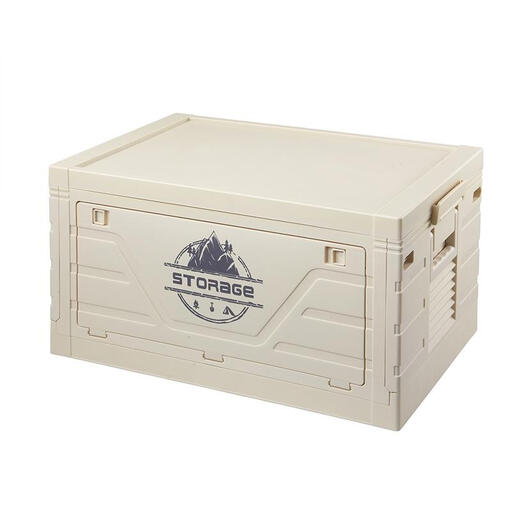
Why we chose it: Perfect for weekend getaways. Its volume is ideal for storing provisions, dishes, or clothes for the whole family for two or three days. It's light enough to be handled effortlessly.
Its well-made polypropylene (PP) construction avoids the "deceptive durability" pitfall. Its structure is designed for stacking, allowing you to optimise boot space without worrying about the lid collapsing.
A smart, simple design with well-integrated handles. Its flat lid ensures stable stacking and can even serve as a small side table once you're at the campsite.
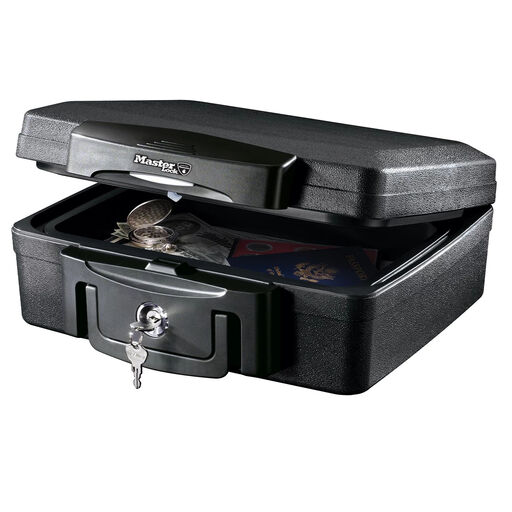
Why we chose it: Essential for those travelling with valuables: documents, car keys, a smartphone, a drone... This portable safe secures your belongings not only against theft but also against water and fire. Absolute peace of mind.
There's no "illusory waterproofing" here. The safe is ETL certified for complete water submersion. This isn't a marketing promise but a lab-verified guarantee to protect your most sensitive items.
Its dual UL/ETL certification guarantees protection against fire and water, including for digital media (USB drives, hard drives). The physical key lock provides simple and reliable security.
Whether you need to organise small fishing tackle, protect tools, or find the ultimate waterproof solution, we've selected other models that meet our demanding quality standards.
How do I clean and maintain my camping storage box? Most plastic crates are very easy to clean with a sponge, warm water, and a little mild soap. Rinse well and let it dry completely before storing. A word of advice: avoid abrasive products and don't leave it in direct sunlight for months, as UV rays can eventually weaken the plastic.
Can I sit on my camping crate or use it as a table? Be careful, not all boxes are designed for this! A standard model is unlikely to support your weight. Only certain high-end chests with a reinforced lid are designed to be used as an extra seat. The manufacturer will state this clearly (for example, "supports up to 100 kg"). When in doubt, don't, to avoid breakage or an accident.
What's the difference between a standard plastic crate and a true food-grade camping box? The difference is crucial. A food-grade camping box is made from plastics certified for food contact (usually BPA-free). This ensures that no harmful substances, tastes, or odours will migrate to your food. Furthermore, their latching system is often much more effective at preserving freshness and keeping insects and moisture out.