Campers with a camping stove
If you can heat water, porridge made with oats lets you choose your own additions. Quaker France’s published recipe uses water and takes around 2 minutes to cook over a low heat.


For an oat-based camping breakfast, choose oats you can prepare if you have a way to heat water and want to pick your own toppings. If you don’t have cooking equipment, ready-to-eat muesli or granola may be more convenient. Either way, compare the ‘of which sugars’ figure per 100 g, as ‘no added sugars’ does not mean ‘sugar-free’.
If you can heat water, porridge made with oats lets you choose your own additions. Quaker France’s published recipe uses water and takes around 2 minutes to cook over a low heat.
Dry muesli or granola can save you having to cook at the campsite. Check whether your chosen product can be eaten as it is, and check its nutritional information and allergen details too.
To compare recipes, check the sugars per 100 g, then read the ingredients and allergen information. The sugar content alone won’t tell you whether a product contains nuts or cereals containing gluten.
First decide whether you’ll prepare your breakfast at the campsite or eat it without cooking. Then compare the labels of products that suit your needs.
Choose these if: you can heat water and want to make your own porridge.
Bear in mind: you’ll need a container, time to prepare it and any ingredients you want to add.
Choose this if: you’re looking for a dry mix and want to avoid added sugars in the product you select.
Check: the naturally occurring sugars, particularly in recipes containing dried fruit.
Choose this if: you prefer a crunchy texture and want to compare a figure on the pack.
Check: the full ingredients list, particularly the nuts and fats.
| What to consider | What to check | Who it matters to |
|---|---|---|
| Sugar content | Compare the ‘of which sugars’ figure per 100 g and read the ingredients list. Don’t rely on the claim on the front of the pack alone. | If I want to keep the sugar in my breakfast down, I need to be able to distinguish the stated amount from a simple claim on the pack. Around 46% of consumers would make this their top priority. |
| Preparation at the campsite | Check whether the product requires hot water, a container or cooking. | Without a camping stove, I look for a product I can eat with the equipment I’ve brought. Around 36% of consumers would prioritise ease of preparation. |
| Ingredients and allergens | Read the ingredients, allergen information and ‘may contain’ statements. If you’re planning several portions, compare the nutritional values per 100 g. | If certain ingredients don’t suit me, I need to check the exact recipe before preparing my portions. Around 18% of consumers would put this compatibility first. |
A product can still contain naturally occurring sugars. For example, Jordans describes Oh My Crisp! Nuts as having ‘no added sugars’, while showing a sugar content of 9.5 g per 100 g.
Use the claim to identify the type of recipe you’re looking for, then compare the ‘of which sugars’ figure per 100 g and the ingredients.
Quaker France’s published oat recipe requires boiling the water, then cooking the porridge over a low heat for around 2 minutes. It won’t meet the same needs as a product that can be eaten without cooking.
Before choosing your oats, check the preparation instructions and make sure they’re suitable for the equipment you have.
Depending on how you plan to prepare it, you’ll also need to carry a camping stove, fuel and a suitable container.
Recipes that make a claim about sugars may also contain nuts or cereals containing gluten. Ingredients vary from one product to another.
Check the ingredients list and any ‘may contain’ statements on the exact product before putting together your portions.
A go-to for oats to prepare as porridge when you can heat water at the campsite.
The range includes mueslis and granolas, some of which carry a claim about sugars.
Its range includes oat flakes, porridge and muesli from a variety of brands.
This selection includes two packs of oats for making porridge and a powdered oat mix. If you’re taking them camping, check the instructions for each product before assuming you can make it with water.
 Image unavailable
A pack of oats to consider if you want to make your own porridge at the campsite. The pack contains 500 g. Before you set off, check the preparation instructions, nutritional information and allergen details for this product.
 Image unavailable
These oats can be used as a base for porridge, with your choice of additions. The pack contains 500 g. Check the instructions for this product rather than automatically following those for another Quaker recipe. If allergens affect your choice, check the label too.
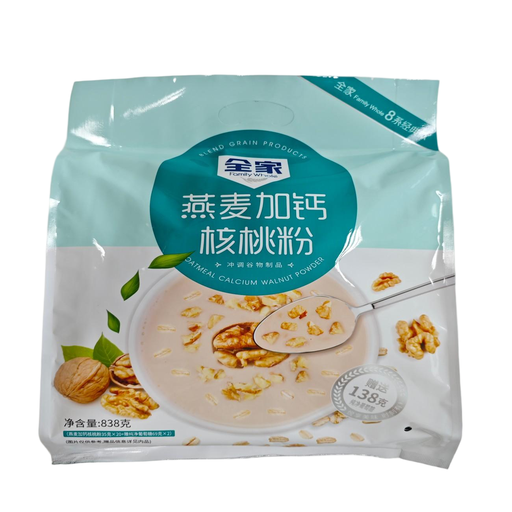 Image unavailable
Consider this powdered mix if you can make a drink or porridge with boiling water at the campsite. The glucose is supplied separately, so bear this in mind when comparing the sugars in the preparation you’ll actually consume. Check the ingredients and allergen information for this product, particularly if walnuts or peanuts are a concern.
No. The product may still contain naturally occurring sugars. According to its product information, Jordans Oh My Crisp! Nuts carries a ‘no added sugars’ claim and contains 9.5 g of sugars per 100 g. Read both details together.
Compare the ‘of which sugars’ figure per 100 g, then check the ingredients in each recipe. The DGCCRF says that nutritional information given per 100 g or 100 ml makes it easier to compare products. A figure per portion alone may be based on different portion sizes.
Yes, if the recipe you’ve chosen is designed for it and you can heat the water. Quaker France’s recipe uses 250 ml of water or milk for 40 g of oats and takes around 2 minutes to cook over a low heat. Check the instructions for the product you’re taking with you.
Read the ingredients and any ‘may contain’ statements for the exact product. Jordans’ product information for recipes with nuts lists nuts and cereals containing gluten. The Carrefour France listing for the Bjorg product also mentions possible traces of milk, nuts, sesame and soya.
No. It doesn’t replace the sugar content per 100 g, the ingredients list or the preparation instructions. Check all of these details for the product you’re considering to make sure it suits your camping equipment and dietary needs.