
Livraison le jour même ou le lendemain

Qualité garantie

Débloquez vos offres de bienvenue: Livraison GRATUITE | Jusqu'à -80 % | 30 jours d'essai gratuits à JoyPlus
Téléchargez l'application
To fully enjoy a day outdoors, a good night's sleep or a truly restorative break is essential. Yet, the choice of a camping pillow is often overlooked. The result: restless nights and breaks ruined by discomfort. Before falling for marketing hype, it's best to understand the common traps that turn a promising purchase into a genuine regret.
Many fall for the "ultra-light at all costs" trap, only to end up with a pillow as noisy as a plastic bag and completely lacking in support. Others opt for a budget-friendly solution that turns out to be a false economy: a pillow that mysteriously deflates by the second night, or foam that flattens permanently after a single hike. Finally, be wary of the "jack-of-all-trades" product that, ultimately, excels at nothing.
This guide breaks down the technical criteria that truly matter, so your comfort in the great outdoors is never again left to chance.
To make the right choice, three fundamental points must be scrutinized: the pillow type, its weight-to-pack-size ratio, and the quality of its materials.
The choice between foam and inflatable primarily depends on your activities.
Foam Cushions: Often made from XPE foam (cross-linked polyethylene), these models are the very definition of reliability. A foam hiking seat cushion is virtually indestructible, puncture-proof, and offers perfect insulation against cold and damp ground. It's the simple, effective solution for breaks during a long walk or for sitting comfortably during a picnic. Their egg-crate texture optimises both comfort and insulation.
Inflatable and Self-Inflating Pillows: The inflatable camping pillow is the undisputed champion of compactness. Once deflated and rolled up, it takes up minimal space in a backpack. Self-inflating models incorporate a polyurethane (PU) foam that expands when the valve is opened, drawing in air for partial automatic inflation. You then just need a few breaths to adjust the firmness to your liking. This is the premium option for lightweight camping gear dedicated to overnight trips, where sleep quality is non-negotiable.
Weight is the hiker's sworn enemy. Every gram counts. For trekking or mountaineering, lightweight camping gear is simply non-negotiable. A seat cushion under 50 grams or an inflatable pillow between 200 and 300 grams is an excellent compromise.
For more stationary camping (car camping, fishing...) or activities where weight isn't the top priority, you can afford more generous comfort-focused bivouac equipment. A larger pillow or a thicker folding ground mat will transform your experience without penalizing your mobility.
The lifespan of your pillow is directly linked to the quality of its construction.
Let's get practical with a few models that meet the demanding criteria we've just detailed.
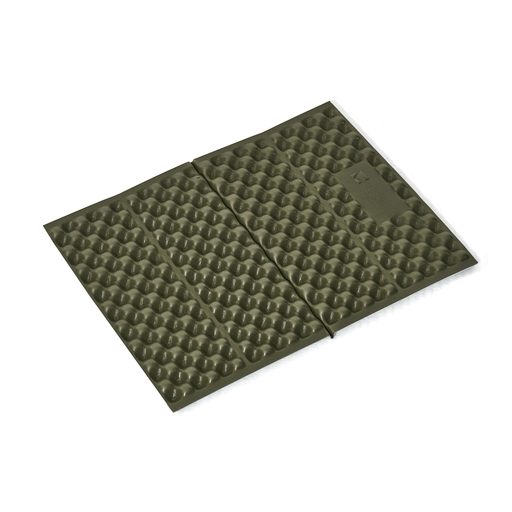
Why it stands out: Perfect for anyone seeking a simple, ultra-light, and reliable solution to insulate themselves from cold, damp ground during breaks. Its feather-light weight (around 45g) and compact size make it indispensable for day trips, fishing, or impromptu picnics.
This cushion doesn't promise the world. It does one thing, and it does it perfectly. It avoids the false-economy trap thanks to its single-piece XPE foam, which doesn't sag and withstands repeated use without fail.
Effective thermal insulation and a virtually negligible weight. You'll forget it's in your pack until you need it.
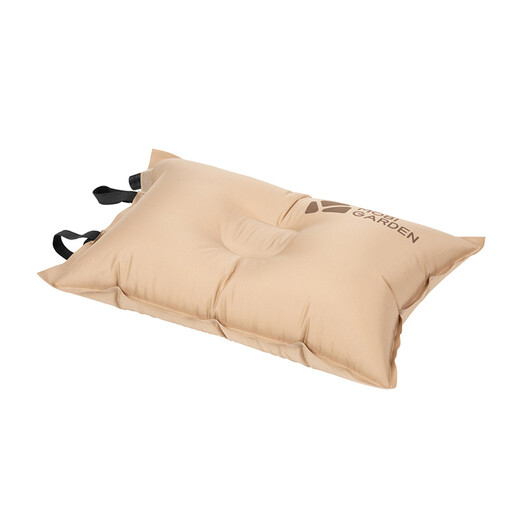
Why it stands out: Designed for campers and travellers who refuse to sacrifice a good night's sleep for the sake of packability. Its self-inflating foam core and ergonomic shape offer remarkable neck or lumbar support, whether in a tent, on the road, or even for a nap at the office.
It sidesteps the problem of noisy, unstable pillows with its soft-touch fabric and high-resilience PU foam. Its sealed one-way valve puts an end to overnight deflation—the deal-breaking flaw of low-end models.
Customisable comfort thanks to top-up inflation and versatile use (pillow, lumbar support).
We have curated a complete selection of products that meet our demanding selection criteria and current safety standards.
A standard inflatable pillow is just an air bladder that you must fully inflate by mouth or with a pump. A self-inflating pillow, however, contains open-cell foam that expands when you open the valve, thus drawing in air. Inflation is therefore almost automatic. You only need to add a few breaths to achieve your desired firmness. It's often faster and less effort.
For all pillow types, avoid contact with sharp objects. Clean spots with a damp cloth and mild soap, but never machine wash them. For an inflatable model, ensure the valve is free of sand or dirt before closing it. Finally, store your pillow in a cool, dry place, uncompressed. For a self-inflating pillow, it's best to store it flat with the valve open to preserve the foam's elasticity.
Absolutely. For minimal weight and bulk, a seat cushion radically improves the comfort of your breaks. It insulates you from the dampness of wet ground, the cold of a rock, and dirt. It's that little luxury that makes all the difference in recovering properly during physical exertion. It proves useful in a multitude of situations far beyond hiking (stadiums, festivals, gardening...).