
Livraison le jour même ou le lendemain

Qualité garantie

Débloquez vos offres de bienvenue: Livraison GRATUITE | Jusqu'à -80 % | 30 jours d'essai gratuits à JoyPlus
Téléchargez l'application
A successful outdoor adventure always starts with a good night's sleep. Yet, choosing a camping mattress can quickly become a headache. Drowning in marketing promises and technical jargon, it's easy to end up with unsuitable gear that can turn a dream trip into an ordeal. As a product expert at Joybuy, my mission is to help you decipher the market to make an informed choice. Here are the pitfalls to avoid and the criteria that truly matter.
The market is flooded with products boasting tempting features, but some can hide deal-breaking flaws.
To avoid these traps, focus on objective data that defines a mattress's real performance.
The R-Value is the measure of your mattress's thermal resistance. The higher this number, the more effectively the mattress will insulate you from the cold ground. This is THE number one criterion for your comfort and safety.
Ignoring the R-Value means risking feeling the cold seep in through your back, even with an excellent sleeping bag.
Each type meets a different need, from the minimalist bivvy pad to the ultra-comfortable inflatable guest bed.
Weight is the hiker's enemy. A 1-person camping mattress for trekking should ideally weigh less than a kilogram. For car camping or a 2-person camping mattress, weight becomes a secondary criterion compared to comfort and space. Always check the mattress's packed dimensions to ensure it fits in your backpack or car boot.
Here are a few options that cater to distinct user profiles, based on objective performance criteria.
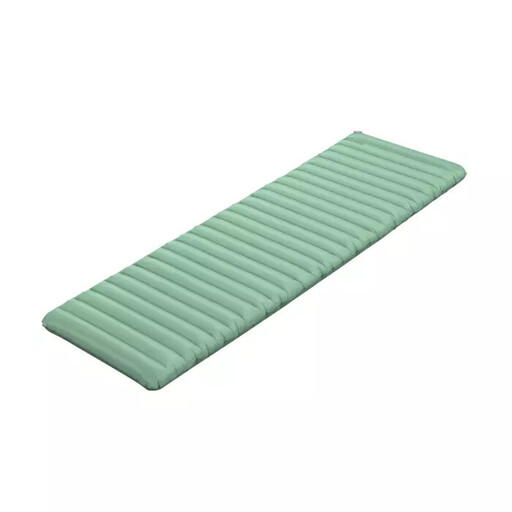
Why it's right for this profile : Designed for the solo adventurer who counts every gram. Its 798 g weight and ultra-compact size make it the ideal companion for long treks, without sacrificing the insulation needed for cool mountain nights.
It doesn't rely solely on thickness (7.5 cm). Its R-Value of 2.7 and THERMOLITE insulation provide a real barrier against the cold, while its 70D ripstop nylon fabric protects it from the fragile ultra-light trap.
Excellent insulation-to-weight ratio. Cleverly, the compression sack doubles as a pump sack for quick and hygienic inflation.
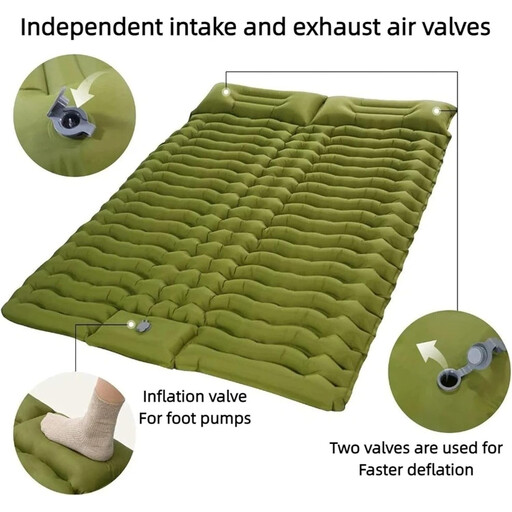
Why it's right for this profile : Ideal for couples or families who prioritise space and simplicity. Its generous dimensions (200 x 160 cm) offer shared comfort, and its integrated foot pump simplifies setup.
It bypasses the tedious inflation trap. The integrated foot pump means you don't have to carry an external pump or get out of breath. The one-second deflation via the dual valve is also a welcome time-saver when breaking camp.
An all-in-one solution for two, with integrated pillows. Its 1.7 kg weight is very reasonable for a double model.
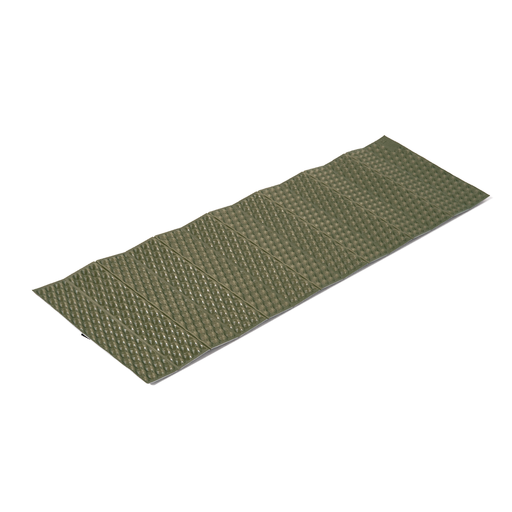
Why it's right for this profile : For those who seek reliability above all else. This foam pad is puncture-proof, impervious to moisture, and ready to use in seconds. It's the trusted companion for bivouacking and harsh conditions.
It completely eliminates the risk of punctures and valve failure. Its egg-crate structure in XPE foam traps air to provide a reliable and consistent R-Value of 2.6 that doesn't depend on inflation.
Maximum durability and simplicity. Lightweight (750 g) and versatile, it can also serve as an insulating under-layer for another mattress in winter.
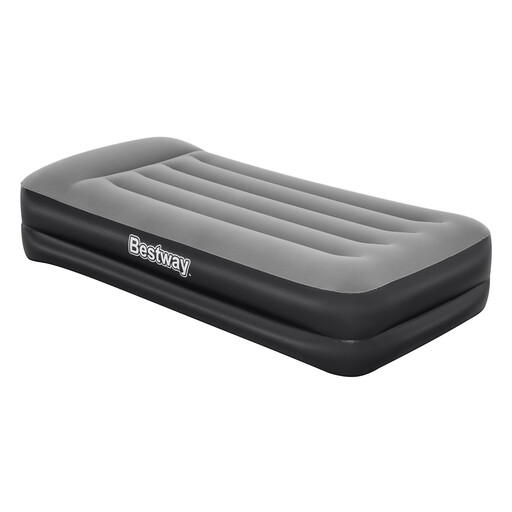
Why it's right for this profile : Perfect for hosting unexpected guests. This guest bed focuses on home-like comfort with its 46 cm height, which makes getting in and out of bed easy, and its integrated electric pump for effortless setup.
It solves the problem of comfort and convenience for indoor use. The integrated AC pump inflates the mattress in 3 minutes. The internal Tritech structure is designed to minimise air loss overnight and maintain its firmness.
The comfort of a real bed thanks to its height and supportive structure. A carry bag is included for easy storage.
Explore our full selection of mattresses that meet our strictest performance and durability criteria.
Most quality inflatable mattresses come with a repair kit. To find the leak, inflate the mattress and submerge it in water (or wipe a soapy sponge over its surface) to spot the air bubbles. Mark the spot, dry and degrease the area, then apply the patch with the provided glue, following the manufacturer's instructions.
The lifespan depends on the mattress type, frequency of use, and care. A foam pad can last for many years. A well-maintained inflatable mattress (stored clean and dry, away from the sun) can last 5 to 10 years. The main cause of premature wear is storing it in poor conditions (dampness, excessive compression).
For a hiking mattress, the choice comes down to a trade-off between reliability and comfort.