
Livraison le jour même ou le lendemain

Qualité garantie

Débloquez vos offres de bienvenue: Livraison GRATUITE | Jusqu'à -80 % | 30 jours d'essai gratuits à JoyPlus
Téléchargez l'application
A good night's sleep is essential for any successful outdoor adventure. Yet, choosing the right camping mattress can quickly become a headache. Between promises of absolute comfort and often-opaque technical jargon, it's easy to end up with unsuitable gear, turning a night under the stars into a true test of endurance. As a product expert at Joybuy, I break down the spec sheets for you and give you the keys to making a truly informed choice.
But before we dive into our top picks, let's review the most common mistakes that trip up campers, whether they're novices or seasoned pros.
The market is flooded with models, but certain design flaws or misleading marketing claims can ruin your experience.
To avoid these disappointments, simply focus on a few key indicators that define the real performance of a hiking or camping mattress.
This rating is your best ally against the cold. It indicates the performance of an insulating ground pad. Here’s how to interpret this index, simply put:
A mattress that doesn't display its R-Value? Be wary, especially if you plan to camp outside of the peak summer season.
The choice depends on your priorities between durability, comfort, and weight.
These two factors are obviously crucial for trekking and hiking. A mattress under 800g that folds down to the size of a water bottle is a major asset. For car camping or festivals, where weight is not a constraint, you can opt for wider and thicker models.
Here are a few options that meet specific needs, keeping in mind the performance criteria we've just discussed.
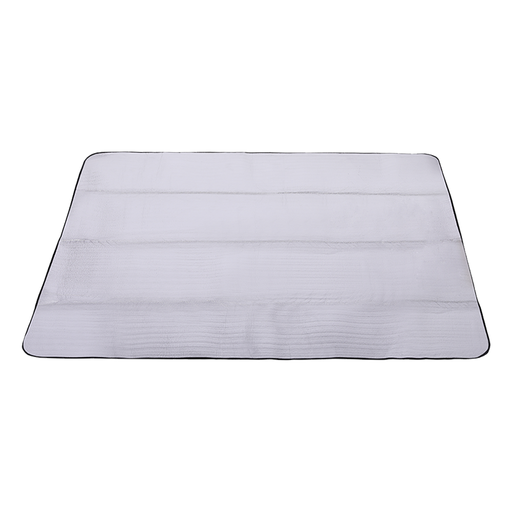
Why we chose it: Perfect as a basic moisture barrier for a picnic, a day at the beach, or as a tent groundsheet. Its purpose isn't for sleeping, but to serve as a versatile and ultra-lightweight ground mat.
This mat doesn't pretend to be something it's not. Its function is clear: to serve as a waterproof and reflective barrier. It avoids the trap of a product that promises everything but excels at nothing.
Feather-light (around 300g) and an easy-to-clean waterproof surface. The aluminum film reflects body heat and insulates from ground moisture.
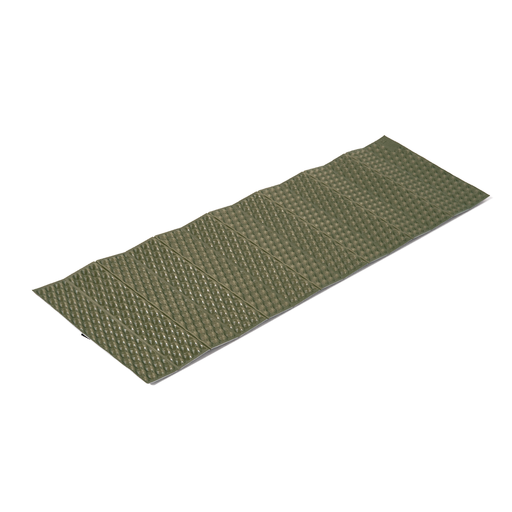
Why we chose it: For those who seek reliability above all else. This foam pad is puncture-proof and offers effective insulation for most conditions from spring through autumn.
It avoids pitfall #2, that of neglected insulation. With an R-Value of 2.6, it guarantees effective thermal protection from the cold ground, where a simple non-insulated inflatable mattress would show its limits.
Reliability and insulation. Its XPE foam construction is durable and isn't afraid of punctures. The egg-crate structure offers a good compromise between cushioning and insulation.
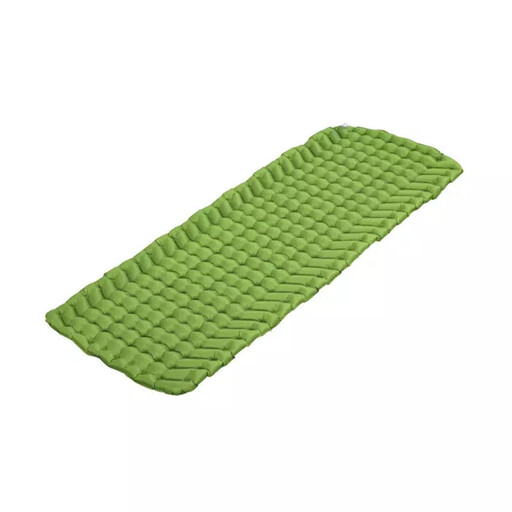
Why we chose it: An excellent compromise for those who want the comfort of an inflatable mattress without sacrificing lightness. Perfect for summer hikes where every gram counts.
It avoids pitfall #1, that of thickness without structure. Its CrossWing design, with its angled air chambers, provides much better stability and prevents you from rolling off the sides. Its R-Value of 1.3 is clearly indicated for use in mild weather.
Lightweight and compact. At only 686g on the scale and with an ultra-compact packed size, it frees up precious space in your backpack. The flat valve allows for easy inflation and precise pressure adjustment.
Explore our full selection of products that meet our performance and safety criteria.
The longevity of your mattress will depend on its type and, most importantly, how you care for it. A foam ground pad is extremely durable and can last for many years, as it is immune to punctures. An inflatable mattress, even a high-quality one, is more fragile. Its lifespan will depend on the frequency of use and the care taken to avoid punctures. On average, with regular use and proper maintenance, a quality inflatable model can last between 3 and 7 years.
Regardless of the model, cleaning is simple: use a damp cloth and mild soap. Never use solvents or hard brushes. The most important thing is to ensure the mattress is completely dry before storing it to prevent mould and mildew. For a foam mattress, roll or fold it without compressing it excessively. For an inflatable model, fold it carefully and store it in its stuff sack, away from heat and direct sunlight.
No, and this is a stubborn myth. Comfort depends on three factors: support, insulation, and cushioning. A very soft 10 cm mattress with no internal structure can be less comfortable than a well-designed 6 cm mattress that supports your body evenly. Likewise, a thick but uninsulated mattress will be freezing on a cool night. It's better to choose a mattress with a proven support structure and an R-Value appropriate for your adventures.