
Livraison le jour même ou le lendemain

Qualité garantie

Débloquez vos offres de bienvenue: Livraison GRATUITE | Jusqu'à -80 % | 30 jours d'essai gratuits à JoyPlus
Téléchargez l'application
A good night's sleep is the key to any successful adventure, whether you're deep in the wilderness or hosting last-minute guests. Yet, choosing a camping mattress can quickly become overwhelming. Between marketing jargon and obscure technical specs, the risk of ending up with a product that doesn't fit your needs is very real. To ensure your nights don't turn into a nightmare, here are the most common pitfalls to avoid.
First mistake: thinking thickness equals comfort. A very thick but poorly designed mattress will deform like an unstable hammock, with guaranteed back pain in the morning. Second pitfall: underestimating insulation. An air mattress might seem cosy, but without an effective barrier against the cold rising from the ground, your nights will be freezing, even in summer. Finally, beware of low-quality valves and inflation systems: they turn setup into an ordeal and are a promise of waking up on a flat mattress.
To see more clearly and make the right choice, focus on a few objective technical criteria. These indicators are your best compass for distinguishing a high-performance product from mere marketing hype.
A mattress's ability to insulate you from the cold is measured by its R-Value. The higher this rating, the more effective the insulating mattress is. This is a non-negotiable criterion as soon as the nights get cooler.
Ignoring this value is a surefire way to lose your body heat through contact with the ground (known as thermal conduction) and spend a shivering night.
The secret to good support lies in the mattress's internal structure. Where a simple air bed without reinforcements will sag in the middle, more modern technologies guarantee far superior stability and comfort:
Your type of activity will dictate the best compromise between comfort and portability.
Because every camper is unique, here is a selection of models that meet specific needs, all evaluated according to the performance and reliability criteria we've just detailed.
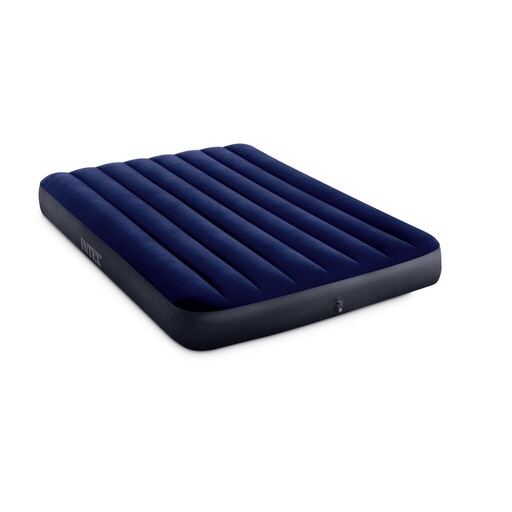
Why we chose it: Ideal as a guest bed for two or for car camping where comfort is a priority. Its 25 cm height makes it as easy to sit on or get up from as a real bed, and its generous dimensions are a real bonus.
The internal Fiber-Tech construction ensures a firm and stable sleeping surface, counteracting the "hammock effect" and sagging typical of entry-level air mattresses.
Its reinforced structure supports up to 272 kg, and its 2-in-1 valve allows for rapid inflation and deflation with an external pump.
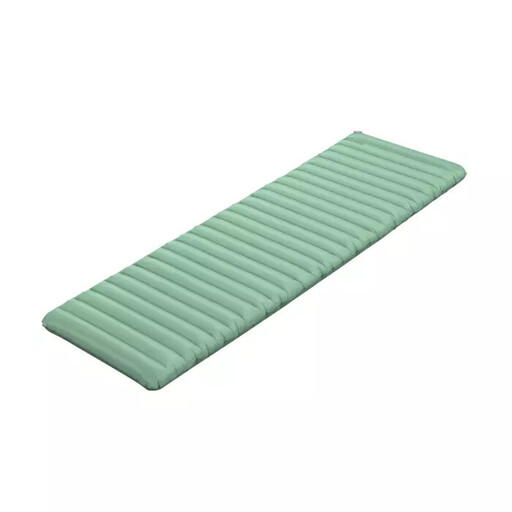
Why we chose it: Designed for trekking and hiking, this mattress combines light weight (798g), a compact size, and high-performance insulation for cool nights.
With an R-Value of 2.7 and THERMOLITE insulation, it effectively combats heat loss to the ground—a common pitfall with ultralight hiking mattresses.
The internal I-Beam structure ensures good stability, while the included compression sack also serves as a pump sack for quick inflation on the trail.
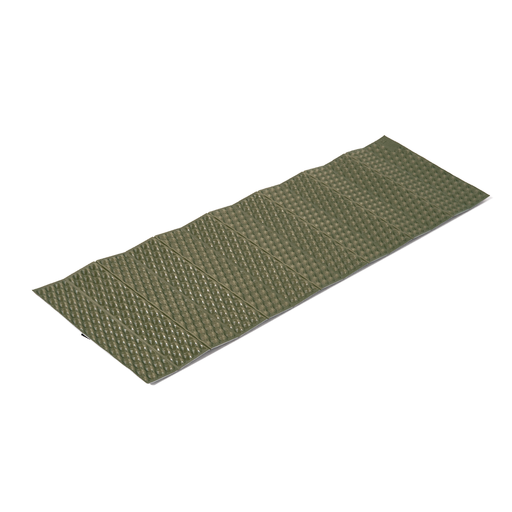
Why we chose it: For those who prioritise durability and absolute simplicity. This foam sleeping pad is puncture-proof, lightweight, and ready to use in seconds.
There's no risk of punctures or a leaky valve here. Its closed-cell XPE foam design also makes it impervious to moisture.
The dimpled "egg crate" structure traps air to create an insulating layer, offering an R-Value of 2.6, which is very high-performance for a foam pad of this weight (750g).
We have curated a complete selection of products that meet our demanding selection criteria and current safety standards.
To put it simply: a camping mattress, which is often inflatable, focuses on comfort and thickness, making it perfect for "static" camping or as a guest bed. A sleeping pad, on the other hand, is the champion of durability and light weight. Puncture-proof and ultralight, it's the ally of hikers and backpackers for whom every gram counts.
Before setting it up, clear the area of any rocks and branches. Never over-inflate it, especially in the sun (heat increases air pressure). For cleaning, a damp cloth and mild soap are sufficient. Finally, make sure it is completely dry before storing it in a cool place, away from any sharp objects.
The R-Value is the rating that measures a mattress's thermal resistance—its ability to block the cold rising from the ground. The higher this value, the more effectively the mattress insulates you and retains your body heat. It is an essential criterion for your comfort, but also for your safety, during cool nights outdoors.