Joybuy Insights

Camping Mattress Guide: How to Choose the Right One

A successful outdoor adventure starts with a good night's sleep. Yet, choosing the right camping mattress can often feel like a daunting task, especially when navigating a sea of misleading marketing claims. As the head of product selection at Joybuy, my mission is to help you make sense of it all. Together, let's break down the common pitfalls to avoid and the key criteria that truly matter for finding the perfect mattress—without wasting your money.

The 3 Pitfalls to Avoid When Buying a Camping Mattress

The market is flooded with tempting promises that often hide deal-breaking flaws, which only become apparent with use. Don't fall into the trap.

  1. The Illusion of Ultralight Without Insulation: A 400-gram hiking mattress? It's tempting. But this feather-light weight often comes at the cost of virtually non-existent insulation. Without an effective thermal barrier, the cold ground will seep through during the night, turning your trip into an endurance test, even with the world's best sleeping bag.
  2. The "Instant Inflation" Promise: Integrated pump systems, especially foot pumps, seem convenient on paper. In the field, however, some underperforming models will force you into an unexpected cardio session just to achieve proper firmness. Worse, low-quality valves can lead to a gradual loss of air overnight, leaving you to wake up on a half-deflated inflatable camping mattress.
  3. Confusing Thickness with Comfort: Don't be fooled by appearances: thicker doesn't always mean more comfortable. A very thick mattress without a supportive internal structure (like baffles or fibres) will sag under your weight, creating a "hammock" effect that is both uncomfortable and bad for your back.

Technical Criteria to Check Before You Buy

To invest wisely, focus on objective data rather than marketing slogans. Here are the three key indicators to scrutinize.

1. Thermal Insulation: The R-Value

The R-Value is the universal measurement of a mattress's thermal resistance. The higher this number, the more effectively the mattress will insulate you from the cold ground.

  • R-Value of 1 to 2: Ideal for summer camping on mild nights, or as an inflatable guest bed at home.
  • R-Value of 2 to 4: The versatile choice for 3-season camping (spring, summer, autumn). This is the benchmark for a good bivouac or hiking mattress.
  • R-Value above 4: Essential for winter camping, at high altitudes, or on frozen ground where temperatures can drop well below zero.

A simple foam camping mat has its own R-Value, whereas for an inflatable mattress, everything depends on its internal design and the presence (or absence) of insulation.

2. Mattress Type: Foam, Self-Inflating, or Inflatable?

Each technology meets a specific need, with its own strengths and weaknesses.

  • Foam Pads: The classic closed-cell foam sleeping pad, often known by brand names like "Karimat".
    • Pros: Puncture-proof (literally!), ultra-durable, lightweight, and budget-friendly.
    • Cons: Spartan comfort and bulkier when rolled up.
  • Self-Inflating Mattresses: A clever hybrid that combines open-cell foam with an airtight shell.
    • Pros: The best compromise between comfort, insulation, and ease of use. As the name suggests, a self-inflating mattress begins to fill with air on its own as soon as you open the valve.
    • Cons: Heavier and bulkier than a standard air mattress, and still vulnerable to punctures.
  • Inflatable Mattresses (Air Beds): The classic choice for family camping and guest beds.
    • Pros: Supreme comfort, ultra-compact when folded, and available in 1-person camping mattress or 2-person camping mattress sizes.
    • Cons: Insulation is often close to zero (very low R-Value), risk of punctures, and can be noisy with every movement (the infamous "bag of crisps" sound!).

3. Weight and Packed Size

The weight and packed size of the mattress are two non-negotiable criteria, especially for hiking or bivouacking, where every gram counts. A 500g mattress is perfect for a trek, while a 3kg model is suitable for car camping where comfort is the priority. Our advice: always check the weight and dimensions of the mattress when it's folded in its stuff sack. This is the volume that will matter in your backpack or car boot.

Our Camping Mattress Picks

To help you visualize how these criteria apply, here are a few options tailored to different user profiles.
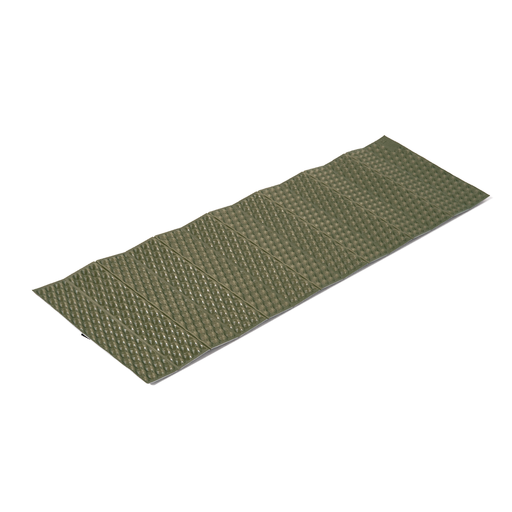
PROFILE: THE CASUAL HIKER
Mobi Garden, Egg Crate Foam Sleeping Pad

Mobi Garden, Egg Crate Foam Sleeping Pad

Why we chose it: Ideal for beginners or for adventurers who demand foolproof reliability. At 750g, it's perfectly manageable for multi-day hikes, and its foam design protects you from the dreaded puncture.

How it avoids the pitfalls

This pad completely sidesteps any issues with leaks or inflation. Its R-Value of 2.6 ensures proper insulation for 3-season use, whereas many entry-level inflatable mattresses would leave you feeling the cold.

Key advantage

Its bombproof durability and two-second deployment. Zero risk of waking up on the ground in the middle of the night.
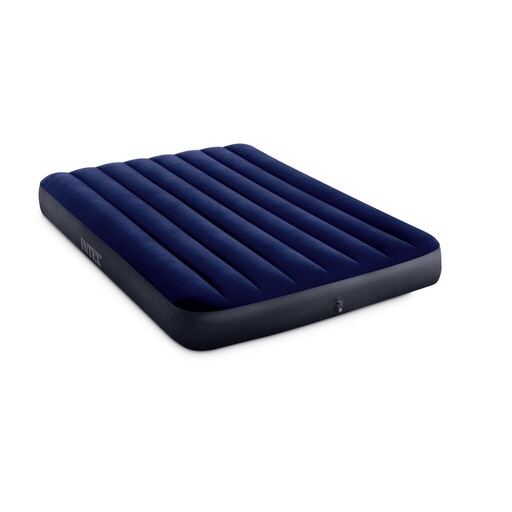
PROFILE: THE COMFORT-SEEKING CAMPER
INTEX Redcliffs Inflatable Camping Mattress 191x137x25cm

INTEX Redcliffs Inflatable Camping Mattress 191x137x25cm

Why we chose it: The perfect solution for car camping, festivals, or as a comfortable guest bed for two. Its 25 cm height and generous width provide a level of comfort worthy of a real bed.

How it avoids the pitfalls

It avoids the "false comfort" trap thanks to its internal Fiber-Tech structure. These thousands of polyester fibres ensure even weight distribution and a much more stable surface, preventing the infamous "hammock" effect found in low-end air mattresses.

Key advantage

Its 25 cm height, which makes getting in and out of bed effortless. You sleep truly elevated, far from the dampness and bumps of the ground.
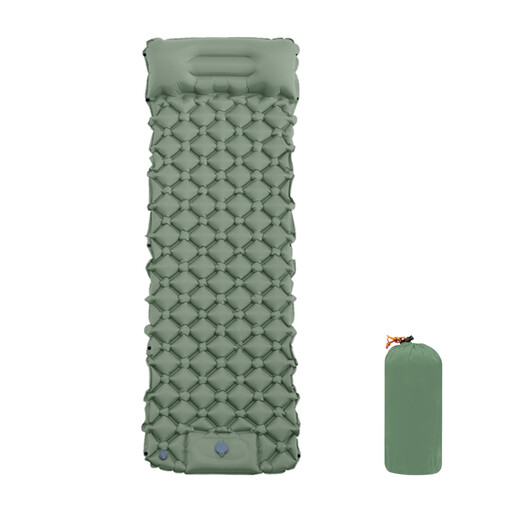
PROFILE: THE MODERN TREKKER
VXOYO Ultralight Camping Mattress with Foot Pump

VXOYO Ultralight Camping Mattress with Foot Pump

Why we chose it: Designed for those who count every gram but refuse to sacrifice their sleep. Weighing just 690g with a packed size of 26x10 cm, it's easily forgotten at the bottom of your backpack.

How it avoids the pitfalls

It avoids the spartan ultralight trap by offering a generous 15 cm thickness and a baffled structure. Its integrated foot pump is the smart answer to "endless inflation": no more getting out of breath or carrying an external pump.

Key advantage

Its excellent comfort-to-weight ratio. The 15 cm thickness literally smooths out uneven ground, a rare feat for such a lightweight mattress.

Need More Options?

Discover our full selection of products that meet our quality charter and current standards.

Frequently Asked Questions (FAQ)

What is the lifespan of a camping mattress?

It all depends on the type of mattress and, most importantly, how you care for it.

  • Foam Pads: Virtually indestructible. They can last for decades. Their only weakness is being stored compressed for too long, which can permanently alter their shape.
  • Inflatable and Self-Inflating Mattresses: Their longevity depends on the quality of the fabric and seams. The secret to making them last: always clean them after a trip, ensure they are completely dry before folding, and store them in a dry place, away from sharp objects and extreme temperature fluctuations.

Does a self-inflating mattress really inflate all by itself?

Yes... and no. When you open the valve, the foam inside expands and draws in air, doing about 80% of the work. However, to achieve ideal firmness, you will almost always need to top it off with a few breaths (either by mouth or with a pump sack). The term "self-inflating" therefore mainly describes the start of the process.

How do I repair a leak in an inflatable mattress?

Most good inflatable mattresses include a repair kit. If yours doesn't have one, buy one in advance—it's a small investment that can save a night's sleep.

  1. Find the leak: Fully inflate the mattress. The best way is to submerge it in water (a bathtub, a lake...) and look for small bubbles. Alternatively, a sponge with soapy water will do the trick: bubbles will form at the site of the leak.
  2. Prepare the surface: Mark the spot with a pen, completely deflate the mattress, then thoroughly clean and dry the area to be repaired.
  3. Apply the patch: Follow the instructions in your repair kit. Generally, you'll apply the adhesive to the patch or the mattress, then press the patch firmly over the hole for a few moments.
  4. Wait: Strictly follow the drying time indicated in the instructions before attempting to reinflate your mattress.