
Livraison le jour même ou le lendemain

Qualité garantie

Débloquez vos offres de bienvenue: Livraison GRATUITE | Jusqu'à -80 % | 30 jours d'essai gratuits à JoyPlus
Téléchargez l'application
Choosing the right camping gear can quickly become a headache. Between marketing promises and endless spec sheets, it's easy to end up with unsuitable equipment that ruins an outdoor trip. As a product specialist at Joybuy, my mission is to guide you through this jungle. Let's break down the mistakes to avoid and the criteria that really matter to make the right choice.
Before you pull out your credit card, it's crucial to know the classic marketing traps that lead straight to buyer's remorse.
To avoid these disappointments, you need to read between the lines of the spec sheets. They are the true arbiters for evaluating a product's quality and its suitability for your needs.
This is THE essential criterion for a camping tent. This rating measures a fabric's resistance to water pressure.
The weight and robustness of your gear depend directly on the materials used.
The best outdoor accessories stand out for their clever design. For a camping crate, here are the life-changing details:
Every camper has their go-to gear. Here is our 2026 selection, designed for different profiles so you can find the equipment that fits your style.
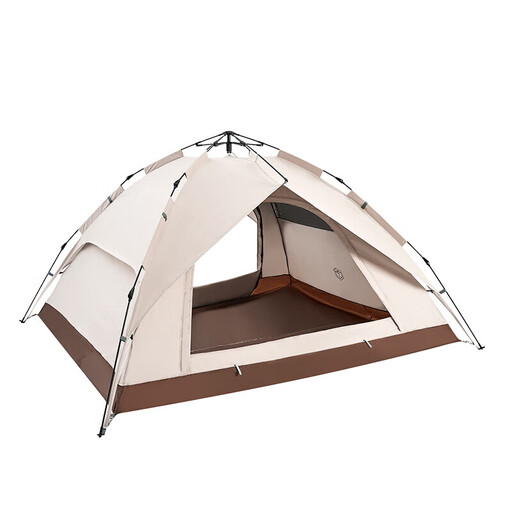
Why we love it: Perfect for family outings or weekend trips with friends where simplicity is key. Its 4-person tent capacity and automatic setup let you pitch camp in a flash to make the most of your adventure.
It shatters the stereotype of the flimsy pop-up tent. Its automatic deployment mechanism is far more reliable than older disc-style systems, and its waterproof rating of PU3000mm ensures you stay dry.
Its double-layer design improves insulation and ventilation. The result: less condensation and much more comfortable nights.
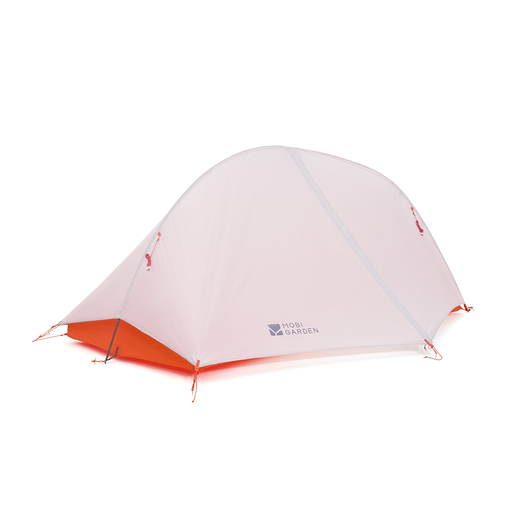
Why we love it: Designed for hiking where every gram counts. This ultralight tent (approx. 1.18 kg) goes unnoticed in a backpack without compromising on protection from the elements.
No compromises here. Forget the false economy of a heavy, bulky pop-up tent. This is all about performance, with technical materials: silicone-treated 20D ripstop nylon and ultralight aluminium alloy poles.
Its feather-light weight and record-breaking pack size (48 × 11 cm when folded) make it a benchmark for multi-day hiking gear.
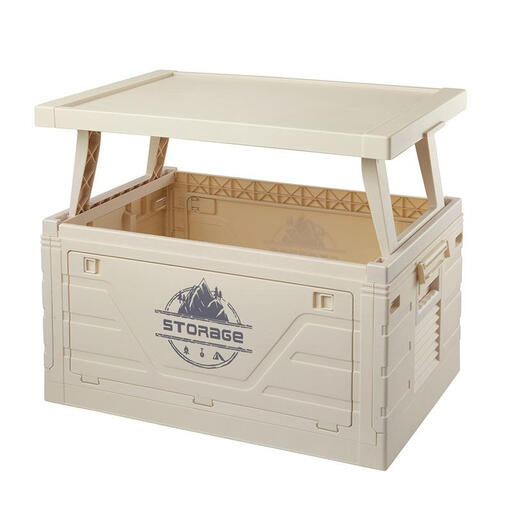
Why we love it: For those who like everything in its place, even in the middle of nature. This sturdy camping crate protects food and gear alike, while optimising your living space.
It tackles an all-too-often overlooked detail: organisation. No more damp bags and general clutter. Its rigid PP (polypropylene) structure and stackable design are the solution for a camp that lasts and stays tidy.
Its versatility. It's an ultra-practical storage box with its multiple access points, but its lid also transforms into a very stable side table.
Discover our full selection of camping gear, tested and approved by our experts using these same quality criteria.
For summer use in most regions, a PU2000mm rating for the flysheet and PU3000mm for the groundsheet is sufficient to stay dry during a typical downpour. However, if you often camp in the mountains, coastal areas, or outside of peak season where rain can be more intense and persistent, a higher rating (PU3000mm and above) will provide much better peace of mind.
A tent's sworn enemy is moisture! The golden rule: always make sure it is completely dry before packing it away in its bag. For cleaning, a soft cloth and plain water are sufficient (definitely no detergents!). Store it in a dry, cool place away from direct sunlight. A little tip: avoid folding it along the same creases every time to prevent marking and weakening the fabric over the long term.
Be careful, the capacity advertised by manufacturers (e.g., "4-person") is often calculated down to the last centimetre, without accounting for luggage. For a bit of elbow room, we generally recommend going one size up from the number of campers. For example, for a couple, a 3-person tent will be much more comfortable than a 2-person one, especially with bags inside.