
Livraison le jour même ou le lendemain

Qualité garantie

Débloquez vos offres de bienvenue: Livraison GRATUITE | Jusqu'à -80 % | 30 jours d'essai gratuits à JoyPlus
Téléchargez l'application
Outdoor comfort is no longer a luxury, but finding the right camping cushion remains a real headache. Between marketing promises of absolute comfort and sometimes obscure technical jargon, the risk of ending up with an unsuitable, noisy, or impossible-to-pack product is very real. Our guide is here to decipher the market, sidestep the common traps, and help you choose the perfect companion for your bivouac nights, multi-day treks, or simple breaks in nature.
Before you even start comparing models, let's review the hidden flaws that too often turn a good deal into a regret.
To avoid these disappointments, here are the essential points to check before you buy.
Each type has its pros and cons. The key is to know what you're prioritising.
For a hiking cushion, the rule is simple: every gram counts. Ultralight models (under the 100g mark) are almost exclusively foam or simple inflatable cushions. For car camping or outings where weight isn't a primary concern, a more substantial self-inflating model (250-400g) will provide unparalleled comfort. Always check the dimensions once the product is packed in its stuff sack to avoid unpleasant surprises when packing your bag.
The outer fabric is a point you should never overlook. A high-density polyester (like 210T) ensures good resistance to abrasion and moisture. A slightly textured or "peach-skin" finish will reduce noise and prevent your head from sliding. Finally, never underestimate the valve: a one-way model is a game-changer for both inflation and deflation, while ensuring a rock-solid seal.
Here are a few options that meet specific needs, keeping our selection criteria in mind.
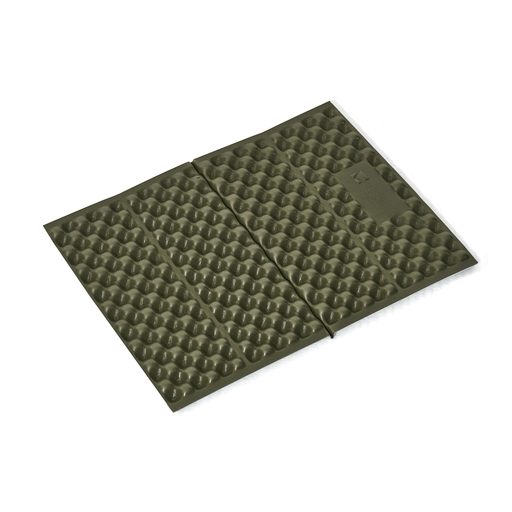
Why we chose it : For the hiker who weighs every item in their pack, this XPE foam cushion is a no-brainer. It's designed for quick breaks, providing insulation from a cold or damp ground without ever weighing down your backpack.
Its ultra-simple foam design eliminates problems with inflation, punctures, or packing. It only promises the essentials and delivers them well: an insulating seat, not a luxury pillow.
A feather-light weight of just 45g and effective thermal insulation thanks to its egg-crate structure. Unfolds and refolds in a second.
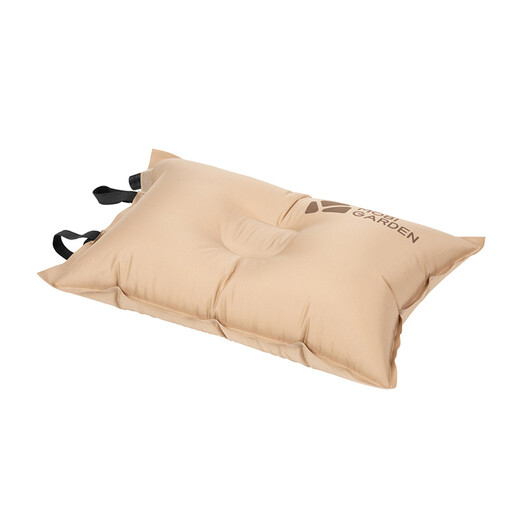
Why we chose it : This is the Swiss Army knife of comfort. It serves as a pillow for the night, lumbar support on a folding chair, or a travel cushion. Its weight remains manageable (around 260g) given its great versatility.
Its one-way valve makes inflation and deflation much easier, solving the tedious packing problem. The responsive internal foam effectively starts the inflation process and limits the number of breaths needed.
Customisable comfort thanks to the top-up inflation and a water-repellent fabric that's easy to clean after a night under the stars.
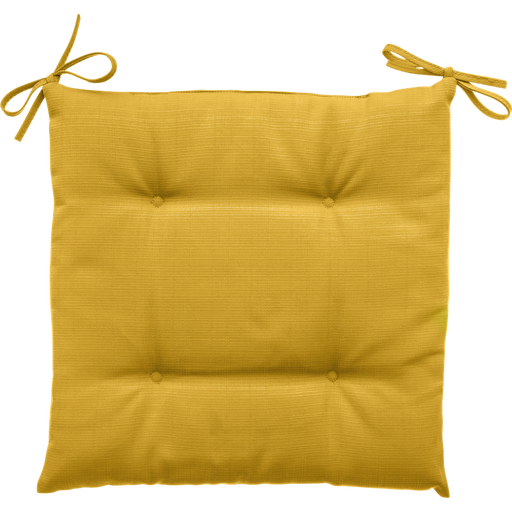
Why we chose it : The ideal solution for car camping, van life, the balcony, or picnics where weight and compactness are no longer an issue. Here, only comfort and style matter.
This product doesn't pretend to be something it's not. It embraces its role: to provide near-domestic comfort for stationary outdoor activities, far from the "false compactness" trap of technical models.
Home-like seating comfort and a practical four-pack format, perfect for outfitting several camping chairs or creating an impromptu lounge area.
Explore our full selection of products that meet our selection criteria and current safety standards.
Absolutely no washing machines! For stains, a simple damp cloth with a little mild soap is sufficient. Let it air dry completely before storing it to prevent any mould, a crucial point for self-inflating models. Finally, to preserve the foam, ideally store it uncompressed with the valve open between adventures.
For the most part, yes. When you open the valve, the memory foam expands and draws in air, doing about 70-80% of the work. You will almost always need to add a few breaths to reach your ideal firmness. The term "self-inflating" therefore mainly refers to this helpful head start.
It's all a matter of compromise. For ultralight (or UL, for those in the know) hiking, the goal is to stay under 100g with foam or inflatable models. For a multi-day trek where comfort is a priority, a weight between 150g and 300g represents an excellent balance. Beyond that, you're moving into products more suited for car camping, where every gram is no longer the enemy.