
Livraison le jour même ou le lendemain

Qualité garantie

Débloquez vos offres de bienvenue: Livraison GRATUITE | Jusqu'à -80 % | 30 jours d'essai gratuits à JoyPlus
Téléchargez l'application
Whether for a weekend getaway, a family picnic, or a long holiday road trip, a camping cooler is the essential companion for keeping food and drinks chilled. But between exaggerated marketing claims and confusing spec sheets, it's easy to make the wrong choice. Our mission? To help you cut through the noise and identify the criteria that truly make a difference.
Before you start, watch out for these common pitfalls that can turn your purchase into a disappointment:
To make an informed decision, focus on the few features that genuinely determine the performance and lifespan of a portable insulated cooler.
A cooler's effectiveness rests entirely on the quality of its insulation. The most common and highest-performing technology for hard-sided models is polyurethane (PU) foam injected between the walls. It offers far superior density and thermal insulation capacity compared to expanded polystyrene (EPS), which is found in entry-level models. A thick, uniform layer of PU foam is the best guarantee of long-lasting cold retention.
The capacity, expressed in litres, should match your needs. There's no point in weighing yourself down with a 50-litre model for a picnic for two.
Remember that a cooler works best when it's fully packed. A large, half-empty cooler will warm up faster.
Proper food safety while camping depends on safe materials and an airtight design.
Rather than an endless list, we've matched products to typical user profiles to help you find the right solution at a glance.
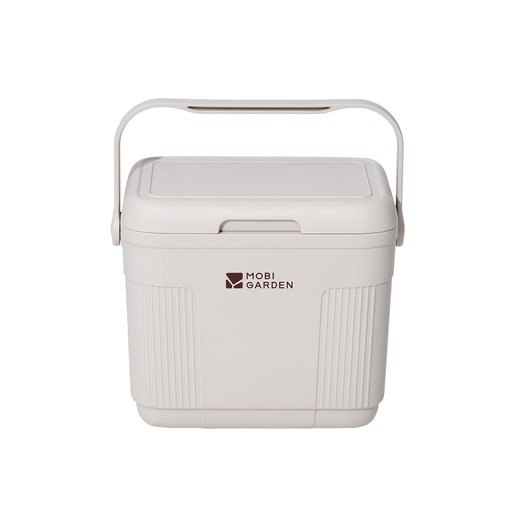
Why we picked it: Its 22-litre capacity is ideal for a family of 4 to 6 over a weekend. It strikes the perfect balance between ample storage space and a format that remains easy to carry.
This model relies on high-density PU foam insulation and reinforced corners, dispelling any doubts about performance and durability. The single-piece rotating handle is designed to withstand a full load without failing.
The food-grade PP inner liner and thick silicone gasket ensure hygienic storage and a reliable seal—two non-negotiable points for food safety.
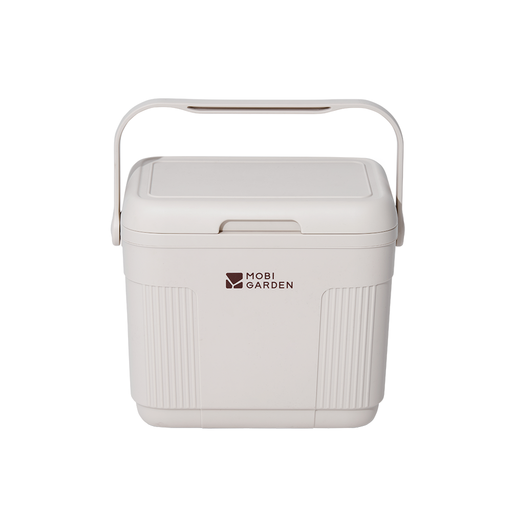
Why we picked it: For a picnic cooler, portability is king. At 10 litres, this model is lightweight and compact, easy to carry by hand for a day at the beach, in the woods, or for an outdoor lunch.
Unlike many small coolers that sacrifice quality for a lower price, this one retains PU foam insulation and a food-grade PP shell. The result: serious performance in a compact form factor.
Its silicone gasket and a dedicated slot for an ice pack in the lid optimise cold retention, a feature often missing on models of this size.
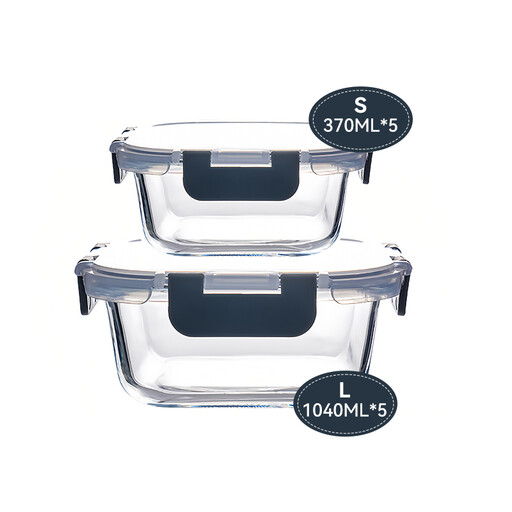
Why we picked it: A good cooler is only half the battle. Internal organisation is essential to prevent cross-contamination and stop everything from sitting in melted ice water. This set of airtight containers is the perfect companion.
It solves the often-overlooked problem of mess and food waste inside the cooler. No more leaky open packages or soggy food.
Borosilicate glass is non-porous, doesn't retain odours, and can withstand temperature changes. The locking lids guarantee a perfect seal for safe storage.
For your getaways and your daily routine, discover our selection of smart products, all chosen for their practicality and quality.
Several tricks can boost its performance. Pre-chill your cooler by placing ice packs inside a few hours before filling it. Freeze or refrigerate food and drinks beforehand. Fill any empty space with extra ice packs or even towels to limit air circulation. Finally, place the cooler in the shade and open it as infrequently as possible.
Yes, and the difference is significant. Hard coolers, especially those with PU foam insulation, provide a much more effective and durable thermal barrier than the thin layers of a soft bag. Bags are perfect for carrying a meal for a few hours; a hard cooler is designed to keep items cold for one or more days.
This is strongly discouraged for most consumer-grade coolers. The sublimation of dry ice (its transition from a solid to a gas) releases a large amount of carbon dioxide. In an airtight container not designed for this purpose, pressure can build up and cause the cooler to rupture or even explode. Always follow the manufacturer's recommendations; the models featured here, for example, are not designed for this use.