
Livraison le jour même ou le lendemain

Qualité garantie

Débloquez vos offres de bienvenue: Livraison GRATUITE | Jusqu'à -80 % | 30 jours d'essai gratuits à JoyPlus
Téléchargez l'application
Preparing a hot meal under the stars is one of the greatest joys of camping. Yet, this experience can quickly turn into a nightmare with the wrong equipment. A backpack weighed down by unnecessary gear, food sticking to the bottom of a low-quality pan, or an incomplete cook set are all-too-common frustrations for campers. Before you invest, it's crucial to read between the lines of product descriptions and focus on what really matters.
Choosing the right camping cookware isn't just about finding the lightest option. It's a question of balancing weight, durability, capacity, and functionality. Here’s a rundown of the classic mistakes to avoid:
To make the right choice, a few technical details make all the difference once you're in the field.
The choice of material directly impacts the weight of your pack, how your food cooks, and the lifespan of your equipment.
A good hiking cook set should nest together perfectly, like a set of Russian dolls. Check that all elements (pots, pans, lids, bowls) fit inside one another to form a compact unit. Foldable or removable handles have become the norm, and they are the bare minimum. Also, think about modularity: for a short trip, you should be able to take only the pot you need without being burdened by the entire set.
Your equipment must be suitable for your camping stove. A pot designed for a gas stove may not be stable on a wood-burning stove. If you plan to cook over a campfire, make sure your gear, especially its handles (often made of plastic or silicone), can withstand the intense heat of a direct flame. Some bivouac cook kit models include a bail handle, a small detail that is a game-changer for cooking over a wood fire.
Every camper needs the right gear. To guide you, we've selected a few standout products, each tailored to a specific user profile.
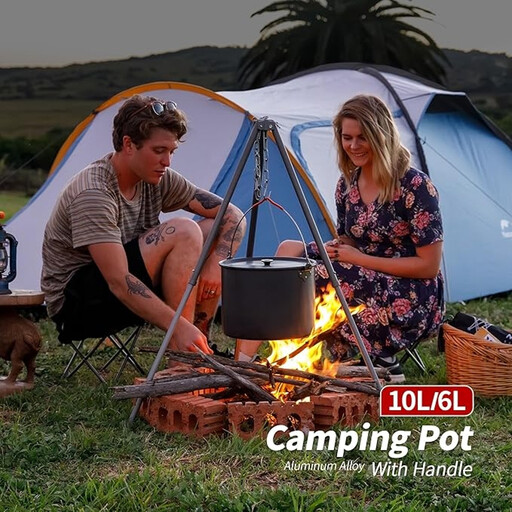
The verdict: Perfect for large groups (up to 6 people). Its generous capacity is a real advantage for preparing soups and stews all at once, or simply boiling enough water for everyone. No more logistical headaches with group meals.
No more ridiculously small pots to feed a tribe. Here, the 10-litre capacity is clearly stated and designed for group use. No unpleasant surprises upon arrival.
Its aluminium alloy construction makes it surprisingly lightweight (1.1 kg for 10L!). Its bail handle is perfect for use over a campfire with a tripod.
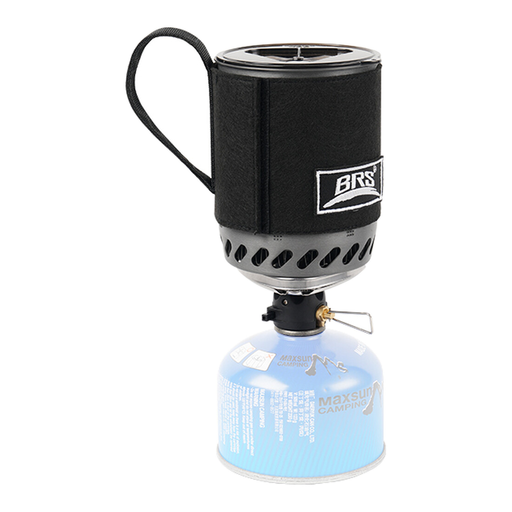
The verdict: Designed for the solo adventurer who counts every gram. This system merges the stove and pot into an ultra-compact unit. The perfect optimisation for trekking and ultralight bivouacking.
It sidesteps the trap of an advertised weight "excluding accessories." Here, the listed 360g includes everything: burner, 0.5L pot, lid, and carry case. The weight on the spec sheet is the weight in your pack.
A true all-in-one system with an integrated piezo ignition and a fine-tuned control valve to master the flame with precision, even when the wind picks up.
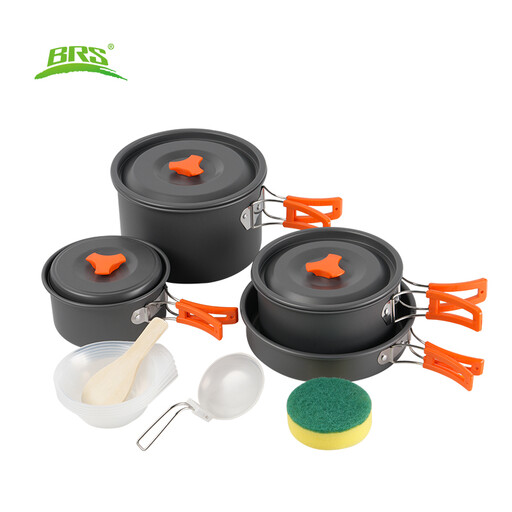
The verdict: The Swiss Army knife of cook sets for small groups (2 to 5 people). Comprehensive enough to fry, boil, or simmer, it strikes the right balance between capacity, weight, and versatility. Ideal for varying your culinary pleasures in the great outdoors.
It doesn't fall for the low-quality material trap. Its hard-anodised aluminium construction and non-stick coating are a guarantee of durability and easy cleaning. Everything nests together perfectly.
The killer detail: the base of the pots incorporates a heat exchanger. The result: water boils faster, and you save precious fuel from your gas canister.
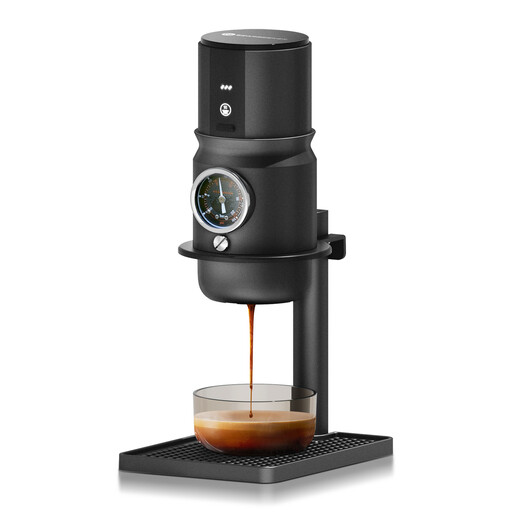
The verdict: For anyone who considers "instant coffee" an insult. This portable machine brews a genuine espresso, complete with real crema, that is light years away from the usual watery camp coffee.
This isn't a multi-function gadget that does everything poorly. It's a hyper-specialised device that does one thing, but does it perfectly: a proper espresso. A pro tool, not a toy.
It features a proper 58mm portafilter (the professional standard!) and a pressure gauge for precise extraction control. Its integrated battery provides up to 50 shots before needing a recharge.
Explore our full selection of gear that meets our demanding standards for quality and safety.
To limit your impact on nature, bring a small bottle of biodegradable soap. Use a minimal amount of hot water to loosen food residue, scrub with a sponge, then dispose of the dirty water at least 60m (200 feet) away from any water source (lake, river). Never wash your dishes directly in a stream. For stubborn leftovers, a little sand or dirt makes an excellent natural abrasive before rinsing.
There's no single answer, as it all depends on your type of trip and your tolerance for weight. For a solo backpacker on a self-supported trip, a complete system (stove + pot) should ideally weigh under 500g. For a group of 2 to 3 people, a set of pots and pans weighing between 700g and 1.2kg represents an excellent compromise between weight and functionality.
In principle, yes, but caution is required. It is imperative to check that the base of your pot rests stably on the stove's support arms. A pot that is too wide or poorly balanced could tip over and cause serious burns. Integrated cooking systems, where the pot locks onto the stove, are the safest and most thermally efficient solution. The key takeaway: always test the setup's stability when it's cold before lighting it.