
Same-day & Next-day Delivery

Quality Guaranteed

Unlock Your Welcome Offers: FREE Delivery | Up to 80% OFF | Free 30-day JoyPlus trial
Download the APP
Whipping up a good, hot meal in the great outdoors is one of the simple joys of camping. But without the right equipment, this comforting moment can quickly turn into a nightmare. A good camping cookware kit is much more than just a pot: it's a complete system that must be lightweight, compact, and efficient. All too often, campers—whether beginners or veterans—are tempted by sets that prove disappointing on their very first trip.
Before you make a decision, here are the most common pitfalls to avoid so you don't throw your money away:
This guide is here to help you decode the technical specs that truly make a difference and choose a camping cookware set that is reliable and perfectly suited for your adventures.
To make an informed choice, forget the marketing slogans and focus on the facts. Here are the three technical points to check systematically before any purchase.
The choice of material is crucial: it directly impacts the weight, sturdiness, and heat distribution capabilities of your camping kitchen gear.
When hiking, every gram counts. Compactness isn't an option—it's a requirement. A good camping cookware set should feature a "nesting" design: all components (pots, pan, lids, and sometimes even the gas canister) fit perfectly inside one another to form a single, ultra-compact block that's easy to slide into a backpack.
Always check the kit's packed dimensions and total weight. Don't be dazzled by the number of pieces; instead, ask yourself if every single item will actually be useful. Foldable or removable handles are now essential for maximum space-saving.
Your cook pot never works alone. Its efficiency is directly linked to its pairing with your stove.
Every camper is unique, and their gear should be too. Here are our recommendations, designed for different types of adventurers.
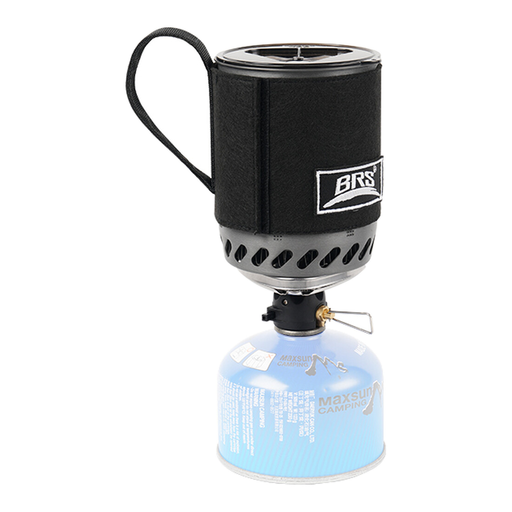
Why it's a great choice: Ideal for solo adventures where every gram counts. This system merges the stove and pot into a single, ultra-compact, and lightweight (360 g) unit, perfect for slipping into an already full backpack.
It shatters the "overstuffed kit" trap by focusing on the essentials. Its all-in-one design ensures no part is superfluous and the entire unit is hyper-optimised for transport.
Integrated system: stove, pot, and lid nest together. Extremely lightweight: a feather-light 360 g. Fast ignition and precise flame control.
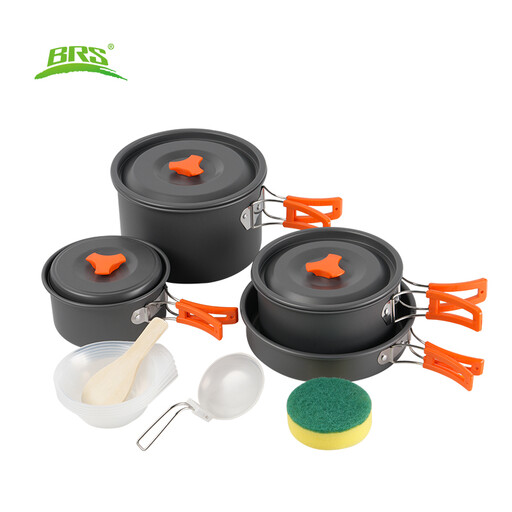
Why it's a great choice: Designed for group trips, this complete set includes multiple pots and a pan for cooking proper meals. Its nesting design allows everything to fit together in an ultra-compact package, despite its generous capacity.
It avoids the dangerous handle trap with folding, heat-insulating silicone grips. The non-stick coating is applied to a hard-anodised aluminium base, ensuring much greater durability.
Heat exchanger: for faster cooking and gas savings. Versatility: allows for frying, simmering, and boiling. Secure handles made of insulating silicone.
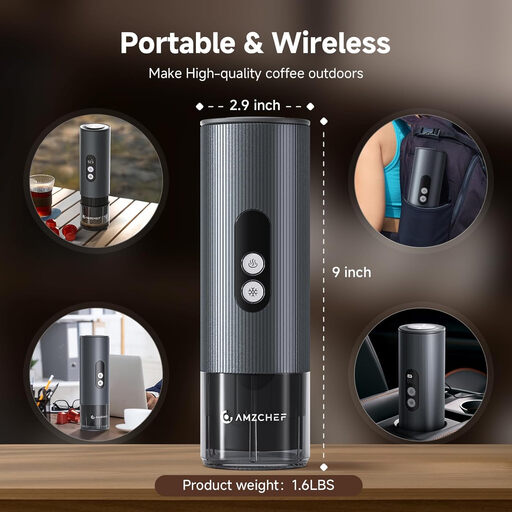
Why it's a great choice: For anyone who refuses to compromise on good coffee, even in the middle of nowhere. This portable coffee maker is electric and reaches 20 bars of pressure to extract a true espresso, all powered by a battery.
This is the antithesis of a useless gadget. This specialised device excels at one mission: making excellent coffee, anywhere. It doesn't pretend to do anything else, but what it does, it does perfectly.
20-bar pressure: for a true espresso with a real *crema*. 9000 mAh battery: heats the water and makes several coffees on a single charge. 2-in-1 versatility: compatible with Nespresso-style capsules and ground coffee.
Discover our full selection of gear that has passed our tests and meets our standards for quality and safety.
The secret is to act quickly and gently. As soon as you're done eating, let the pot cool slightly (never let it get completely cold). Pour in a little water and heat it gently to loosen any food residue. Empty the pot, then wipe it with a non-abrasive sponge or a microfibre cloth. Avoid scouring pads and metal utensils, which are the sworn enemies of non-stick coatings. For stubborn residue, a paste of water and baking soda works wonders.
Yes, without a doubt. Anodised aluminium is perfectly safe for food use. The anodisation process creates an aluminium oxide barrier—an inert and extremely hard layer that completely seals the metal. This protection prevents any aluminium from leaching into food, even when it comes into contact with acidic ingredients (like tomatoes or lemon). It is a reliable and widely proven technology in the world of cookware.
This finned ring welded underneath the pot is a real efficiency booster. It acts like a reverse radiator: it increases the surface area in contact with the flame and captures the heat that would normally be lost out the sides. The main advantage is a dramatic gain in energy efficiency. In practical terms, water boils much faster, so you use less gas or alcohol. This is a decisive advantage on long hikes, where every gram of fuel you carry is precious.