
Livraison le jour même ou le lendemain

Qualité garantie

Débloquez vos offres de bienvenue: Livraison GRATUITE | Jusqu'à -80 % | 30 jours d'essai gratuits à JoyPlus
Téléchargez l'application
A good camping chair can transform a simple outing into a moment of pure relaxation. The problem? The market is saturated with models that promise the world but often prove disappointing in practice. To avoid buyer's remorse, it's crucial to understand the most common pitfalls so you can make an informed choice.
Who hasn't regretted an impulse buy, ending up with a chair that sags, fabric that tears, or comfort so poor that the ground starts to look more inviting? Let's take a closer look at the two classic mistakes to avoid:
To avoid these disappointments, the solution is simple: focus on objective criteria that truly define the quality and suitability of a camping chair.
Rather than relying on marketing slogans, analysing a few technical specifications will help you distinguish a reliable model from a short-lived gadget.
The sturdiness of a camping chair depends on two key elements: its frame and its load capacity.
A comfortable camping chair is an investment in your well-being. The ergonomics and quality of the fabric are therefore paramount.
A folding beach chair or camping chair must be easy to transport. However, portability isn't just about net weight. Check the packed dimensions (often listed as packed size). A compact model will fit much more easily into a car boot or a cupboard. The inclusion of a sturdy carry bag with a strap is also a real bonus.
To put theory into practice, here's how these criteria apply to a few models suited for different user profiles.
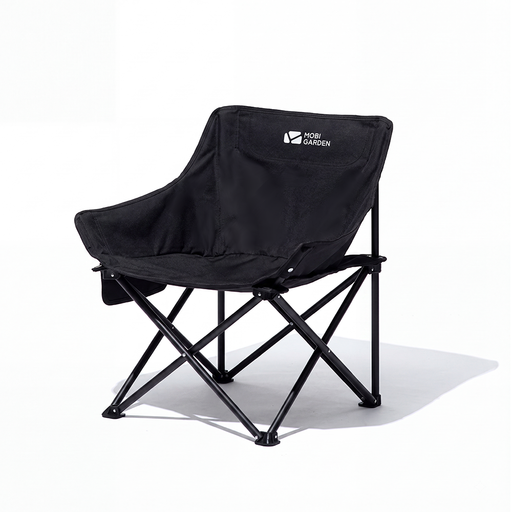
Why it's a great fit: Perfect for picnics, festivals, or as an extra seat on a balcony. Its 2.35 kg weight and compact folded size (70 cm long) make it an ideal and space-saving travel companion.
It sidesteps the "false lightness" trap by combining a manageable weight with a sturdy carbon steel frame and thick Oxford fabric, all guaranteeing a static load capacity of 100 kg.
Its cocoon-like "moon" seat offers surprising comfort for such a compact model, providing excellent lower back support.
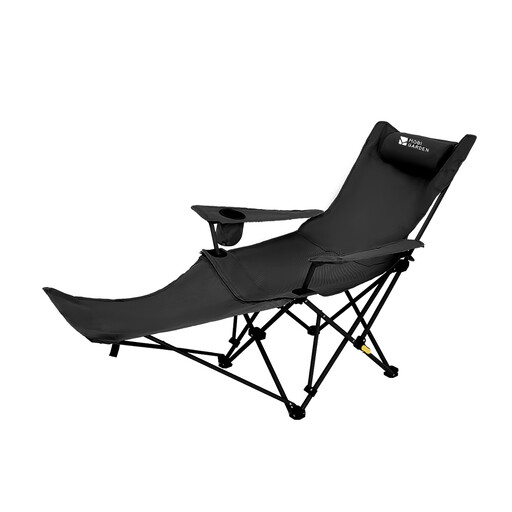
Why it's a great fit: Perfect for long fishing sessions, naps at the campsite, or relaxing in the garden. This model prioritises comfort above all else, with a design that's closer to a lounger.
It counters the "superficial comfort" trap with its multi-position ergonomic design, padded headrest, and footrest. You can go from a seated to a nearly flat position in an instant.
Its chair/lounger versatility is complemented by thoughtful additions like a cup holder and storage pocket. Its static load capacity of 110 kg confirms its excellent durability.
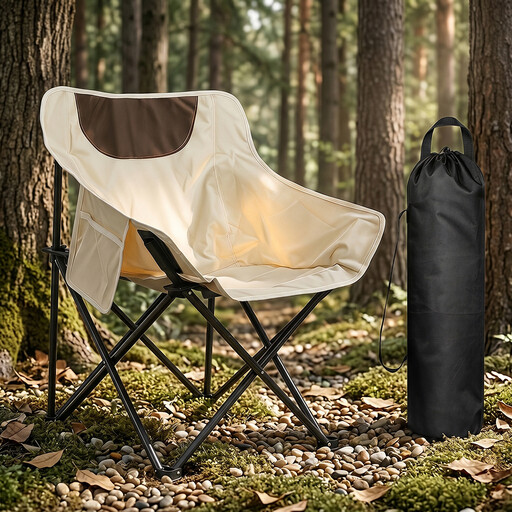
Why it's a great fit: For those seeking the sweet spot: a chair that's easy to transport but doesn't sacrifice back support, suitable for fishing, camping, or outdoor sporting events.
This model focuses on the essentials: a high backrest that offers good support for the back and neck, a feature too often missing from entry-level folding chairs.
Its excellent balance of back support, simple folding mechanism, and portability makes it a formidable all-rounder for multiple activities.
Explore our full selection of products that meet our standards for quality, comfort, and safety.
The lifespan of a folding camping chair depends primarily on the quality of its materials and how well it's maintained. A model with a carbon steel frame and well-cared-for Oxford fabric can last for many years. Avoid leaving it permanently exposed to sun or rain, as UV rays and moisture can degrade the fabric and cause metal parts to rust.
Maintenance is a breeze. Most importantly, do not put it in the washing machine! A simple damp cloth is sufficient for the fabric and frame. For stubborn stains, a little mild soap will do the trick. Just remember to let the chair dry completely after cleaning or a rain shower before storing it in its bag. This is the best way to prevent mould and rust.
Absolutely. For the vast majority of adults, a static load capacity of 100 kg is an excellent indicator of sturdiness and safety. This measurement indicates the maximum weight the chair can support in a stationary position. It means the frame and seams are designed to withstand significant pressure, which translates to better overall durability, even for lighter individuals.