
Same-day & Next-day Delivery

Quality Guaranteed

Unlock Your Welcome Offers: FREE Delivery | Up to 80% OFF | Free 30-day JoyPlus trial
Download the APP
Viewing your ear canal on a smartphone screen may seem easier than using a traditional ear pick. However, not all camera otoscopes for ear cleaning are created equal. Image quality, probe diameter, tips, battery life and app compatibility all have a direct impact on ease of use.
Before buying an ear-cleaning camera, it is also worth understanding the limitations of these devices. They allow you to view and gently remove accessible residue, but they are not a substitute for medical advice in the event of pain, discharge, reduced hearing or a suspected significant blockage.
A high resolution does not, by itself, guarantee a genuinely usable image. In a narrow ear canal, focus, lighting and lens diameter matter just as much as the advertised resolution. An image with very high definition but poor lighting may be less practical than one produced by a camera fitted with several LEDs and offering a stable connection.
IPX5, IP67 and “waterproof” ratings should be examined carefully. They do not necessarily mean that the entire handle can be submerged in water. On many devices, only the removable head or camera section can be rinsed under running water. The main body must be kept away from moisture, in accordance with the manufacturer’s instructions.
An ear-cleaning kit may include a single ear pick, several silicone tips or specialist accessories. Check their diameter, flexibility and whether they can be replaced. Also make sure the device is compatible with iPhone, iPad and Android, and that the app is available in your app store.
A 3.5 mm lens is a common size among the models featured here. A flexible probe may follow the natural shape of the ear canal entrance more easily, but it requires slow and careful handling. A stopper or safety scale provides a useful guide to help limit insertion depth.
A camera-equipped ear pick should never be pushed in deeply. The screen is there to guide your movements, not to authorise intervention in an area that is difficult to see.
The integrated LEDs illuminate the area being viewed. The available models advertise features including 1920 × 1080 p imaging, a 10 MP camera or several adjustable LEDs, depending on the product listing. These specifications can be compared on paper, but the user experience also depends on the stability of the wireless connection and the quality of the app.
On some wireless otoscopes, Wi-Fi or Bluetooth is used solely to connect the device to your phone. It does not necessarily provide internet access. Nevertheless, check the permissions requested by the app before installing it.
For occasional use, an advertised battery life of 40 to 60 minutes may be sufficient. Families or regular users may prefer a 300 mAh battery and an advertised battery life of around 80 minutes. USB-C charging is convenient, particularly if the device is kept in a bathroom or needs to be carried around.
After each use, remove the tip, clean it according to the instructions and dry it completely. Never use an accessory that is cracked, misshapen or difficult to disinfect.
The models below have been assessed based on the specifications stated in their product listings. They do not constitute medical advice and cannot be used to diagnose an ear condition.
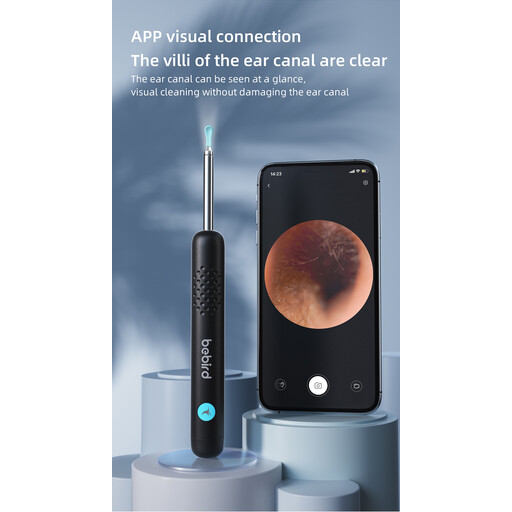
Why this choice suits this profile: Compact and lightweight at 50 g, this model is ideal for anyone discovering connected ear inspection for the first time, with an app for iOS, iPadOS and Android.
The listing mentions a 3.5 mm lens, 1920 × 1080 p imaging and an advertised battery life of around 60 minutes: specific details to check before placing your order.
3 MP camera, three-axis gyroscope, USB-C charging and two ear picks included in the package.
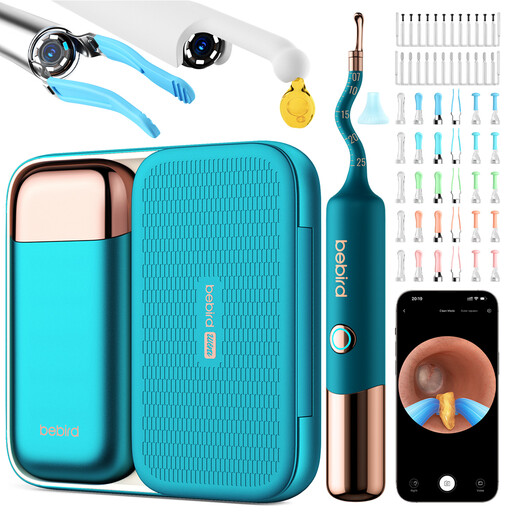
Why this choice suits this profile: Its comprehensive kit is designed for those who want inspection, accessories and storage all in one set.
The kit is not based solely on a high-definition claim: the listing details the accessories, tips and included USB-C cable.
Advertised 300 mAh battery, around 80 minutes of battery life, several tips and a storage case.
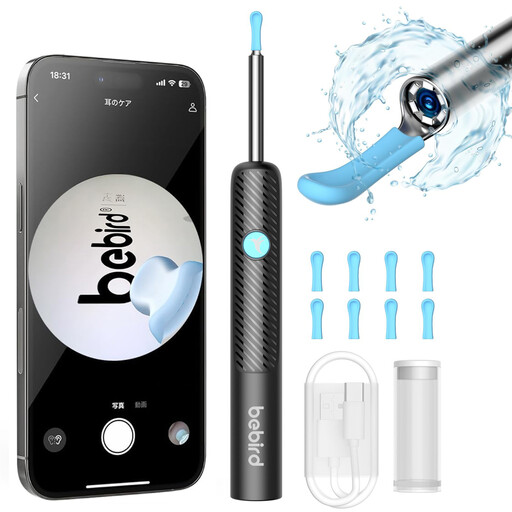
Why this choice suits this profile: Its flexible probe, interchangeable tips and safety stopper make it suitable for regular adult use, always with care.
The listing mentions an integrated scale and protective stopper. These features do not remove the need to follow the instructions or limit insertion depth.
HD image, wireless connection to your phone, several tips and a design advertised as containing at least 50% recycled materials.
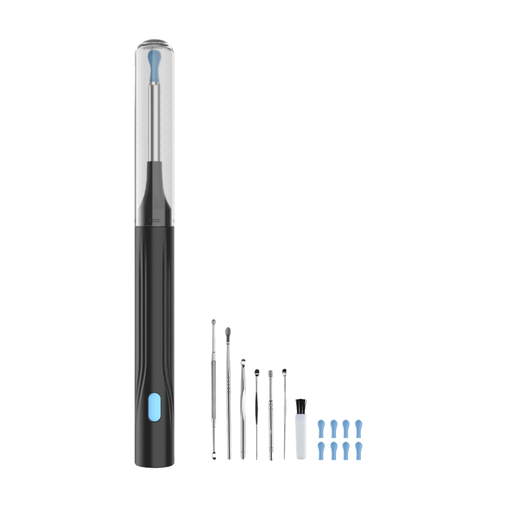
Why this choice suits this profile: Its lightweight design is ideal for users who want to take a rechargeable ear cleaner with them or use it occasionally at home.
The listing clearly distinguishes the washable head from the rest of the device and states that the complete device must not be immersed.
Advertised 10 MP camera, six LEDs, IPX5 rating for the head, six silicone tips and a 130 mAh battery.
Charge the device, install the app specified in the instructions, then enable the Wi-Fi or Bluetooth connection, depending on the model. On iPhone, iPad and Android, check the permissions requested by the app. Test it on an external area before fitting a tip, then follow the manufacturer’s instructions.
This depends on the battery, frequency of use, storage conditions and maintenance. An advertised battery life of 40 to 80 minutes per charge does not indicate the device’s total lifespan. To help preserve the battery, avoid repeated complete discharges, do not store the otoscope while damp and use the supplied cable.
Not necessarily. Children require direct supervision, and some models are not recommended if the user is not confident handling them. If you have symptoms or suspect an earwax blockage, ask a doctor or pharmacist for advice before attempting any cleaning.