
Livraison le jour même ou le lendemain

Qualité garantie

Débloquez vos offres de bienvenue: Livraison GRATUITE | Jusqu'à -80 % | 30 jours d'essai gratuits à JoyPlus
Téléchargez l'application
The idea of being able to peek into your own ear canal or perform a precise ear cleaning at home is tempting. This is the promise of the camera otoscope, also known as a smart ear cleaner. The problem: the market is flooded with models whose appealing features often turn out to be costly disappointments, or even dangerous gadgets.
As a Product Recommendation Manager at Joybuy, my mission is to help you see things more clearly. Let's cut through the marketing jargon and focus on what's essential: here are the pitfalls to avoid and the criteria that truly matter to make the right choice.
To avoid these disappointments, it's crucial to check a few technical specifications that make all the difference.
A clear image is fundamental. Verify that the product guarantees a true 1080p (1920x1080) image resolution. But numbers aren't everything. Video smoothness and lighting quality are just as crucial. A good smartphone otoscope should feature at least 6 LEDs to illuminate the ear canal uniformly without creating blinding glare. The quality of the lens is also decisive for colour accuracy and detail precision.
This is the non-negotiable point. Opt for an ear cleaning kit with a camera that includes tips made of soft, food-grade or medical-grade silicone. These materials, which are much gentler on the skin, drastically reduce the risk of irritation. Some models, like those in the Bebird range, go a step further with secure locking systems that prevent the tip from accidentally detaching in the ear.
A small lens diameter, ideally around 3.5 mm, offers better insertion comfort and makes the device more versatile, especially for the narrower ear canals of children or for examining the ears of pets. Also, check the app's compatibility with your operating system (iOS and Android).
Rather than an endless list, here is a selection of models that check all the boxes for safety and performance, each tailored to a specific user profile.
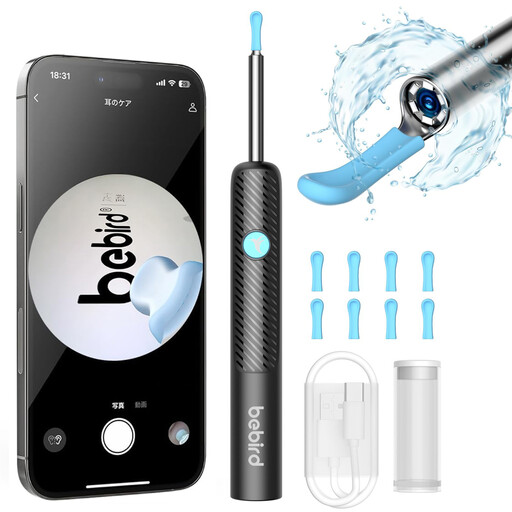
Why we chose it: This is the perfect model to get started. It combines the essential features for a first at-home inspection experience without breaking the bank. Ideal for those who want to discover the world of camera otoscopes with a reliable and user-friendly device.
It sidesteps the fake HD trap by offering true 1080p resolution, and the dangerous tip trap thanks to its soft silicone scoops, which are much safer than the rigid plastic on low-end models.
Excellent value for money. It ensures clear visualisation and safe handling, thanks in particular to its 3.5 mm lens diameter and 6 LEDs.
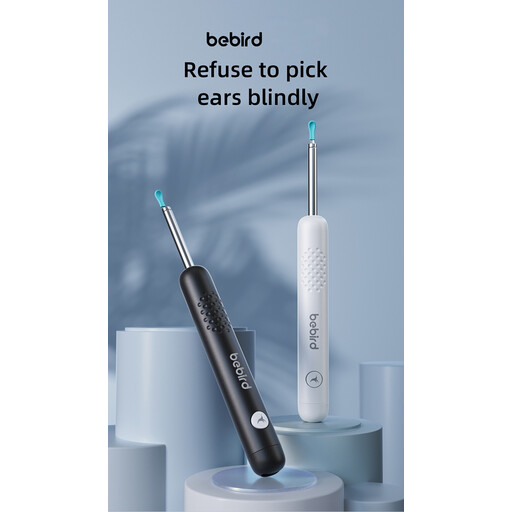
Why we chose it: Perfect for family use or for those with sensitive ears. Its standout feature is its tweezer function, which allows you to gently grip and remove earwax blockages rather than just scraping them. The approach is much gentler and more controlled.
It bypasses the pitfall of irritating tips by offering a clever alternative: a mechanical tweezer. This minimises contact with the ear canal walls, providing an ultra-precise removal method, even for the most stubborn earwax.
The manually controlled tweezer function allows for exceptionally gentle cleaning, which is particularly suitable for users with sensitive ears or for removing delicate blockages.
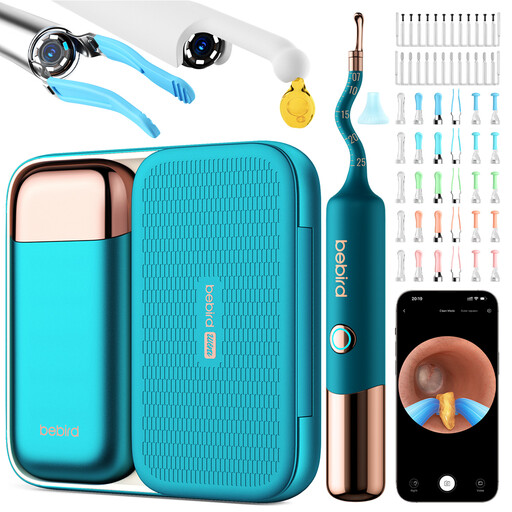
Why we chose it: For demanding users who want the most complete solution. This isn't just an otoscope; it's a true arsenal of accessories for inspecting and caring for the ears, nose, and throat, all neatly organised in a storage case.
It goes far beyond basic tips by offering a full range of specialised tools (tweezers, sponge tips, adhesive tips), all designed for specific uses and enhanced safety.
Extreme versatility. With its 300 mAh battery for extended life and its comprehensive accessory kit, it meets almost any at-home ear care need.
We have compiled a complete, up-to-date list of products that meet our quality and safety standards.
Yes, as long as you follow a few safety precautions. Always choose a model with soft silicone tips and read the user manual carefully before the first use. Never force the device into your ear, and stop immediately if you feel any pain. However, its use is not recommended if you have an ear infection or a perforated eardrum; in this case, a doctor's consultation is essential.
The connection is usually very simple. Just download the manufacturer's app (via the provided QR code or directly from the App Store or Google Play). Then, turn on the otoscope: it will create its own Wi-Fi network. Connect to this network from your smartphone's Wi-Fi settings, then launch the app to get the live video feed.
Some models are designed for this purpose, featuring small-diameter lenses. However, this requires extreme caution: the procedure must be performed by an adult, and only if the child or pet is completely calm and cooperative. Never try to use it on a person or animal that is moving around. Always check the manufacturer's recommendations on this subject.