
Livraison le jour même ou le lendemain

Qualité garantie

Débloquez vos offres de bienvenue: Livraison GRATUITE | Jusqu'à -80 % | 30 jours d'essai gratuits à JoyPlus
Téléchargez l'application
Capturing breathtaking aerial landscapes or filming family memories from a unique perspective is a dream for many. But be warned: the camera drone market is flooded with marketing promises that too often turn an exciting purchase into a costly disappointment. To avoid buyer's remorse, it's crucial to understand the most common pitfalls before you pull out your credit card.
Here are the three most common mistakes that can ruin your first drone-buying experience:
To avoid falling into these traps, here are the technical specifications that really matter and will define your flying experience.
In the UK and across the European Union, weight is the name of the game. Models under 250 grams (C0 class) benefit from ultra-light regulations: no online exam is required for the pilot. This is the golden ticket for a beginner drone or for stress-free recreational use. Conversely, heavier drones (C1 class and above) are more stable in the wind but require you to register with the relevant aviation authority and pass an online test.
Resolution isn't everything—far from it. For truly sharp and smooth footage, three elements are paramount:
A single battery rarely provides more than 25-30 minutes of theoretical flight time. Once you subtract the time for takeoff, positioning, and landing, your effective shooting time shrinks dramatically. The "Fly More Combo" packs, popularised by DJI, are an excellent solution. They include two or three extra batteries, a multi-charging hub, and other well-designed accessories. While more expensive upfront, they are far more cost-effective in the long run and multiply the enjoyment by enabling proper flight sessions.
Every pilot has their perfect drone. To help you find yours, here is our selection of models, categorised by user profile.
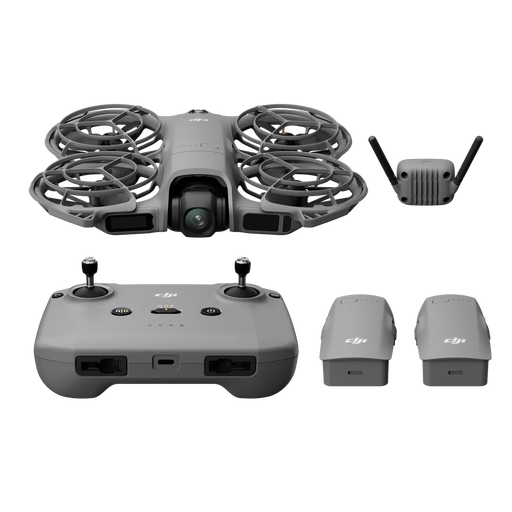
Why it's the right choice: Perfect for learning to fly without any stress. Its feather-light weight, full propeller guards, and palm-of-your-hand takeoff make it an ultra-accessible and reassuring drone for the whole family.
With its 151-gram weight, it flies under the regulatory radar (C0 class), exempting you from the online exam. The "Fly More" pack and its three batteries immediately solve the battery life issue, guaranteeing long play sessions.
Maximum safety thanks to 360° obstacle detection and propeller guards. Incredibly easy to use with gesture controls.
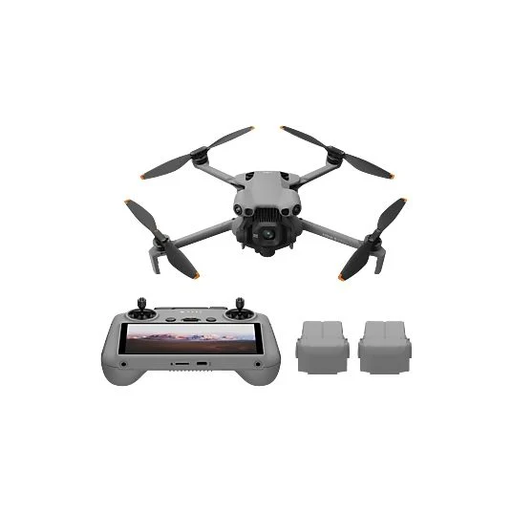
Why it's the right choice: The perfect companion for travellers and vloggers who demand impeccable image quality without sacrificing portability. This mini drone combines the best of both worlds: a pocket-sized format and top-tier imaging performance.
It shatters the "fake 4K" myth with its large 1-inch CMOS sensor and its ability to shoot in 4K/60fps HDR. All while staying under the critical 249g weight limit, keeping it in the hassle-free C0 class.
Stunning image quality for its size, omnidirectional obstacle detection for peace of mind, and advanced creative features like ActiveTrack 360°.
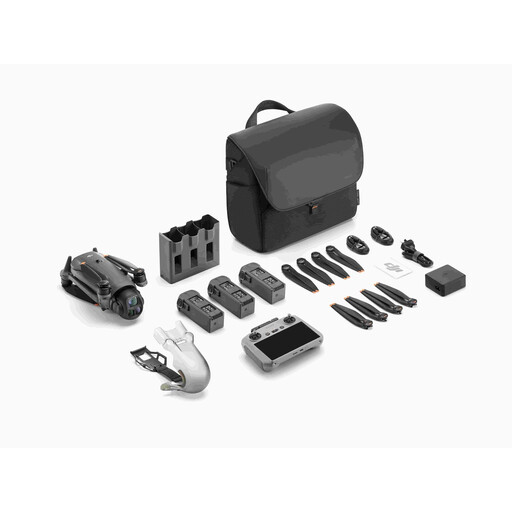
Why it's the right choice: Built for photographers and videographers who accept no compromises on quality. This professional drone is a true aerial production powerhouse, offering unparalleled versatility and imaging performance.
This model doesn't dodge regulations (its weight makes them mandatory); it justifies them with outstanding performance. Its record-breaking flight time (up to 51 minutes) and its triple-camera system, featuring the main 4/3 CMOS Hasselblad sensor, put it in a league of its own.
Triple-camera system for absolute creative flexibility. Benchmark image quality by Hasselblad. Extra-long battery life for uninterrupted shoots.
If none of these models catch your eye, or if you're simply looking for a remote-controlled helicopter just for fun, we've got you covered.
Yes, in most regions, third-party liability insurance is mandatory for drones, even those under 250 grams. It covers any damage your drone might cause to people or property. Check if your home insurance policy covers this type of use; otherwise, specialised insurance is available at very affordable rates.
The lifespan of a lithium-polymer (LiPo) drone battery depends on its use and maintenance. Generally, it will maintain optimal performance for 200 to 300 charge cycles. Beyond that, its capacity will gradually decrease. To maximise its longevity, avoid full discharges and store it at around 50-60% charge if you don't plan to use it for a while.
No, absolutely not. Regulations are very strict. It is forbidden to fly over: people, built-up areas (cities and towns), airports and their surroundings, military sites, nuclear power plants, prisons, and many national parks and nature reserves. Night flying is also heavily regulated. The essential step before every flight: check the restriction map on your local aviation authority's official website, such as the UK's Drone and Model Aircraft Code.