
Livraison le jour même ou le lendemain

Qualité garantie

Débloquez vos offres de bienvenue: Livraison GRATUITE | Jusqu'à -80 % | 30 jours d'essai gratuits à JoyPlus
Téléchargez l'application
By the Editors, August 27, 2026
Choosing a new digital camera can often feel like a daunting task. Between the endless spec sheets, the siren song of marketing, and the hundreds of models on the market, it's easy to feel lost... and end up with buyer's remorse. Our goal? To help you find not the "perfect" camera, but the one that truly meets your needs—without making you pay for useless features.
But before you take the plunge, watch out for the common pitfalls that trap many buyers:
By understanding a few key technical criteria, you can make an informed choice and avoid unpleasant surprises.
To hit the mark, focus on the features that truly matter for image quality and user experience.
The sensor is the heart of your camera. Its size (expressed in inches, like 1/1.3" or 1") directly determines its ability to capture light. As a general rule, a larger sensor means:
For video, verify that the 4K resolution is paired with a frame rate of at least 30 fps for smooth playback. For spectacular slow-motion, aim for modes at 60 or 120 fps.
A good image stabiliser is essential, especially for video or when shooting with a telephoto lens. There are two main types:
A camera can have the best spec sheet in the world, but if it's a pain to handle or too fragile for your adventures, it will end up in a drawer. For a vlogging camera, a flip screen is a game-changer. For adventurers, a waterproof and shockproof camera is a real lifesaver. Also consider battery life, especially if you plan long shooting days.
Rather than an endless list, here is a selection of cameras that cater to specific needs, in line with the criteria we've just discussed.
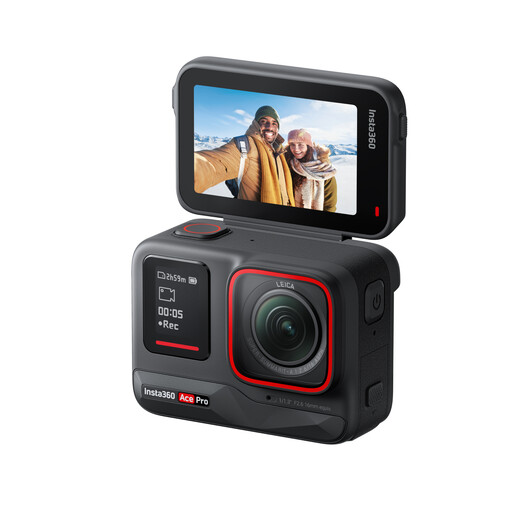
Ideal for: Those who demand impeccable image quality in a compact and rugged package. Perfect for vlogging, extreme sports, and travel thanks to its versatility and waterproofing.
It avoids the megapixel trap by focusing on its large 1/1.3-inch sensor and Leica-engineered lens, guaranteeing excellent image quality even as light fades. It delivers true, smooth 4K at up to 120 fps, a far cry from empty marketing promises.
Stunning image quality day or night (thanks to the large sensor and AI chip!). 2.4-inch flip touchscreen, ideal for self-filming. Ultra-effective FlowState Stabilisation.
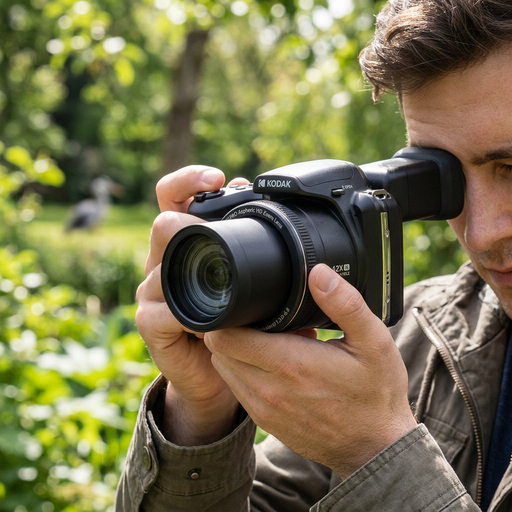
Ideal for: This bridge camera is for those seeking the versatility of a powerful zoom without the complexity (or cost) of an interchangeable lens camera. Ideal for travel, wildlife photography, or sporting events.
It goes all-in on its true optical zoom (42x), saving you from the low-quality digital zoom trap. Its built-in optical stabilisation (OIS) ensures sharp photos, even when fully zoomed in.
Impressive 42x optical zoom to capture distant details. 20MP sensor for rich images. Optical Image Stabilisation (OIS) to reduce blur from camera shake.
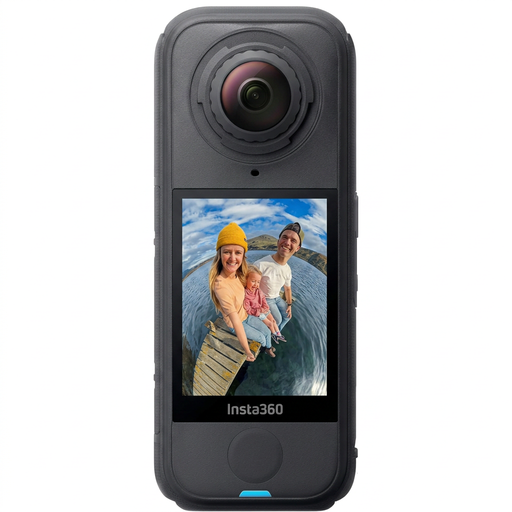
Ideal for: Those who want to push the boundaries of creativity. This 360 camera shoots immersive 8K videos and lets you choose your camera angles *after* shooting, offering unparalleled editing freedom.
It shatters the constraints of framing by shooting in every direction at once. Its FlowState Stabilisation, one of the best on the market, makes external gimbals unnecessary and guarantees perfectly smooth videos.
Total freedom with the "shoot first, frame later" principle. "Invisible Selfie Stick" effect for mind-blowing shots. 8K 360° video for spectacular image quality.
We have curated a complete, up-to-date selection of cameras that meet our demanding selection criteria.
Yes, an action camera can be an excellent vlogging camera, especially for content shot on the move or outdoors. Its strengths: compactness, durability, a wide-angle lens, and formidable stabilisation. For more stationary use (indoors), a model with a flip screen and a microphone input will be more comfortable.
Battery life varies wildly depending on the model and your usage. A compact sports camera will last between 60 and 90 minutes of continuous 4K recording. A larger bridge or mirrorless camera can take several hundred photos or record for 2 to 3 hours. For long shooting days, packing one or two spare batteries is essential. Some models, like the SJCAM C300, even offer battery grips to multiply their endurance.