
Livraison le jour même ou le lendemain

Qualité garantie

Débloquez vos offres de bienvenue: Livraison GRATUITE | Jusqu'à -80 % | 30 jours d'essai gratuits à JoyPlus
Téléchargez l'application
Every dog owner knows that a cosy corner is essential for their pet. The calming dog bed, with its cocoon-like shape and ultra-soft texture, has emerged as a go-to solution for promoting relaxation and restorative sleep. But be warned: not all beds are created equal. The wrong choice can quickly become a nightmare—an unusable bed your dog pointedly ignores, and a complete waste of money.
To ensure you don't regret your purchase, here are the three pitfalls you must absolutely avoid:
To make the right choice—one that will last—here are the technical specifications that make all the difference.
Practicality is non-negotiable. A dog bed with a removable cover is your guarantee of impeccable hygiene and an extended lifespan. Ensure the zipper is well-made so you can remove the cover effortlessly. The ideal choice? A machine-washable cover for simple, fast maintenance. A washable round bed is the secret to keeping your pet's sleeping area clean and your home healthy—for both of you.
The promise of an anti-stress pet bed comes down to one word: filling. Budget models are often stuffed with fibres that flatten in record time. Our advice: look for a dense PP cotton (polypropylene) filling. This material provides superior support, retains its shape over the long term, and guarantees a comfortable dog bed year after year. It's the key to creating that cosy "cocoon" effect dogs adore.
This detail might seem trivial, but it's crucial for your pet's comfort and safety. A base fitted with rubber dots grips the floor and stops the bed from becoming an improvised bobsled with every move your dog makes. This stability is indispensable for energetic puppies, senior dogs, or those with mobility issues. A good dog mat, just like a good bed, must stay in place. Period.
To put theory into practice, here are a few models that tick all the right boxes, each designed for a specific need.
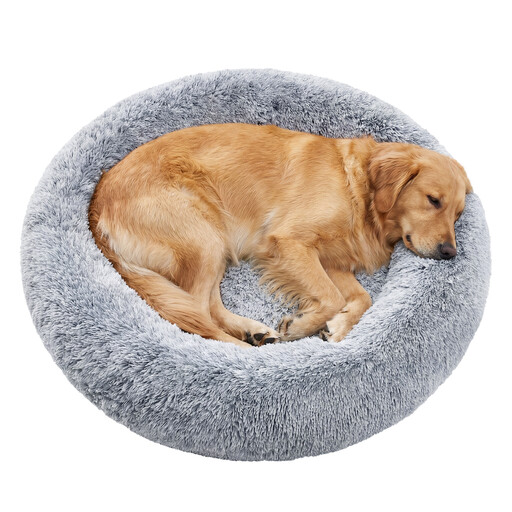
Why we chose it: This is the champion of hygiene, perfect for those who make no compromises on cleanliness. It was designed for ultra-simple maintenance, making it a powerful ally for medium to large dogs.
It tackles pitfall #1: maintenance. Its central cushion is removable with a zipper, and the outer cover is fully machine-washable. Problem solved.
Ultra-soft yet durable long-pile plush fabric; non-slip base with rubber dots for foolproof stability.
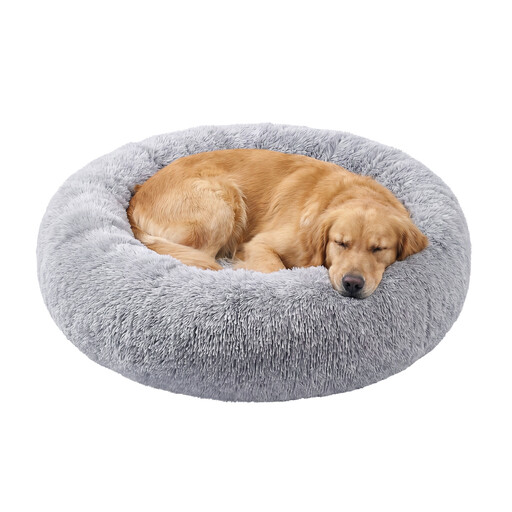
Why we chose it: Finding a bed that's both spacious and sturdy enough for a large dog can be an ordeal. With its 120 cm diameter, this model provides the necessary space and support for large breeds, without compromising on comfort or easy maintenance.
Its PP cotton filling is engineered to support substantial weight without going flat. Say goodbye to the "pancake" effect, even for the heavyweights!
XXL dimensions (120 cm); removable and washable cover; non-slip base for maximum safety.
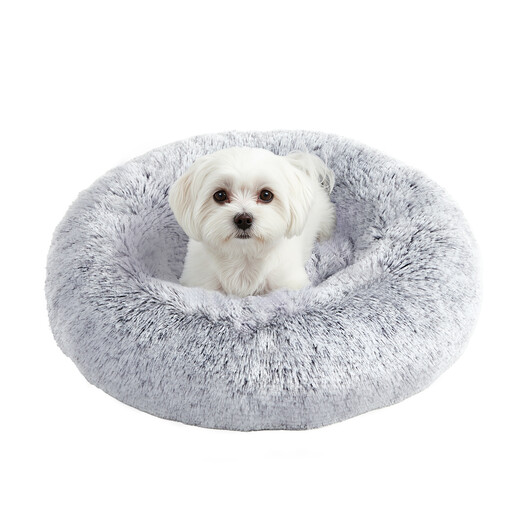
Why we chose it: For those who want a pet bed that complements their home decor. Its 70 cm size fits most medium-sized dogs, and its dark grey colour is both elegant and excellent at hiding dirt.
Its base is equipped with those crucial rubber dots that anchor it to the floor. No more sliding bed on your tile—a frequent and frustrating problem.
Sleek and stylish design; removable and washable cover for effortless maintenance; versatile size suitable for a wide range of breeds.
We've curated a complete range of products that meet our strict standards for comfort, durability, and safety.
Don't worry, this is normal! Most beds are shipped compressed. After unboxing, give it a vigorous shake and pat the filling to aerate the fibres. Then, simply let it sit and expand for 24 to 48 hours. It will regain its full, plush shape as if by magic.
It depends on your dog (how much do they shed? do they love rolling in the mud?), how often the bed is used, and the season. As a general rule, washing the cover every 2 to 4 weeks is a good rhythm for maintaining excellent hygiene. For small spots between full washes, a quick wipe with a damp cloth will work perfectly.
With a donut bed for dogs and cats, the goal is to create a secure, cocoon-like space. The simplest method is to measure your dog from their snout to the base of their tail while they're sleeping in their usual position (e.g., curled in a ball). Then, add 15 to 25 cm (6 to 10 inches) to find the ideal diameter. If you're in doubt between two sizes, always opt for the larger one. Comfort is key.