
Livraison le jour même ou le lendemain

Qualité garantie

Débloquez vos offres de bienvenue: Livraison GRATUITE | Jusqu'à -80 % | 30 jours d'essai gratuits à JoyPlus
Téléchargez l'application
The well-being of our four-legged friends is a top priority, and the soaring popularity of the calming dog bed is a testament to this. Designed to provide a true cocoon of security, this type of bed promises to reduce our pets' anxiety. However, with an overwhelming number of options on the market, disappointment is common. To avoid buyer's remorse, it's crucial to learn how to spot the flaws hidden behind glossy marketing promises.
Here are the 3 most common mistakes when buying a so-called "calming" bed:
To ensure your investment truly benefits your pet, focus on a few objective technical features rather than marketing claims.
The shape is the key to the calming effect. A round dog bed, like a donut, is most often recommended. Its high, continuous rims create a "nest" that reminds the animal of the feeling of being snuggled against its mother and littermates. This gentle, enveloping pressure helps to calm their nervous system.
Make sure the rims are high and firm enough to properly support the head and neck without collapsing as soon as your dog leans on them.
A healthy bed is, above all, a clean bed. Ease of cleaning is therefore a non-negotiable criterion. A truly practical model must offer:
The longevity of your bed depends directly on the quality of its components.
To help you make a clear choice, we have identified a few options that meet these criteria for quality and practicality, matching them with specific needs.

Why we love it: Perfect for small to medium-sized dogs (or large cats) looking for the ideal compromise. Its 70 cm diameter offers ample space without being too bulky, and it checks all the essential boxes for hassle-free daily use.
It sidesteps the "fake removable cover" trap with a zipper that allows the entire central cushion to be removed. Washing is simple, fast, and guarantees impeccable hygiene.
Its excellent balance between the softness of the plush, the support of the filling, and the practicality of easy maintenance. The non-slip base is a real bonus for safety.
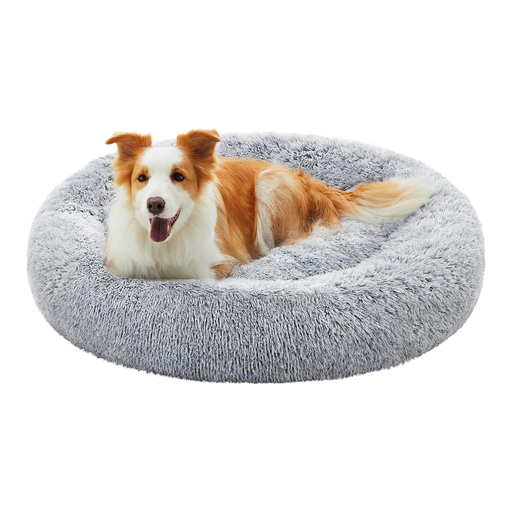
Why we love it: Finding a **bed for a large dog** that is both spacious and well-structured is often a challenge. With its 100 cm diameter, this model accommodates medium to large breeds (up to 35 kg), allowing them to stretch out fully or curl up.
It avoids the pitfall of stuffing that goes flat. Its generous filling (20 cm thick) is designed to support a heavier weight without collapsing, ensuring long-lasting support.
The combination of generous space, robust filling, and a removable central cushion that greatly simplifies cleaning—a crucial point for beds of this size.
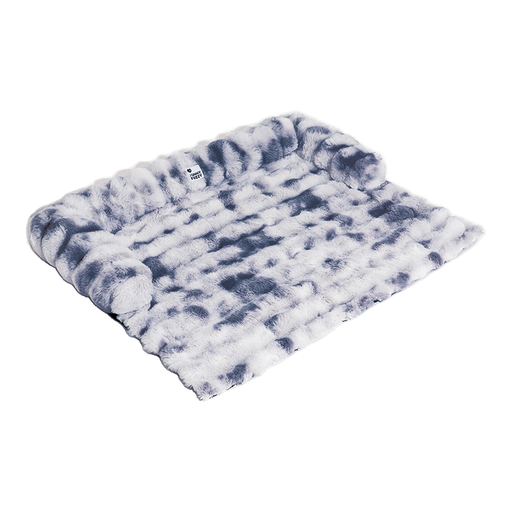
Why we love it: For a senior dog, one recovering from surgery, or one suffering from joint pain, a simple **calming dog cushion** isn't always enough. This model goes a step further by integrating a structured foam base for true orthopaedic support.
It goes beyond the simple "softness" argument. Its egg-crate foam base provides firm support that distributes weight, relieves pressure points, and promotes proper spinal alignment. A real technical advantage.
It combines the best of both worlds: a soothing plush surface and an orthopaedic foam base for support. The cover is, of course, still removable and washable for effortless maintenance.
Explore our full collection of dog beds that meet all our criteria for quality, comfort, and safety.
Measure your dog from the tip of their nose to the base of their tail while they are stretched out. Add 15 to 25 cm (6 to 10 inches) to this measurement to find the ideal diameter. This allows them to lie fully extended, while still feeling securely enveloped when they curl up. If in doubt between two sizes, always choose the larger one, especially for a puppy or a small dog bed for a dog that hasn't finished growing.
This is completely normal; this compression method helps to optimise shipping. Once unpacked, shake it vigorously and pat the bolsters and centre to help the filling expand and fluff up. Allow it to air out for 24 to 48 hours to regain its final shape and volume.
For perfect hygiene, washing the cover every 2 to 4 weeks is a good rule of thumb. Feel free to wash it more often if your dog has allergies, spends a lot of time outdoors, or is in a heavy shedding season. Regular washing is the best defence against allergens, bacteria, and bad odours.