
Livraison le jour même ou le lendemain

Qualité garantie

Débloquez vos offres de bienvenue: Livraison GRATUITE | Jusqu'à -80 % | 30 jours d'essai gratuits à JoyPlus
Téléchargez l'application
Every owner wants to give their dog a sleeping spot that is both cosy and reassuring. The calming dog bed has become a must-have, promising to soothe anxiety and provide better sleep for our four-legged companions. However, behind the slick marketing promises often lie pitfalls that can turn a good investment into a disappointment.
Before you make your choice, it's best to know how to spot the design flaws that can render a bed useless in just a few months. Here are the most common traps:
To avoid falling into these traps, this guide breaks down the technical criteria that truly matter for your dog's comfort and the bed's longevity.
To make an informed choice, forget the marketing jargon and focus on three key points: structure, practicality, and materials. This trio is what guarantees lasting comfort and a healthy environment for your pet.
The most important feature of an anti-stress dog bed is its shape. A round dog bed, often called a donut dog bed, with raised, plush edges is highly recommended. This design reassures the dog by mimicking the security of a den or the contact with its mother. The edges also offer support for the head and neck, promoting a healthy sleeping posture.
A comfortable dog bed must be easy to maintain. The presence of a removable cover is a non-negotiable criterion. Check that the dog bed has a removable cover with a sturdy, discreet zip. A machine-washable dog bed ensures you can maintain perfect hygiene, eliminating hair, dust mites, and odours, which is essential for your dog's health and the cleanliness of your home.
The comfort and longevity of a bed depend directly on its filling. Opt for PP (polypropylene) cotton filling, which offers good support, retains its shape longer, and resists sagging. Avoid low-quality foams that flatten quickly. The outer fabric, usually a long plush, should be soft to the touch but also durable. Finally, an often-overlooked detail is the base of the bed: a non-slip surface with rubber dots is a guarantee of safety, especially for playful puppies or older dogs.
To illustrate these criteria in practice, here is a selection of models that tick all the right boxes, each meeting a specific need.

Why it stands out: With its 70 cm diameter, it offers an ideal space for small to medium-sized breeds (Beagle, French Bulldog, Cocker Spaniel). It allows them to curl up comfortably while feeling secure thanks to the raised edges.
This model is fully removable via a bottom zipper, which definitively solves the hygiene issue. Its PP cotton filling is designed to maintain its volume.
An excellent balance of size, comfort, and practicality for the most popular household breeds.
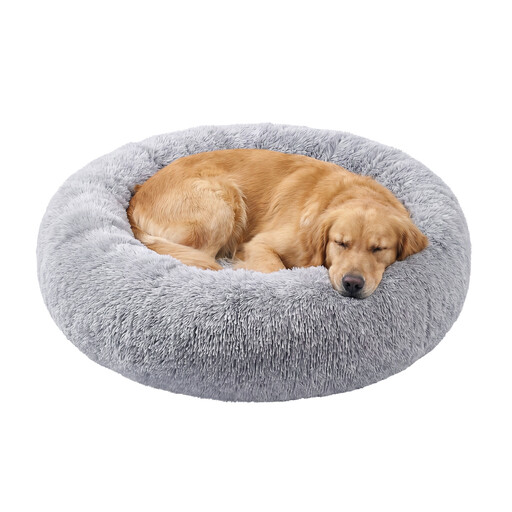
Why it stands out: Finding a **bed for a large dog** that is both calming and functional is a challenge. With its 120 cm diameter, this model offers a generous space for large breeds like Labradors, German Shepherds, or Golden Retrievers, allowing them to stretch out while still enjoying the secure edges.
The large size doesn't sacrifice essential features. It remains fully removable and has a non-slip base, correcting the common flaws of XXL beds.
Generous dimensions (120 cm) and supportive filling suited to the weight and build of large dogs.

Why it stands out: For those who want to balance their dog's well-being with their home's aesthetic. The warm and trendy camel colour blends seamlessly into many living room or bedroom styles, while still offering the same calming benefits.
Style does not come at the expense of practicality. This model retains all the important technical features: washable cover, supportive filling, and a non-slip base.
Combines an elegant, easy-to-integrate colour with full functionality for the pet's comfort and hygiene.
We have selected a full range of products that meet our quality and safety criteria.
Measure your dog when it is fully stretched out, then add 15 to 25 cm to find the ideal diameter. This gives them enough room to stretch while still being able to curl up against the edges to feel secure. If in doubt between two sizes, always opt for the larger one.
For impeccable hygiene, it is recommended to wash the cover every 2 to 4 weeks. If your dog has allergies, spends a lot of time outdoors, or sheds heavily, more frequent washing (every 1 to 2 weeks) may be necessary. Always follow the washing instructions on the label to avoid damaging the fabric.
Yes, this is completely normal. For logistical and ecological reasons, most beds are shipped vacuum-sealed. After unpacking, shake it vigorously and pat it to help the filling spread out and regain its volume. Let it rest for 24 to 48 hours for it to reach its final shape and fluffiness.