Canteen managers working to a sugar specification
You need to specify whether the requirement is for the ‘sugar-free’ claim or for no added sugars, then check the label of every product under consideration.


For a workplace canteen, choose a cake labelled ‘sugar-free’ if your specification requires a very low sugar content. If the requirement is for no added sugars, look for that separate claim instead. In either case, compare the ‘of which sugars’ line, the ingredients and the nutritional information, then check the allergens and serving format of the exact product.
You need to specify whether the requirement is for the ‘sugar-free’ claim or for no added sugars, then check the label of every product under consideration.
You’re looking for portions that are easy to distribute, while keeping ingredient, allergen and serving-weight information readily available.
You want to offer variety without assuming that a sugar-related claim alone tells you about energy content, ingredients or suitability for dietary restrictions.
First, define the claim required by your specification. Under European Union Regulation (EC) No 1924/2006, ‘sugar-free’ is reserved for products containing no more than 0.5 g of sugars per 100 g or 100 ml. ‘No added sugars’ is subject to a different condition and does not mean that the total sugar content is zero.
Choose these: when your specification requires a very low total sugar content, which you should check on the exact product.
Keep in mind: this claim alone tells you nothing about energy content, polyols or allergens.
Choose these: when your requirement is for no added sugars, as covered by this claim.
Keep in mind: this claim does not replace checking the total sugar content shown on the ‘of which sugars’ line.
| Criteria | What to check | Who it matters to |
|---|---|---|
| Claim and sugar content | Check the exact claim on the packaging and the ‘of which sugars’ value per 100 g. | If my specification sets a sugar requirement as its main priority, I need to be able to distinguish between the two claims before adding a cake to the range. Around 33% of consumers concerned would put this criterion first. |
| Ingredients and allergens | Check the ingredients list and allergens for each recipe. If polyols are listed, check the portion size too. | When I offer a recipe to diners, I mainly need to know what it contains so I can pass on the relevant information. Around 27% of consumers would share this priority. |
| Portion and serving | Compare the weight per piece, number of portions and storage conditions stated for the product. | When planning morning service, I prefer a format that makes it easy to count portions and organise distribution. Around 20% of consumers would put this need first. |
| Variety and nutritional information | Compare recipes per 100 g and per portion, including energy, fat, sugars, fibre and salt. | If I want to offer a varied selection of cakes, I want to compare their nutritional content beyond the sugar claim alone. This would be the main criterion for around 20% of consumers. |
These claims are subject to different conditions under European Union Regulation (EC) No 1924/2006. If your requirement is for a very low total sugar content, the claim ‘no added sugars’ alone is not a substitute.
Specify the claim you’re looking for and ask for the nutritional declaration for the exact product.
A low sugar value doesn’t tell you everything about a recipe. For a Gerblé soft cake with no added sugars, Auchan lists 382 kcal and 32 g of polyols per 100 g.
Also compare the ingredients, fat, polyols where listed, and nutritional values per portion.
Ingredients vary between recipes: the Gerblé product information reviewed includes ingredients made from wheat, egg or almond, among others.
Keep the ingredient and allergen information for every product you serve, and don’t assume it will be the same as for another recipe from the same brand.
Packaging designed for retail sales isn’t enough to plan the quantities and storage needed for canteen service.
Confirm the packaging supplied, the best-before date on receipt, storage conditions and product specification with your supplier.
Gerblé offers a range of ‘sugar-free’ and ‘no added sugars’ biscuits. Auchan also lists individual soft cakes and financiers among its products.
Carrefour France lists Karéléa speculoos-style biscuits labelled ‘sugar-free’, as well as strawberry biscuits labelled ‘no added sugars’.
Carrefour France search results include Schär vanilla biscuits labelled ‘sugar-free’.
This cake could be considered for serving in portions, but check its label and weight before selecting it for a sugar-related specification.
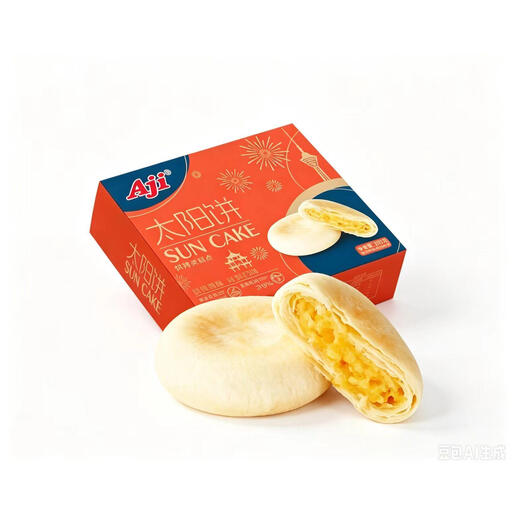 Image unavailable
If you’re considering serving this cake at breakfast, check the sugar claim and ingredients list on the packaging: the information associated with this product is inconsistent about its sugars. Also confirm the net weight and weight per portion before planning quantities, as the weight information differs.
No. Under European Union Regulation (EC) No 1924/2006, ‘sugar-free’ is reserved for products containing no more than 0.5 g of sugars per 100 g or 100 ml. ‘No added sugars’ refers to the absence of added sugars, subject to the conditions of that claim. For a canteen, choose the claim that matches your specification and check the ‘of which sugars’ line in either case.
No. The sugar claim alone doesn’t tell you how much energy a product provides. As an example from a different recipe, Auchan lists 382 kcal per 100 g for a Gerblé soft cake with no added sugars. Compare the nutritional values per 100 g and per portion of the cake you’re considering serving.
Check the ingredients list and allergen information for the exact product, then make sure they’re available during service. The DGCCRF reminds food businesses that allergens in prepacked foods must be emphasised on the label. Don’t transfer information from one recipe to another.
Look for them in the ingredients list and compare the quantities shown per 100 g and per portion, without confusing this information with the sugar content. For example, Auchan lists 9 g of polyols per 28 g portion for a Gerblé soft cake with no added sugars. This value doesn’t apply to other recipes.
Follow the best-before date and storage conditions shown on the batch you buy. Instructions may vary between recipes, so confirm them for each product you select, along with the packaging actually supplied.