For serving without slicing
If people are helping themselves as they arrive, a pack with a countable number of individual cakes makes it easier to plan. If it matters for your arrangements, check whether they’re individually wrapped.


For a morning coffee break with a group, start by thinking about how you’ll serve the cakes. Individual cakes save you having to cut slices, while a whole cake works well if you can present and slice it. Then compare the quantity with the number of people attending, and check the allergens and storage instructions for the product you choose.
If people are helping themselves as they arrive, a pack with a countable number of individual cakes makes it easier to plan. If it matters for your arrangements, check whether they’re individually wrapped.
A whole cake is ideal for sharing, provided you can slice it and protect any leftovers after the break.
Net weight, the number of individual cakes or portions, and the ingredients list can help you choose between formats that look similar. If you’re catering for a group, check the allergens on the packaging of the exact product you’re buying.
First decide whether there’ll be time to slice a cake or whether you need individual portions ready to serve. Then work out the quantity and check the label: a larger pack won’t necessarily meet the group’s needs.
| Criteria | What to check | Who is this important for? |
|---|---|---|
| Serving without slicing | Number of individual cakes and whether they come in separate wrappers. | When colleagues arrive at different times, I want everyone to be able to help themselves easily. Around 30% of consumers put this way of serving first. |
| Quantity for the group | Number of individual cakes or portions, net weight and expected number of people. | I want to make sure there’s enough cake without ending up with too much to store. Around 30% of consumers put this need first. |
| Comparing formats | Total weight and how much can be served, depending on whether the product comes in individual cakes or needs slicing. | When choosing between a box of biscuits and a whole cake, I need to compare how much can actually be served. Around 20% of consumers prioritise this comparison. |
| Ingredients and storage | Allergens, date marking and storage instructions on the packaging. | If several people are sharing the break, I need to check that the product is suitable for any dietary restrictions they’ve mentioned. Around 20% of consumers put this information first. |
The weight of a whole cake doesn’t tell you how large each slice will be. It’s easier to count individual cakes in a multipack, but the number of cakes won’t necessarily match the number of people you can serve.
Start with the number of people attending, then compare it with the number of cakes or portions shown on the pack. If you’re serving a cake that needs slicing, plan how you’ll serve it and store any leftovers, following the packaging instructions.
Two packs of similar dimensions may contain different quantities or need to be served in different ways.
Compare the net weight and, where shown, the number of individual cakes or portions. Also check whether the format makes it easy to store anything you don’t serve.
The recipes we looked at contain different allergens, and the pack size alone won’t tell you what’s in the product.
Ask about any relevant dietary requirements before buying, and read the label on the pack you choose, including any warnings about possible traces.
Auchan’s family-sized Le Napolitain pack contains 24 cakes in a 2 × 360 g pack; the product listing says it provides 12 portions.
St Michel describes its 350 g plain Madeleine Géante as a cake to share, including with colleagues.
E.Leclerc’s range includes a 285 g brownie to share, mini cakes and 500 g loaf cakes.
Carrefour offers several ranges of biscuits for breakfast, afternoon tea or a coffee break, including filled biscuits.
These biscuits, tartlets and wafers are options to enjoy with your coffee without any preparation. They’re not all served in the same way as a whole cake that needs slicing, so check the quantity and pack format to make sure they suit your group.
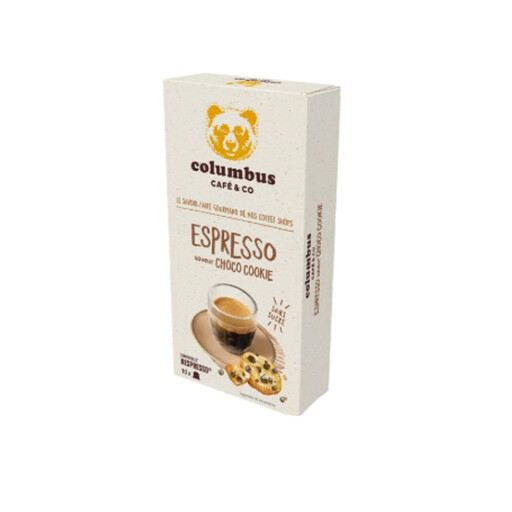 Image unavailable
With 10 biscuits, you can plan how many pieces to serve at your coffee break. If you’d like to hand them out individually, check the packaging; the product contains wheat, milk and soya.
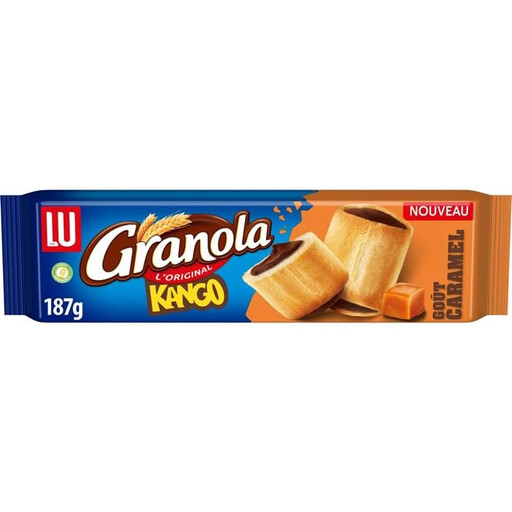 Image unavailable
These ready-to-serve biscuits are ideal for a morning break. The pack contains 187 g; check how many biscuits it includes to plan how you’ll serve them. The recipe contains wheat, milk, eggs and soya, and may contain sesame.
Image unavailable
These ready-to-eat tartlets could be a good choice for a small shared break. The pack contains 100 g, so check how many pieces it includes before planning how to serve them. The product contains wheat, milk and soya. Its label also lists the colourings E102 and E110 and carries a warning about children’s activity and attention.
 Image unavailable
This 400 g tin can be served with hot drinks at a group coffee break. Check how many wafers it contains to plan how you’ll serve them, and close the tin after opening. The product contains wheat, milk and soya, and may contain traces of nuts, peanuts, sesame and eggs.
Check the ingredients and allergens, the net quantity, the date marking and the storage instructions. For pre-packed food sold in France, the DGCCRF says allergenic ingredients must be emphasised in the ingredients list.
Ask about the group’s dietary requirements, then check the label on the exact product you’re buying. The product listing for St Michel’s Madeleine Géante mentions gluten and egg, as well as possible traces of nuts, milk and soya. These details don’t apply to every recipe from the brand.
Individual cakes are better for serving without slicing, while a whole cake means you’ll need to be able to cut and present the portions. For a guide to the formats available, Auchan’s family-sized Le Napolitain pack lists 24 cakes and 12 portions, while St Michel describes its Madeleine Géante as a 350 g cake to share.
Follow the instructions on the packaging you buy, and check how to protect a cake once it’s been opened. Auchan’s product listing for the family-sized Le Napolitain says to store it away from heat and moisture; instructions may differ for other recipes.