To choose a cake to share while looking for one with less fat, compare the amount per 100 g across products of the same type, then check the allergens and pack size. A ‘reduced sugar’ claim, a nutrition aisle or a Nutri-Score rating won’t answer this question on its own. For example, Auchan lists 15 g of fat per 100 g for a reduced-sugar Gerblé Bio shortbread biscuit on its product page.
Who should consider this?
Hosts keeping an eye on fat content
You want to compare the fat content of cakes rather than rely on a recipe described as ‘light’. The amount per 100 g lets you compare products of the same type, as the DGCCRF explains in its guidance on nutrition information.
Groups with varied nutritional preferences
Some guests may prefer wholegrains, fibre or a reduced-sugar recipe. These preferences can help guide your choice of dessert, but they don’t tell you its fat content on their own.
Hosts who take allergies into account
If a guest tells you they have an allergy, check the ingredients, highlighted allergens and any ‘may contain’ warnings on the product you’ve bought before serving it.
What should you check before buying?
For dinner with friends, start with what matters most to your group: fat content, suitability for guests with allergies or a pack size that’s easy to share. Check the other nutritional information separately.
| Criteria | What to check | Who is it for? |
|---|
| Fat |
Compare the fat per 100 g in cakes of the same type. Also check the saturated fat figure, making sure not to confuse it with the total. |
I mainly want to compare two recipes by their fat content, rather than relying on the name of the aisle; around 36% of consumers prioritise this comparison. |
| Nutrition claims |
Check the sugar, fibre and fat figures separately. If there’s a Nutri-Score on the packaging, compare it with products in the same category. |
If my guests prefer a reduced-sugar or wholegrain recipe, I want to distinguish that preference from the question of fat content; around 14% of consumers prioritise this distinction. |
| Allergens |
Check the ingredients, highlighted allergens and any ‘may contain’ warnings for the product you’re buying. |
A guest has told me they have an allergy, so I need to check the cake before serving it; suitability for people with allergies is a priority for around 29% of consumers. |
| Sharing |
Check the net weight, number of portions stated and packaging, taking into account the number of guests and any other desserts you’re planning to serve. |
I want everyone to be able to help themselves to a dessert they like, without choosing a pack that doesn’t suit the group; around 21% of consumers prioritise pack size and sharing. |
Common misconceptions to avoid
-
Assuming ‘reduced sugar’ means less fat
These claims refer to different nutritional values. Auchan’s product page for reduced-sugar Gerblé Bio shortbread biscuits lists 15 g of fat per 100 g.
To compare two shortbread biscuits for fat content, check the ‘fat’ figure per 100 g for each. Look at the sugar figures separately if they matter to you too.
-
Reading Nutri-Score as a rating of fat content alone
Nutri-Score takes several nutritional components into account. Manger Bouger presents it as a guide for comparing products in the same category, not as a replacement for nutrition information.
Check the fat per 100 g if that’s the factor you’re choosing on.
-
Throwing away the packaging before everyone has been served
Ingredients and allergen information vary by recipe. St Michel’s shortbread biscuits made with fresh butter, for example, list wheat, almonds, milk and egg.
Ask about any allergies before you buy, and keep the packaging for the product you serve nearby during dinner.
Brands and retailers to consider
Auchan
Auchan’s ‘Lighter Biscuits’ range includes products with varying nutritional profiles.
- The product page for Auchan Bio wholegrain oat biscuits lets you check their fat content.
- Auchan lists 15 g of fat per 100 g for this product. The name of the range alone doesn’t tell you whether a biscuit meets your needs.
Carrefour
Carrefour’s ‘Nutrition Biscuits’ range includes organic recipes and biscuits with no added sugar.
- These options let you explore different types of biscuits to suit your group’s preferences.
- On their own, these claims don’t tell you whether a product is low in fat. Check each product page and its availability at your local store.
St Michel
St Michel’s shortbread biscuits made with fresh butter are better suited to those looking for traditional biscuits to share than to those seeking a low-fat option.
- St Michel describes its 135 g box as a sharing size.
- The recipe listed by the brand contains 24% butter and includes wheat, almonds, milk and egg.
Lidl
Lidl has a biscuits and cakes section, but it’s worth checking the range when you’re planning dinner.
- The product page for a Sondey cookie assortment lists a pack size of 255 g.
- The weight doesn’t tell you the fat content; check the nutrition information for the product available.
A rice cake to consider on Joybuy
This strawberry rice cake could be an option for sharing as a dessert. To see whether it suits your search for a lower-fat option, compare its nutrition information with that of other rice cakes.
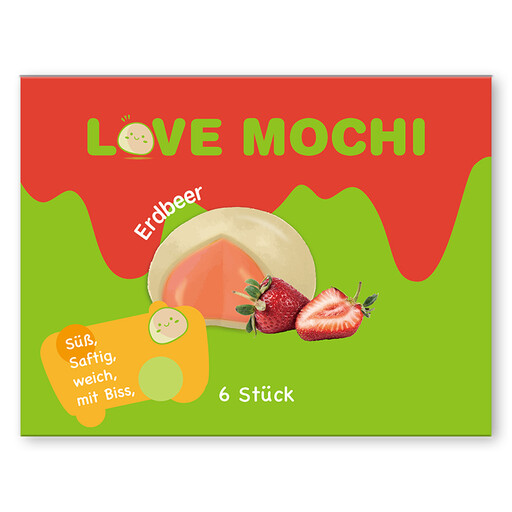 Image unavailable
Love Mochi strawberry rice cakes, 180 g
For dessert with friends, this pack is worth considering if your guests enjoy strawberry rice cakes.
Net weight: 180 g. Compare the fat per 100 g with products of the same type and check the allergens on the packaging before serving.
View on Joybuy
Frequently asked questions
Does a reduced-sugar biscuit always contain less fat?
No: these claims refer to different nutritional values. Auchan lists 15 g of fat per 100 g on the product page for its reduced-sugar Gerblé Bio shortbread biscuits, so check this figure separately from the sugar content.
How do you compare two packs of cakes?
Compare their nutrition information per 100 g if they’re products of the same type. If you’re looking for a lower-fat option, start with the fat figure, then check saturated fat, sugar or fibre to suit your guests’ preferences.
Is Nutri-Score enough to choose a lower-fat cake?
No: Nutri-Score doesn’t tell you a cake’s fat content on its own. Manger Bouger recommends using it to compare products in the same category. For your specific requirement, check the fat per 100 g too.
What should you check if a guest has a food allergy?
Check the ingredients, highlighted allergens and any ‘may contain’ warnings on the packaging of the product you’re going to serve. Don’t assume you know what’s in a product from its brand or category name alone.


