Organising a flexible coffee break
You’re planning several breaks or the number of attendees may change. Cakes that are easy to count and share help you adjust how you serve them.


For a centrepiece dessert to slice and serve, choose a large cake made to order if your numbers are confirmed and you can follow its storage instructions. If numbers may change during a break, shareable cakes or individually wrapped portions offer more flexibility. Individual portions make serving easier, but create more packaging.
You’re planning several breaks or the number of attendees may change. Cakes that are easy to count and share help you adjust how you serve them.
You know how many people are coming and want to serve a shared dessert that can be sliced. The stated number of portions and storage instructions will help you choose what to order.
You need to check the ingredients, allergens, dates and storage instructions for the cakes you’ll actually be serving to the group.
For a conference, decide how you’ll serve the cake first, then check that the portion count and storage requirements suit your plans.
Choose this: for a shared dessert when your numbers are confirmed.
Bear in mind: you’ll need to slice it and, depending on the product, keep it chilled.
Choose this: for a break where cakes will be handed out as the event goes on.
Bear in mind: you’ll need to arrange and count the portions if the pack doesn’t state how many it serves.
Choose this: when attendees need to help themselves quickly, without any slicing.
Bear in mind: there’ll be more packaging than with a shared cake.
| Factor | What to check | What consumers prioritise |
|---|---|---|
| Number of portions | Compare the stated number of portions for a large cake, or the number of pieces and individual packs, with your expected attendance. | When I know how many people are coming, I want to make sure there’s enough dessert without ordering an unnecessarily large size. Around 36% of consumers would put this first. |
| Storage and serving | Check the storage temperature stated for your chosen product, as well as what’s involved in transporting, storing and slicing it. | If the break is taking place somewhere without suitable storage, I need to be able to serve the cakes as directed. Around 29% of consumers would put this first. |
| Allergens and labelling | Read the ingredients and allergen information for the specific variety you’re buying, along with its date and storage instructions. | When serving a group with different dietary requirements, I need to be able to share information about the product actually purchased. Around 21% of consumers would prioritise this first. |
| Dessert presentation | Decide whether you’ll have space for slicing and crockery, or whether it would be easier to serve the cakes without any preparation. | For a closing dessert, I’d like to present one shared cake rather than arrange a self-service break. Around 14% of consumers would put this first. |
The weight in grams alone doesn’t tell you how many people a cake will serve. Larger desserts may state the number of portions, while other cakes are counted in pieces or individual packs.
Start with the number of portions or pieces stated for the product, then adjust the quantity to suit your group and the people you’ll be serving.
Carrefour Traiteur’s 21-portion Millefeuille should be stored between 0 and +4 °C. St Michel mini chocolate-chip madeleines, on the other hand, should be kept somewhere dry, away from heat and light.
Follow the instructions for your chosen cake and plan the journey from collection to storage and serving accordingly.
Allergens vary from one recipe to another. St Michel’s mini chocolate-chip madeleines product information lists gluten, milk, soya and egg, and says it may contain traces of nuts.
Check the packaging for each variety you buy and keep the information accessible while you’re serving the cakes.
The DGCCRF distinguishes between a use-by date, which must not be exceeded, and a best-before date, which indicates how long a product is expected to retain its qualities when stored as directed.
Check which type of date is shown on each batch and follow its storage instructions too.
These ranges offer some ideas depending on how you plan to serve the cakes. Check the format and instructions for the specific product you choose.
Offers large desserts, including options advertised to serve 15, 21 or 30 people.
Offers both celebration cakes made to order for groups and smaller cakes to share.
Offers mini madeleines in 500 g packs, among other options, for a break where portions can be shared out.
Offers Napolitain L’Original in a box of 12 individual packs, weighing 360 g in total.
Offers own-brand cakes and desserts, including a 300 g P’tit Déli all-chocolate cake.
This frozen cake, which needs slicing, could work for a buffet if the quantity suits your group and you can arrange suitable storage before serving.
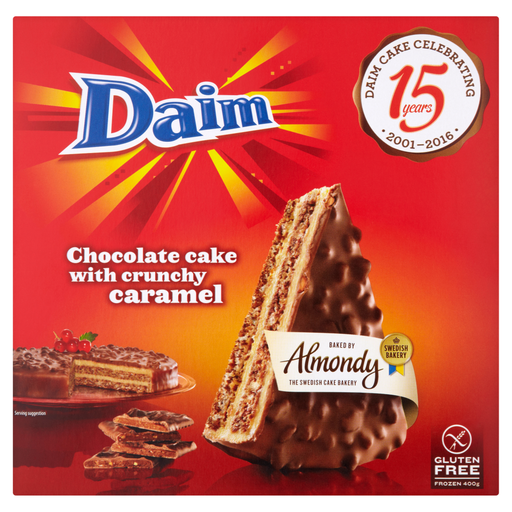 Image unavailable
Consider serving it in slices, after checking that the quantity is right for the number of guests.
Store at −18 °C or below before preparation. Once defrosted, keep refrigerated at no more than +6 °C, consume within 7 days and do not refreeze.
The description lists eggs, milk, almonds and soya, and says the product may contain traces of peanuts and hazelnuts. Check the packaging of the product you receive.
Follow the storage instructions for the product you’ve chosen rather than planning to leave it on the table. Carrefour Traiteur’s 21-portion Millefeuille should be stored between 0 and +4 °C, so plan storage and serving around this requirement.
Use the ingredients list for each cake you actually serve and keep its packaging to hand. St Michel says allergens in its recipes are shown in bold; don’t assume that another variety contains the same allergens.
According to the DGCCRF, a use-by date must not be exceeded, while a best-before date relates to the product’s expected qualities. Check the date shown on the batch you receive and follow its storage instructions.
Keep the packaging or the information that relates to the product served, including its ingredients, allergens, date and storage instructions. The DGCCRF says the labelling on prepacked food also includes the product name, net quantity and nutritional information.