
Livraison le jour même ou le lendemain

Qualité garantie

Débloquez vos offres de bienvenue: Livraison GRATUITE | Jusqu'à -80 % | 30 jours d'essai gratuits à JoyPlus
Téléchargez l'application
Choosing a cake pan? It seems straightforward at first glance. Yet, the wrong choice can quickly turn the promise of a delicious treat into a culinary disaster. A cake that sticks, an unmolding process that becomes a massacre, or a pan that warps after two uses: these frustrations are all too common. To ensure you never experience this again, let's review the pitfalls to avoid before you invest.
The three worst problems to avoid:
To make an informed choice, focus on a few key features that will make all the difference in your pan's performance and lifespan.
The choice of material has a direct impact on baking and ease of use.
A good non-stick cake pan is a game-changer in the kitchen. But the durability of this coating is the crucial point. A quality coating must withstand high temperatures and repeated use without deteriorating. To preserve it, avoid metal utensils and abrasive sponges. Hand washing with a soft sponge remains the best option, even for models advertised as dishwasher-safe.
The shape and design of the pan should match your needs.
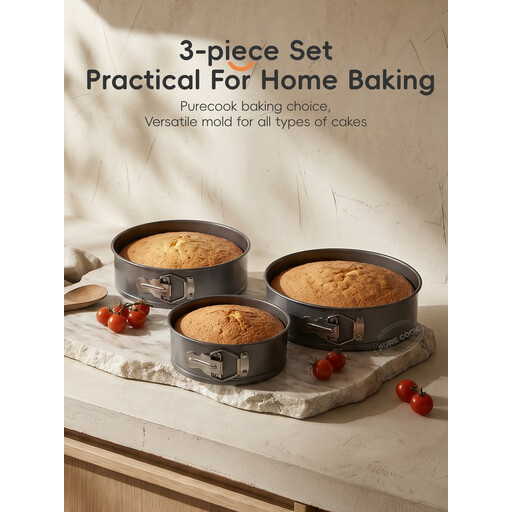
Why we love it: This set is perfect for getting started. With three different sizes, it adapts to any recipe, from a birthday cake to a cheesecake. Its springform design is a godsend for beginners who dread the unmolding process.
Its metal locking buckle ensures a tight seal and minimizes the risk of leaks, a recurring problem with entry-level springform pans.
Versatility: The set of three sizes (18, 20, and 24 cm) covers most baking needs. The non-stick coating simplifies unmolding and cleanup.
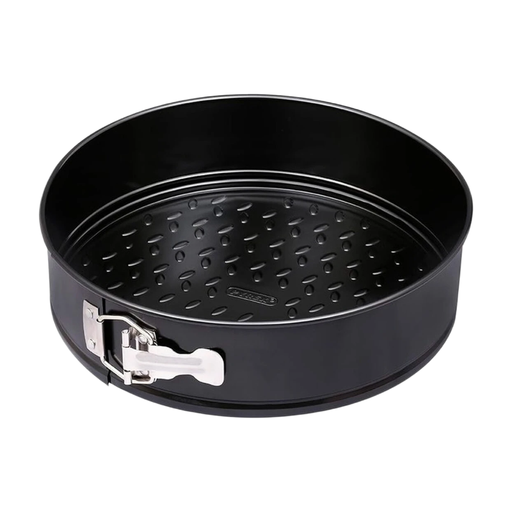
Why we love it: For fans of cheesecakes, sponge cakes, or entremets, flawless unmolding is non-negotiable. This PYREX pan was designed for this very purpose, with its removable base and high-performance coating.
It tackles the two major pitfalls: its secure locking mechanism prevents leaks, while its Metal Glide non-stick coating promises great durability and a snag-free release.
Even baking: Its steel construction ensures uniform heat conduction, which is essential for the precise baking of delicate cakes that can't tolerate any hot spots.
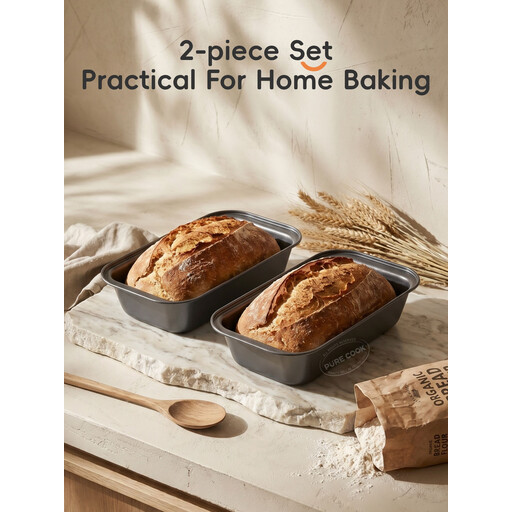
Why we love it: For those passionate about homemade sandwich bread, whole wheat loaves, or savory cakes, a suitable pan is a must. This heavy-gauge carbon steel model is built for home baking.
Its heavy-gauge carbon steel construction prevents any warping from the heat and guarantees a straight, even rise, unlike low-quality pans that tend to bow under the weight of the dough.
Optimized heat conduction: The material was chosen for its perfectly even heating, a decisive factor for achieving a perfectly golden crust and a fully cooked center without the risk of burning the bottom.
We have selected a full range of products for you that meet our demanding selection criteria and current safety standards.
To maximize the life of your coating, the golden rule is to be gentle. Opt for hand washing with a non-abrasive sponge and soapy water. Most importantly, never cut directly in the pan with a knife or other metal utensil. For storage, avoid stacking other hard objects inside that could scratch the surface.
It all depends on the result you're looking for.
If the leak is minor, one trick is to wrap the outside of the pan's base with one or two layers of aluminum foil before closing it and pouring in the batter. This creates a backup barrier. If the leak is significant, it's often a sign of a worn-out mechanism or a design flaw. It's probably time to invest in a more reliable model where a leak-proof seal is a key selling point.