
Livraison le jour même ou le lendemain

Qualité garantie

Débloquez vos offres de bienvenue: Livraison GRATUITE | Jusqu'à -80 % | 30 jours d'essai gratuits à JoyPlus
Téléchargez l'application
The promise of a perfect cake, beautifully golden and released without a fuss, is what drives every baker, from novice to expert. Yet, faced with a maze of shapes, materials, and mechanisms, choosing the right cake pan often becomes a headache. An unsuitable pan almost guarantees a baking disaster, a cake that sticks, and a release that turns into a fiasco.
As the head of product selection at Joybuy, my mission is to help you make sense of it all. This guide gets straight to the point: practical advice to find the baking tool that will elevate your recipes, based on objective criteria, far from marketing jargon.
Before diving into our top picks, let's review the essential criteria that will guide your choice.
The material of your pan is not a minor detail: it directly affects heat distribution and, therefore, the evenness of your bake.
For the most fragile creations, the release mechanism isn't an option—it's a necessity.
In baking, proportions are everything, and that applies to the size of your pan! A recipe is generally designed for a specific diameter. The most common are the 24 cm pan and the 26 cm pan, perfect for cakes serving 6 to 8 people. A quick look at your recipe is therefore essential to choose the right size and ensure a perfect result.
Here are three recommended options, selected for their functionality, versatility, and quality design.
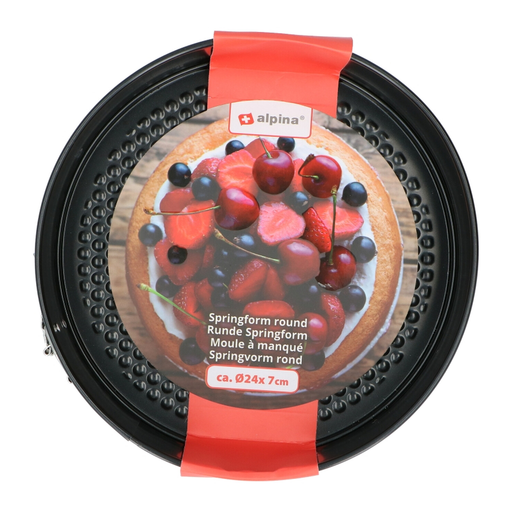
Why it stands out
This springform pan is a classic for a reason. Its metal construction ensures even heat distribution, while its simple and effective mechanism allows for a flawless release. Say goodbye to the anxiety of breaking your cheesecake or mousse cake at the critical moment of presentation. Its standard 24 cm diameter makes it compatible with the vast majority of recipes.
Pros
Who is it for?
For anyone who wants to nail their delicate cakes every time, without any fuss. A reliable and effective staple.
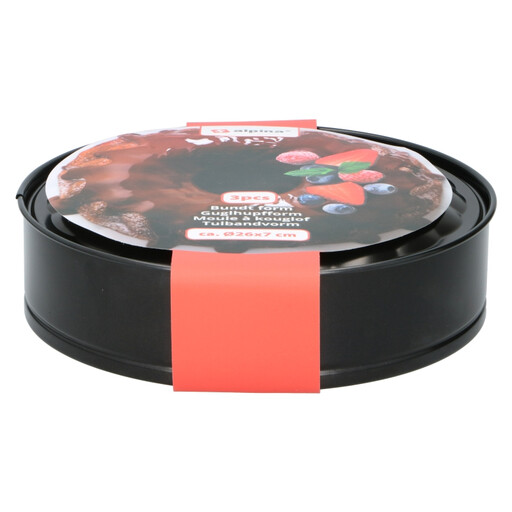
Why it stands out
This clever pan is actually a 2-in-1. Thanks to its two interchangeable bottoms, you can switch from a classic round cake to a traditional Bundt cake in an instant. Its non-stick coating facilitates release, even with fluted shapes, and makes cleanup a breeze. With its generous 26 cm diameter, it's perfect for cakes meant for sharing.
Pros
Who is it for?
For creative bakers who love to mix things up without multiplying their tools. A smart choice to optimise storage space.
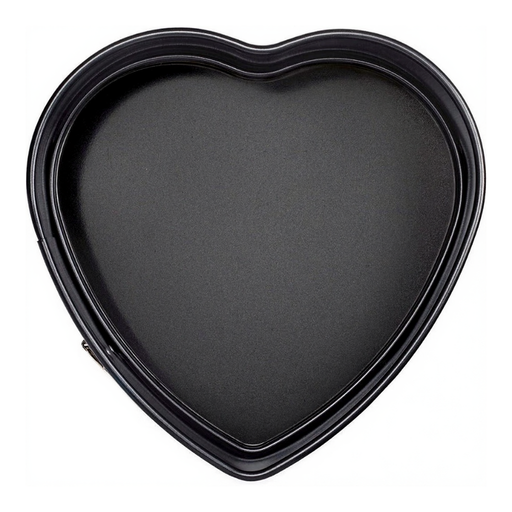
Why it stands out
With this heart-shaped cake pan, Le Creuset delivers a tool that combines beauty and function. Made from heavy-gauge carbon steel, it's warp-resistant and guarantees exceptional heat distribution for surgically precise baking. Its PFOA/PTFE-free, silicone-based non-stick coating is designed to last and simplify release. More than just a pan, it's the bakeware that turns a cake into a message.
Pros
Who is it for?
For enthusiasts who see baking as an act of love and are looking for exceptional, durable, and high-performance equipment to mark special moments.
None of these models catch your eye? Or perhaps you're looking for a different type of tool for your creations? Feel free to browse our complete collection.
Even with an excellent non-stick pan, the tried-and-true "grease and flour" method is a safe bet. Grease generously, dust with flour, then tap out the excess. Another foolproof trick: a disc of parchment paper cut to fit the bottom. This is especially recommended for removable-bottom pans.
The classic (or one-piece) pan is made from a single piece. To release the cake, you have to flip it over, with all the risks that entails. The springform pan, on the other hand, has a side that unclips. The cake is thus freed from the side, without any risky manoeuvres. It's THE safety solution for delicate creations (cheesecake, Bavarian cream...) that wouldn't survive being flipped.
It's a very bad idea, especially for pans with a non-stick coating. Dishwasher detergents are too harsh and, over time, they will destroy the coating and can cause the metal to rust. To keep your pan looking like new, nothing beats washing it by hand with a soft sponge and a little soapy water.