People avoiding caffeine in the evening
You want to be able to clearly identify whether the product you’re buying is caffeine-free, rather than relying on a name that suggests it’s suitable for the evening.


If you’re looking for a caffeine-free drink in the evening, choose a herbal infusion or rooibos that’s explicitly labelled “caffeine-free”, then check the ingredients. If you’d rather have the taste of tea, look for a product labelled “decaffeinated” without assuming it’s completely caffeine-free. To keep your shopping affordable, compare pack sizes too, and check whether blends contain liquorice.
You want to be able to clearly identify whether the product you’re buying is caffeine-free, rather than relying on a name that suggests it’s suitable for the evening.
You compare the number of tea bags and the pack weight to choose a size that suits your usual consumption.
You prefer to know which plants and flavourings are in a blend before making it part of your routine, particularly if it contains liquorice.
Choose this if: being caffeine-free matters more to you than the taste of tea; look for an explicit statement on the product.
Bear in mind: the word “infusion” alone doesn’t tell you everything about the ingredients in a blend.
Consider this if: you’re mainly looking for the taste of tea.
Bear in mind: tea comes from the tea plant and naturally contains caffeine; check that the specific product is labelled “decaffeinated”.
| Criteria | What to check | Who is it for? |
|---|---|---|
| Caffeine-free | The “caffeine-free” or “decaffeinated” label, depending on your chosen drink, and the product’s ingredient list. | For my evening drink, I want to know whether the product contains tea or clearly states that it’s caffeine-free. Around 34% of consumers put this check first. |
| Pack size | The number of tea bags and the net weight, compared across sizes intended for the same use. | If I make it often, I want a pack size that suits my routine. Around 33% of consumers put pack size first. |
| Taste and preparation | The plants or flavourings listed, as well as instructions for preparing it hot or cold. | I want a blend I’ll enjoy drinking in the evening, rather than defaulting to an infusion designed to be made cold. Around 20% of consumers prioritise taste and how they’ll use it. |
| Ingredients and precautions | The full ingredient list, particularly whether it contains liquorice, and any warnings on the packaging. | Before making a blend part of my regular routine, I prefer to know what’s in it and take account of any precautions that apply to me. Around 13% of consumers prioritise the ingredients. |
According to E.Leclerc, tea comes from the tea plant and naturally contains caffeine, while herbal infusions are made by steeping other plants. However, a drink’s name is no substitute for checking its ingredients.
To avoid caffeine in the evening, check the ingredients and choose a product that’s explicitly labelled “caffeine-free”.
The DGCCRF points out that nutrition and health claims on food are regulated. A suggestive name doesn’t prove that an infusion will have a medical effect.
Choose a drink based on what it is, its ingredients and its flavour, rather than expecting its name to promise a therapeutic effect.
Anses warns that consuming large amounts of liquorice-containing foods or drinks repeatedly can lead to hypokalaemia and high blood pressure.
Check the ingredient list for liquorice. If your circumstances or medication mean you need to take precautions, ask a healthcare professional for advice before consuming it regularly.
Products listed by E.Leclerc, Carrefour and Auchan come in packs of 20 or 25 tea bags. So two similar-looking packs don’t necessarily contain the same number of servings.
Check the number of tea bags and the net weight, then make sure the blend still suits your needs in the evening.
Worth considering for infusions in boxes of 25 tea bags, including the Douce soirée blend.
A rooibos in a pack of 20 tea bags, with a name that explicitly states it contains no caffeine.
The Keep Calm blend is worth a look if you want to check the details of a herbal recipe.
The brand describes Be Cool as an evening infusion with verbena, mint and liquorice.
These products are options for a caffeine-free drink made with herbal infusions or rooibos. Compare their ingredients, number of tea bags and preparation method: a cold-brew infusion isn’t intended for the same use as a hot evening drink.
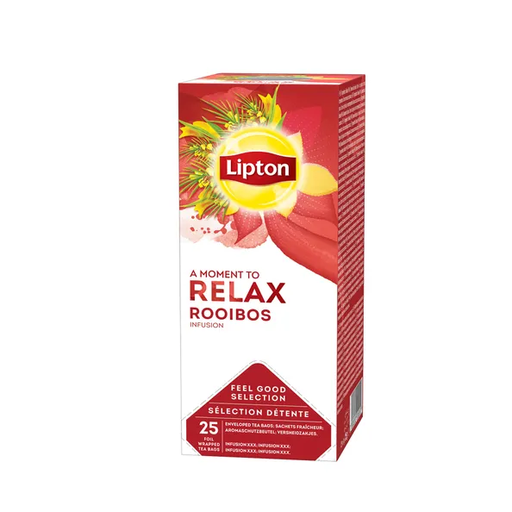 Image unavailable
Worth considering if you prefer rooibos for your evening drink: the product information describes this one as caffeine-free.
The box contains 25 tea bags. Check the label and ingredients on the pack you choose.
 Image unavailable
A camomile infusion to consider if you’d like a herbal blend for later in the evening.
The box contains 21 tea bags and weighs 42 g. The product description says it’s caffeine-free; check this on the packaging you receive.
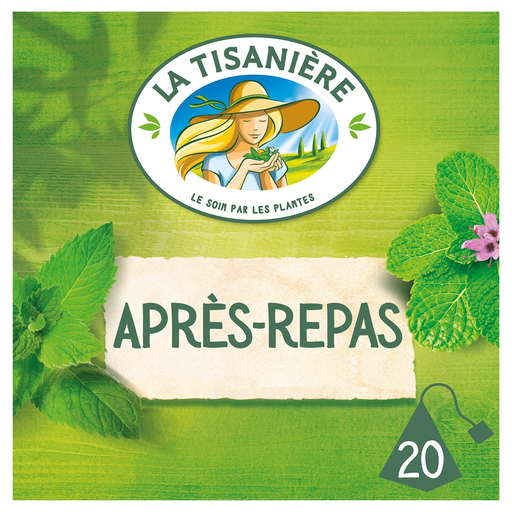 Image unavailable
This infusion is described as naturally caffeine-free. Check the recipe if you’re thinking of drinking it regularly.
The box contains 20 tea bags. The blend also contains liquorice: bear in mind Anses’ warning about consuming large amounts repeatedly.
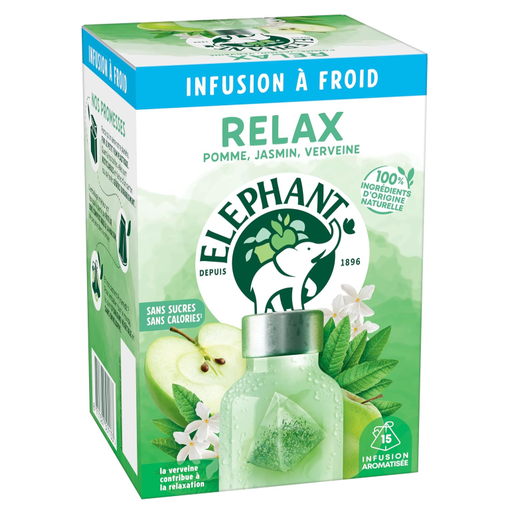 Image unavailable
Worth considering if a caffeine-free cold infusion suits your evening better than a hot cup.
The box contains 15 tea bags. The instructions say to steep one in 500 ml of cold water for 5 minutes; check the instructions before trying to make it hot.
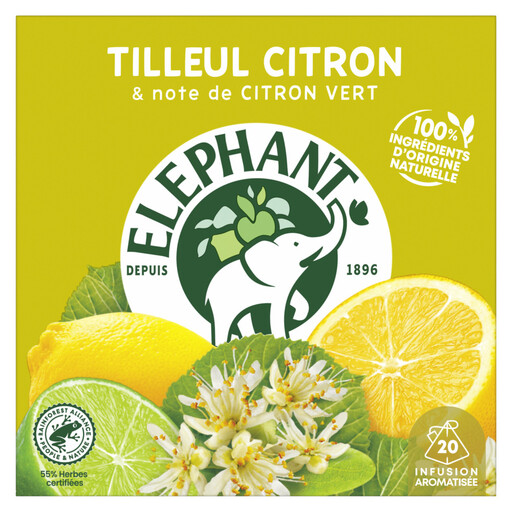 Image unavailable
Worth a look if you prefer a herbal infusion with lime blossom and lemon for your evening drink.
The box contains 20 tea bags and weighs 28 g. The product description says the infusion is caffeine-free; check this on the packaging you receive.
The name alone isn’t enough to confirm this. According to E.Leclerc, tea comes from the tea plant and naturally contains caffeine, while herbal infusions are made from other steeped plants. If avoiding caffeine is your top priority, check the ingredient list and look for an explicit statement on the product.
No. These words don’t guarantee any health effect. The DGCCRF points out that nutrition and health claims on food are regulated. Choose your drink based on its ingredients and the information that applies to the product, rather than treating it as a remedy.
Not necessarily, but how much and how often you consume it matters. Anses links high, repeated liquorice consumption with the risk of hypokalaemia and high blood pressure. It also notes that some people may be more sensitive in certain circumstances and that liquorice can interact with medicines. Check the ingredients and ask a healthcare professional for advice if these precautions apply to you.
Start by comparing the number of tea bags and the net weight of products intended for the same type of preparation. Then check the ingredients, caffeine information and brewing instructions: a pack designed for cold brewing may not suit your preference for a hot drink in the evening.