Families looking to avoid caffeine in the evening
If caffeine-free is your top priority, distinguish between an infusion described as caffeine-free and decaffeinated tea, which may contain residual caffeine that you’ll need to check.


For evening drinks in a large family, choose an herbal infusion explicitly labelled ‘caffeine-free’ if you want to avoid any residual caffeine. If the taste of tea matters more, decaffeinated tea is another option, provided you check its stated caffeine content: according to Carrefour’s product listing, Lipton Thé du Soir contains less than 0.1% caffeine. For regular purchases, also check the number of tea bags and the ingredients in each blend.
If caffeine-free is your top priority, distinguish between an infusion described as caffeine-free and decaffeinated tea, which may contain residual caffeine that you’ll need to check.
When several people have a drink in the evening, the number of tea bags in each box can help you plan your next shop and compare similar pack sizes.
Taking turns to try different blends can suit different preferences. However, it’s important to read the ingredients for each one, especially if an infusion containing liquorice is consumed regularly.
Start by choosing between caffeine-free herbal infusions and decaffeinated tea, depending on how much you value the taste of tea and how important it is to avoid residual caffeine. Then compare the pack sizes and ingredients of blends that suit your household.
Worth considering: if you’re looking for an evening blend explicitly labelled ‘caffeine-free’.
Bear in mind: rooibos or a herbal blend won’t necessarily taste like tea.
Worth considering: if you’d like to keep the taste of tea while choosing a product with reduced caffeine content.
Bear in mind: ‘decaffeinated’ doesn’t mean ‘caffeine-free’; Carrefour’s product listing for Lipton Thé du Soir states that it contains less than 0.1% caffeine.
| Criterion | What to check | Who is it for? |
|---|---|---|
| Caffeine-free | Look for ‘caffeine-free’ on the specific blend. For decaffeinated tea, check the stated residual caffeine content. | If I want to avoid residual caffeine in evening drinks, the difference between herbal infusions and decaffeinated tea matters more than the taste of tea; around 44% of consumers would make being caffeine-free their priority. |
| Pack size and restocking | Compare the number of tea bags and the net weight of the boxes you’re considering, then check that the pack size suits how often you use them. | When several people share the same box, I want to know how many cups it will make before I need to restock; this would be the top priority for around 33% of consumers. |
| Tastes and ingredients | Read the ingredients list for each blend, particularly those containing liquorice. | To cater for different tastes, I’d like to offer a variety of infusions without choosing an ingredient someone in the household wants to avoid; around 23% of consumers would put their choice of blends and ingredients first. |
Reduced caffeine doesn’t mean there’s none: Carrefour states that Lipton Thé du Soir contains less than 0.1% caffeine.
If being caffeine-free is essential, look for this wording on the specific infusion and check the ingredients again.
The products reviewed include boxes of 20 to 25 tea bags, so two boxes won’t necessarily make the same number of cups.
Check the number of tea bags and the net weight before working out how much your household needs.
Names that suggest sleep or digestion don’t tell you everything that’s in a blend. Anses warns that high, repeated consumption of liquorice can, among other things, lead to hypokalaemia and high blood pressure.
Read the full list of herbs before buying several boxes of the same blend, and don’t choose an infusion on the assumption that it has a therapeutic effect.
A blend the family enjoys may not be available next time you shop; when checked, Carrefour’s product listing for Lipton Thé du Soir said it was unavailable.
Before choosing a product for evening drinks, find another blend that meets the same caffeine requirement and suits your household.
These examples show different types of blends and pack sizes to compare. The features of one product don’t apply to every herbal infusion or tea sold under the same brand.
Decaffeinated Thé du Soir is aimed at households that want to keep the taste of tea.
The herbal infusion range offers several blends to explore when tastes differ at home.
Carrefour Classic’ Verbena is an example of a simple tea bag blend.
Tisèa infusions let you explore several blends in a 25-tea-bag pack.
The retailer stocks, among other things, a Clipper herbal and spice infusion.
These products are options for evening drinks, with different blends and numbers of tea bags. If caffeine-free is essential, check the labelling and ingredients on the pack you choose.
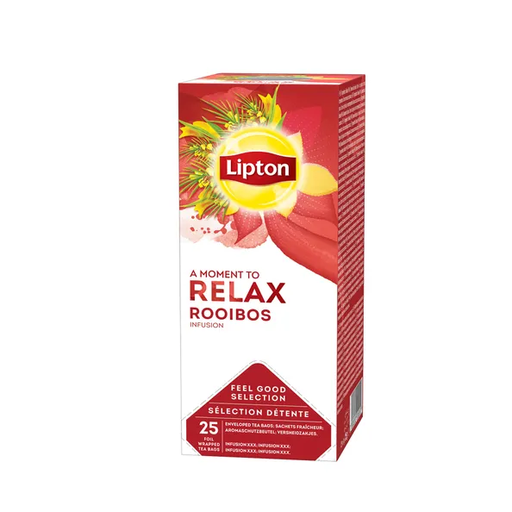 Image unavailable
Worth considering if you’re looking for a rooibos infusion for evening drinks; check the caffeine information on the pack.
Box of 25 tea bags.
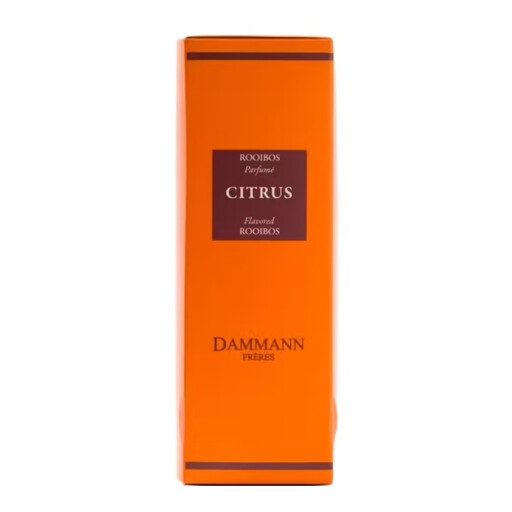 Image unavailable
A rooibos blend with citrus to consider if it suits your household; check the full ingredients before choosing it.
Box of 24 tea bags, stated weight 48 g.
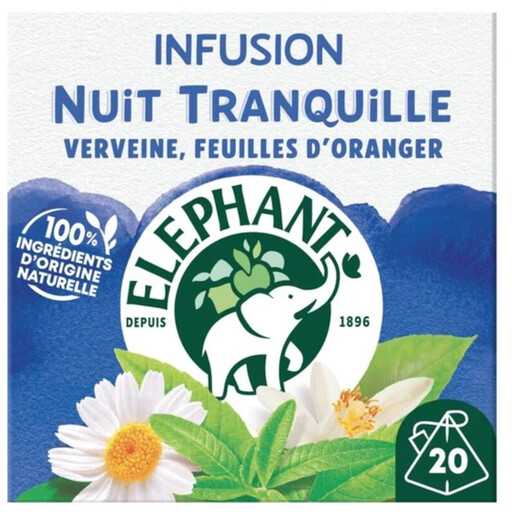 Image unavailable
A blend to consider if you’d like to try different evening infusions; its name doesn’t mean it will help you sleep.
Box of 20 tea bags, stated weight 30 g. Check the list of herbs to make sure it suits your household.
 Image unavailable
Worth considering if your household prefers chamomile to a blend of different flavours; check the ingredients on the pack.
Box of 21 tea bags, stated weight 42 g.
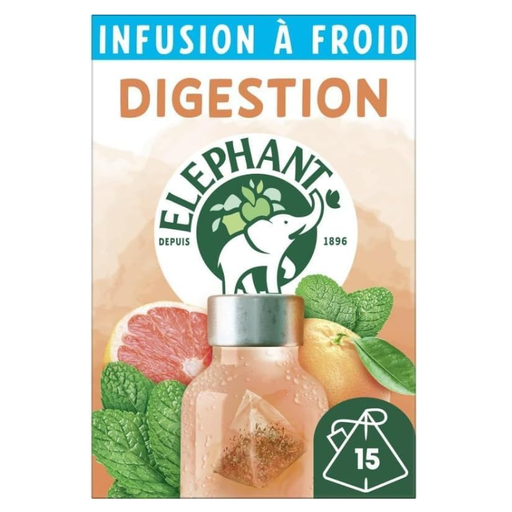 Image unavailable
Worth considering if you’d also like to make a cold infusion; follow the preparation instructions for this blend rather than those for a hot infusion.
Box of 15 tea bags. The name ‘Digestion’ alone doesn’t prove that it has any effect.
No. If you want to avoid residual caffeine, look for an infusion explicitly labelled ‘caffeine-free’. Decaffeinated tea may still contain caffeine; according to Carrefour, Lipton Thé du Soir contains less than 0.1%.
Start by checking the number of tea bags in each box to work out how often your household will need to restock. The products featured here come in different pack sizes, so compare them based on the number of cups you expect to make, without assuming that every blend is prepared in the same way.
No. A blend’s name doesn’t prove that it has an effect on sleep or health. Choose according to the ingredients, preparation instructions and your household’s tastes, and don’t use an infusion as a treatment.
Because high, repeated consumption may pose risks: Anses warns that it can lead to hypokalaemia and high blood pressure, among other things. Check whether each blend contains liquorice; if you have any health concerns, seek appropriate professional advice.