
Livraison le jour même ou le lendemain

Qualité garantie

Débloquez vos offres de bienvenue: Livraison GRATUITE | Jusqu'à -80 % | 30 jours d'essai gratuits à JoyPlus
Téléchargez l'application
Securing your bike or scooter in the city can often be a challenge. Among the vast array of options, cable locks stand out for their light weight and flexibility. But be warned: not all models are created equal, and a poor choice can quickly turn into a nightmare. As a product expert for Joybuy, my mission is to help you navigate the options. Together, let's decode the essential criteria for making a smart purchase, cutting through the marketing noise.
Before making a decision, it's crucial to understand the pitfalls that can render a lock completely useless, or even counterproductive. Keeping these points in mind will help you avoid major disappointments.
To make the right choice, focus on objective criteria that define a cable lock's security level and everyday usability.
The true strength of a cable lock lies in its internal structure. Opt for models made of braided steel, which consists of multiple steel strands wound together. This design offers far better cut resistance than a simple single-strand cable. A substantial diameter (over 8?mm) has a definite deterrent effect, although it doesn't guarantee absolute invulnerability. The goal is to make the job harder for an opportunistic thief.
The ideal length depends on your habits. A flexible 1?m lock or longer offers maximum versatility?– it allows you to easily secure your bike to a wide post, a tree, or even secure a stroller by attaching it to another object. It's also the ideal solution for locking two bikes together. The downside?– it will be a bit heavier and bulkier. For an electric scooter lock, a length of 60 to 100?cm is usually sufficient for securing it to a standard anchor point.
The choice between a keyed bike lock and a combination model is primarily a matter of personal preference.
A particularly clever design is the cuff lock?– it combines a cable with a quick and intuitive locking system, perfect for quick stops.
Instead of an impersonal list, we've selected concrete solutions for specific user profiles.
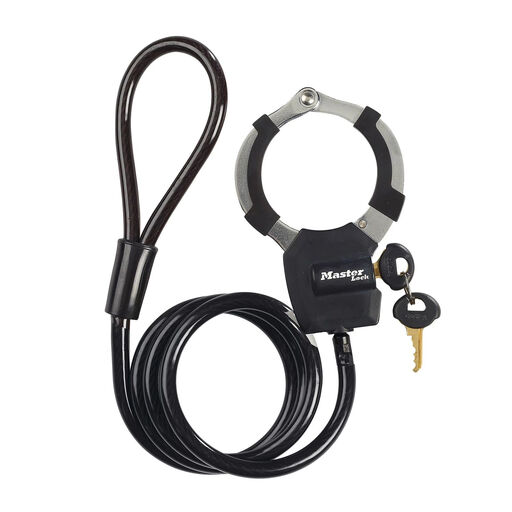
Why we chose it: Perfect for cyclists, electric scooter users, or parents making frequent short stops. Its cuff design allows for lightning-fast, effortless locking to urban furniture.
Its braided steel cable is much more resistant than a single-strand wire. Its vinyl coating effectively protects your paint from scratches. The pin-tumbler cylinder provides enhanced security against picking.
The combination of a one-metre Master Lock cable and a cuff-style lock offers the ideal compromise between flexibility, speed of use, and security for short-term stops.
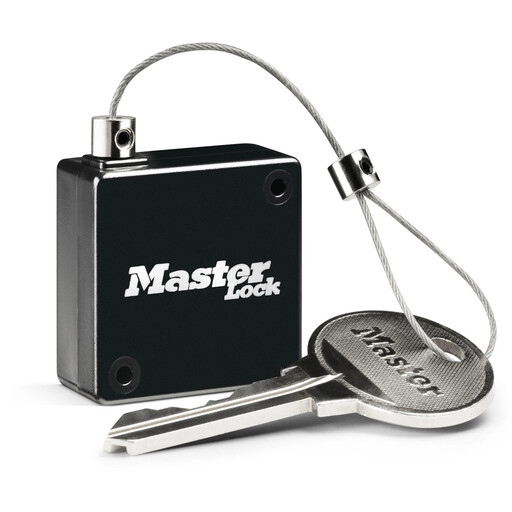
Why we chose it: Essential for families, flatmates, or small businesses that share bikes and locks. This clever accessory ensures the lock key is never lost or accidentally taken.
It tackles an often-underestimated problem: losing the key, which renders the main lock useless. When attached inside a secure key box, it ensures the key is always available and returned to its proper place.
Its 91 cm twisted steel cable provides a comfortable reach for using the key without detaching it. This isn't a lock itself, but an essential management solution for any shared-use scenario.
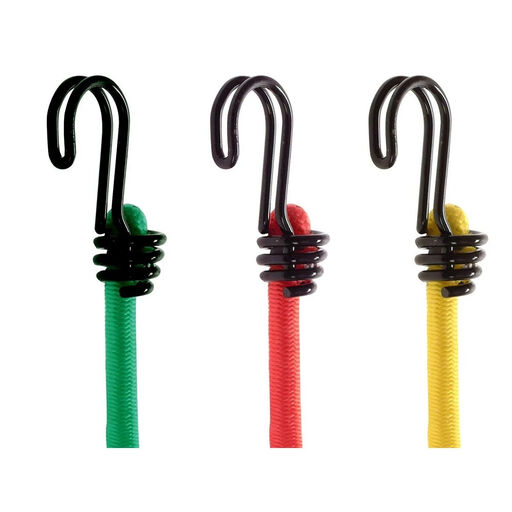
Why we chose it: For those who carry items on their luggage rack (helmet, bag, groceries) and want to keep them secure during a stop. Note: this is not an anti-theft lock, but an accessory for securing cargo.
It complements the main lock by deterring snatch-and-grab theft of your accessories. It dispels the false sense of security that locking the frame also protects your personal belongings.
The twin-wire hooks are much sturdier than those on standard bungee cords, and their rounded ends are designed to prevent scratching the frame. The colour-coding system allows you to spot the required length at a glance.
Explore our full selection of products that meet our demanding selection criteria and current security standards.
For typical urban use where you lock your bike to dedicated racks, a length of 80?cm to 1 metre is usually sufficient. If you often need to secure it to wide posts, trees, or want to lock two bikes together, opt for a model between 1.20?m and 1.80?m.
A cable lock is a good secondary solution for short stops in low-risk areas. For an electric bike (e-bike), which is much more valuable, it is highly recommended to use two different types of locks: a rigid U-lock to secure the frame to a fixed point, and a cable lock to secure the front wheel or saddle. This dual-layer protection is infinitely more of a deterrent.
To extend the life of your padlock, lubricate the mechanism once or twice a year with a suitable product (e.g., powdered graphite or a silicone spray). Avoid greasy oils, which tend to attract dust. If you live in a humid region, try to position the padlock with the keyway facing down to prevent water from collecting inside.