
Livraison le jour même ou le lendemain

Qualité garantie

Débloquez vos offres de bienvenue: Livraison GRATUITE | Jusqu'à -80 % | 30 jours d'essai gratuits à JoyPlus
Téléchargez l'application
A cabin travel bag can make a short trip, business journey or low-cost flight far easier. But an appealing photo and generous capacity are not enough to guarantee the right choice. Actual dimensions, empty weight and interior layout will directly affect your experience at the airport.
Before buying an underseat bag, cabin suitcase or cabin backpack, it is therefore worth separating genuinely useful features from marketing claims that can sometimes be difficult to verify.
A bag marketed as “cabin-compatible” may still exceed the limits specified for your ticket. Rules vary between airlines and may also depend on the fare you have selected.
For a Ryanair cabin bag, the dimensions generally specified for a personal item placed under the seat are 40 × 20 × 25 cm. Always check this measurement on the airline’s website before departure. A soft, lightly packed bag may sometimes fit the sizer, unlike a rigid or overfilled model.
A capacity of 35, 48 or 110 litres may sound appealing. However, a bag that is already heavy when empty reduces your usable load and quickly becomes tiring to carry. On a flight, every gram matters far more than it does on a car journey or camping trip.
Always compare the bag’s empty weight, its dimensions and the maximum weight permitted by the airline. A lightweight travel bag weighing 0.36 to 0.70 kg may be much more comfortable to carry than a roomier but heavier model.
A single large compartment can quickly turn finding a T-shirt, cable or document into a full-scale rummage. By contrast, multiple pockets, a suitcase-style opening and a dedicated document compartment make security checks and transfers easier.
Also inspect the zips, stitching, handles and whether the bag has a strap for attaching it to a wheeled suitcase. A material described as water-resistant is not necessarily waterproof: check the product description carefully.
For an underseat personal item or an airline hand bag, note the three dimensions in the same order: length, width and height. Include handles, exterior pockets and wheels whenever they extend beyond the main body.
For a cabin suitcase, dimensions of 57.5 × 39.5 × 24 cm match the format of certain models, but do not guarantee acceptance by every airline. Checking in advance remains essential, particularly for low-cost flights.
A 20-litre bag is generally sufficient for the essentials of a short trip. A 35- to 48-litre weekend bag offers more room for clothing and shoes, but it can become difficult to close or carry once packed to the brim.
For clothing, travel packing cubes and suitcase organisers make it easier to separate outfits, accessories and toiletries. They keep contents accessible without adding significant weight to your luggage.
A handled duffel bag is suitable for short journeys, while an adjustable shoulder strap distributes the load more effectively. A cabin backpack is especially practical on public transport, around campuses and during business travel, particularly when it features a padded back panel and chest strap.
Oxford fabric, polyester and nylon are among the most common materials. Check for reinforced stitching, metal zips, protective feet and a sufficiently structured base. For outdoor use, also examine the durability of the wheels and how easily the folding system operates.
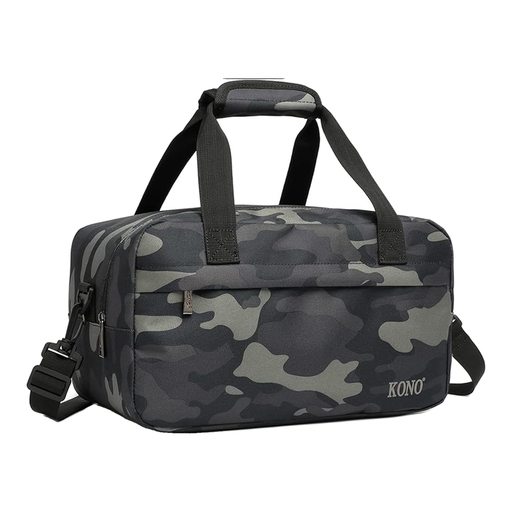
Why it suits this profile: this soft-sided bag is designed for travellers whose fare includes a personal item to be placed under the seat, whether for a weekend away or a short business trip.
Its stated dimensions of 40 × 20 × 25 cm can be compared directly with the conditions of your fare. Its listed weight is approximately 0.36 kg.
20 L capacity, zipped front pocket, adjustable shoulder strap and rear sleeve for a telescopic handle.
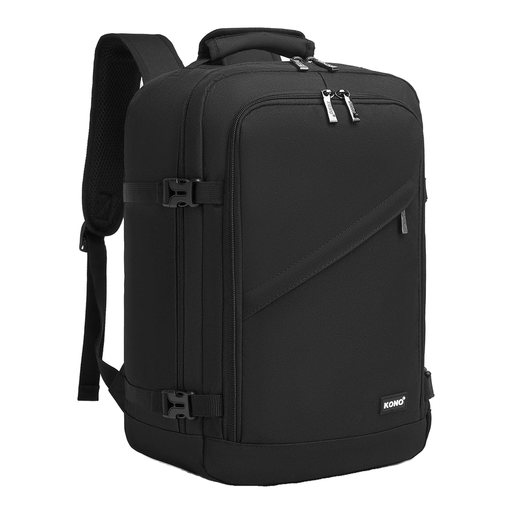
Why it suits this profile: its format works well for students, commuters and business travellers moving through stations and airports while keeping their hands free.
Its suitcase-style main opening makes packing easier, while the front pocket can hold a laptop or tablet.
Approximate dimensions of 40 × 25 × 20 cm, padded and ventilated back panel, adjustable shoulder straps, chest strap and trolley sleeve.
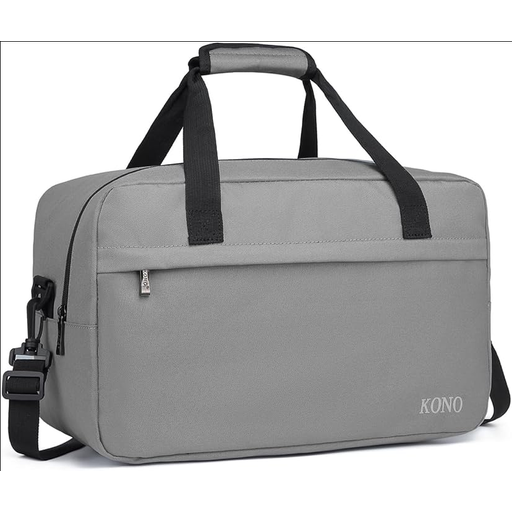
Why it suits this profile: this weekend bag is well suited to hotel stays, business trips and journeys where a little extra capacity is welcome.
The description clearly distinguishes the dimensions from the capacity. Nevertheless, check that 55 × 35 × 25 cm matches your flight’s baggage allowance.
Listed weight of 0.7 kg, water-resistant Oxford fabric, mesh pocket, front pocket and three carrying options.
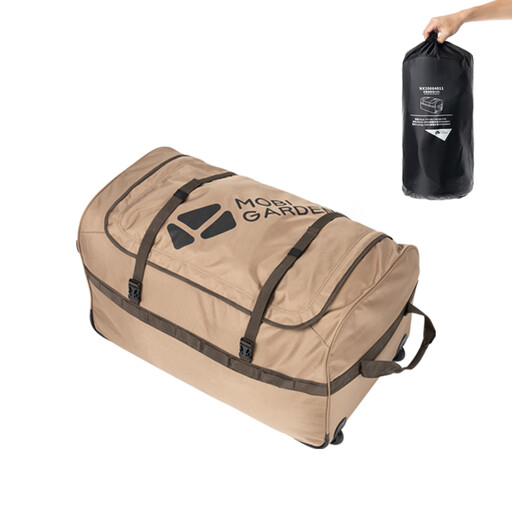
Why it suits this profile: it is intended for campers, anglers and families transporting bulky equipment—not for passengers looking for an underseat personal item.
Its intended use is clear: with a capacity of 110 L and dimensions of 70 × 40 × 40 cm, it should not be mistaken for cabin luggage.
Integrated wheels, listed weight of approximately 1.75 kg, folded dimensions of 42 × 21 cm and easy cleaning with a cloth.
Suitcase organisers are particularly useful when several people share the same bag or when clothing needs to remain neatly separated. The set of eight packing cubes offers several sizes, mesh panels and zipped closures. The seven-piece ANQI set is another lightweight solution for organising clothing, accessories and toiletries.
For a foldable travel bag to keep inside a suitcase, the Beneunder LC168 has a listed weight of approximately 220 g and an expandable capacity of 20 to 35 L. The foldable GASTON LUGA offers 23 L, two exterior pockets and storage in its own pouch. These models can be used as an extra bag, sports bag or duffel bag, provided they comply with transport limits.
A hard-shell cabin suitcase generally provides better protection for fragile items. The Burton Oxford and Liverpool models feature an ABS shell, four multidirectional wheels and several size options. The XS size measures 47 × 32 × 20 cm and holds 23.4 L, while the S size measures 57.5 × 39.5 × 24 cm and holds 40 L. Check your ticket’s baggage allowance before choosing a size.
Browse an updated selection of solutions to compare the dimensions, weight and organisation of your next piece of luggage.
Start by checking the conditions associated with your ticket. For a personal item placed under the seat, choose a model whose stated dimensions match 40 × 20 × 25 cm, then check its empty weight. A soft 20-litre bag, such as some Kono models, keeps documents and electronic devices within easy reach.
With a capacity of between 20 and 35 L, you will generally have enough space for a few clothes and accessories, depending on the season and whether you can do laundry during your stay. A 48-litre model may suit a more heavily packed trip, but its dimensions could exceed the permitted cabin limits.
Avoid overpacking, distribute the weight between the different pockets and never force the zips. Clean the surface according to the manufacturer’s instructions, allow the bag to dry before storing it and remove sand from the wheels after outdoor use. Distributing the contents evenly also reduces the strain placed on the stitching and handles.