
Livraison le jour même ou le lendemain

Qualité garantie

Débloquez vos offres de bienvenue: Livraison GRATUITE | Jusqu'à -80 % | 30 jours d'essai gratuits à JoyPlus
Téléchargez l'application
More than just packaging, an envelope is the first point of contact with your message. For a wedding announcement, an invitation, or a personal letter, its feel and appearance set the tone before a single word is read. But be warned: the stationery market is filled with pitfalls that can quickly turn a beautiful intention into a disappointment. Too many buyers end up with subpar products that fall far short of their expectations.
To avoid falling into the trap, here are the most common pitfalls to steer clear of:
Choosing the right envelope, like a C6 laid paper envelope, requires paying attention to a few technical details that make all the difference.
To guarantee quality, you need to look beyond the photos and focus on three fundamental parameters: the paper type, its weight, and the sealing system.
Laid paper is recognisable by its unique texture. It features fine horizontal lines, the laid lines, intersected by more widely spaced vertical lines, the chain lines. This legacy of traditional papermaking techniques gives the paper a subtle texture and an unparalleled tactile elegance.
A textured C6 envelope made from laid paper is much more than a simple container: it is an integral part of the experience. Its texture subtly guides handwriting and offers a pleasant feel in the hand. It is an immediate sign of special attention to detail, a natural choice for elegant correspondence and major events.
Paper weight, expressed in grams per square metre (g/m? or gsm), is the key indicator of the paper's density. It directly determines its rigidity, opacity, and feel.
For a C6 envelope intended for an announcement, aim for a weight of at least 90 g/m? to ensure the card's design doesn't show through.
Rather than an exhaustive list, here are a few options that meet specific needs, taking into account the quality criteria we've just discussed.
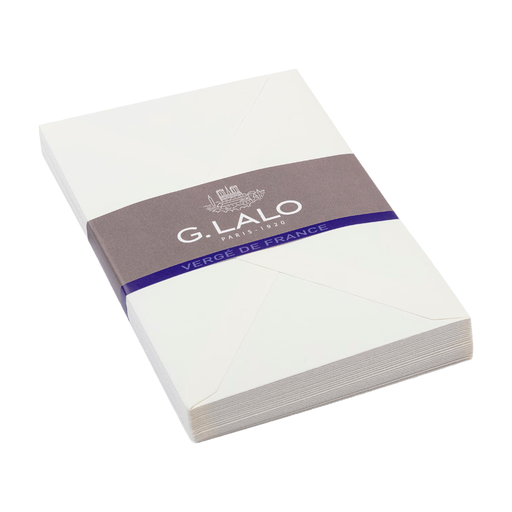
Why we chose it: For major events (weddings, births) or prestigious correspondence where authenticity is paramount. The trio of the C6 format, Lalo laid paper, and a gummed seal embodies French elegance.
This is genuine laid paper from France, not a pale imitation. Its 100 g/m? weight guarantees perfect opacity and an impeccable structure, a far cry from thin, transparent envelopes.
The texture of the laid lines offers a unique tactile experience and lends undeniable character to your invitations. The quality of the gum ensures a reliable seal, without any unpleasant surprises.
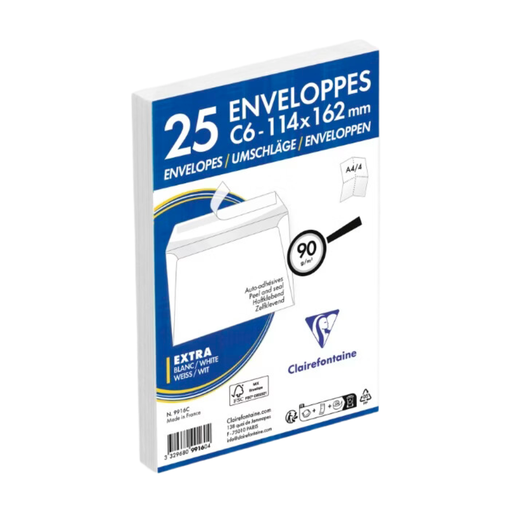
Why we chose it: Perfect for thank-you cards, birthday invitations, or personal bulk mailings, when you want to combine speed and quality.
Although the paper is not laid, its 90 g/m? weight and the renowned whiteness of Clairefontaine paper place it well above standard envelopes. The self-adhesive seal is built to last.
The self-adhesive seal with its protective strip is a significant time-saver. It ensures a clean and secure closure every time.
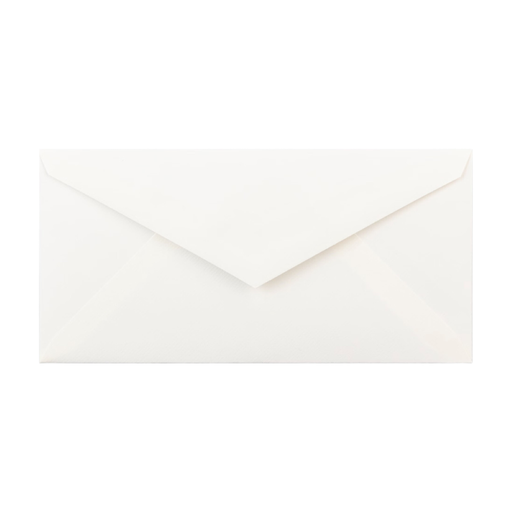
Why we chose it: For professionals who want their business mail to stand out. The DL format is perfect for a tri-folded A4 sheet, but the Lalo laid paper adds a touch of prestige that outclasses standard office envelopes.
These envelopes are lined, adding a layer of opacity to protect confidential documents. The 100 g/m? weight and laid texture dispel the cheap image of classic office envelopes.
The combination of the professional DL format and the elegance of lined laid paper reinforces a polished and serious brand image.
Discover our full selection of envelopes that meet our strictest quality standards.
A gummed envelope has a flap with an adhesive that you must moisten to seal it. This is the traditional method, often favoured for its formal touch. A self-adhesive envelope has an adhesive strip protected by a film: you peel off the film, press down, and it's sealed. It's faster and more convenient.
Yes, a 100 g/m? paper weight is an excellent choice. It provides enough opacity to prevent the invitation card from showing through, while giving the envelope a premium feel and structure without being too heavy or expensive.
To prevent the gum from activating with humidity, it's essential to store them in a cool, dry place. Keep them flat, ideally in their original packaging, so they don't warp and the flaps don't stick together.