Shoppers keeping an eye on declared sugars
If you’re stocking up, the ‘of which sugars’ value per 100 g helps you compare specific recipes, without assuming that a claim on the packaging is enough to tell them apart.


When buying sardines in bulk and keeping an eye on declared sugars, compare the ‘of which sugars’ value per 100 g rather than relying on a ‘reduced sugars’ claim. The plain sardines reviewed list 0 g or less than 0.5 g per 100 g, but you should check each recipe individually. Choose a pack size that suits how much you’ll use once opened, too.
If you’re stocking up, the ‘of which sugars’ value per 100 g helps you compare specific recipes, without assuming that a claim on the packaging is enough to tell them apart.
If you’re buying several tins, their drained weight and storage instructions once opened matter when choosing quantities your household can use.
If you’re looking for sardines in tomato sauce, with lemon or marinated, check the ingredients, sugars, salt and whether they contain bones for each product.
When stocking up on sardines, start with what matters most to you — declared sugars, usable quantity or ease of serving — then compare the exact products.
| Criteria | What to check | Who it’s for |
|---|---|---|
| Declared sugars | The ‘of which sugars’ value per 100 g and the weight basis stated on the label. | I want to compare recipes before stocking my cupboard, without assuming that ‘in water’ guarantees the same for every tin. Around 42% of shoppers would prioritise declared sugars. |
| Usable quantity | The number of tins, their drained net weight and storage instructions once opened. | When I buy several tins, I want the amount of fish and the tin sizes to suit the meals I have planned. Usable quantity would be the top priority for around 33% of shoppers. |
| Recipe and pack size | The ingredients, salt, whether the sardines contain bones and the portion size. | I prefer a recipe that’s ready to serve or fillets, but I want to be able to finish the tin in line with the label instructions. Around 25% of shoppers would put recipe and pack size ahead of other criteria. |
A recipe with a low sugar value doesn’t, by itself, justify a reduced-sugars claim. The DGCCRF notes that nutrition claims are governed by Regulation (EC) No 1924/2006.
Compare the ‘of which sugars’ value per 100 g on the tins you’re considering, and check any claims on the packaging separately.
The Auchan sardines in water reviewed advise refrigeration and consumption within 48 hours of opening.
Choose tin sizes to suit the number of portions you have planned, and follow the instructions for the product you buy.
A tin that’s too large for the meals you have planned may not be fully used within the stated time.
According to its product information, Connétable’s sardines in tomato sauce with no oil contain 1.0 g of sugars and 0.90 g of salt per 100 g. No oil doesn’t tell you either of these values.
Check sugars, salt and ingredients separately for each recipe.
The range includes sardines in water and prepared recipes, making it easy to compare nutritional information across different products.
Saupiquet’s range includes whole sardines and fillets.
Sardines in water and seasoned recipes make it easy to compare ingredients and pack sizes.
The sardines in water reviewed include both whole sardines and fillets.
The 375 g multipack of sardines in sunflower oil featured by E.Leclerc is worth considering when stocking up.
This selection includes sardines in water and oil, both whole and as fillets. If you’re buying in bulk, compare the labels and choose tin sizes that suit your meals.
 Image unavailable
Worth considering if you want boneless sardines in water. Before stocking up, check the ‘of which sugars’ value and drained weight on the label.
 Image unavailable
Worth considering if you prefer fillets in olive oil. The name gives the weights as 115/81 g: check the packaging to see what each weight refers to before comparing quantities.
 Image unavailable
To compare sardines in extra virgin olive oil with those in water, check the nutritional information per 100 g and the drained weight of this 140 g tin.
 Image unavailable
This 135 g pack gives you another tin size to consider for the same type of recipe. Check the drained weight and storage instructions once opened before buying several.
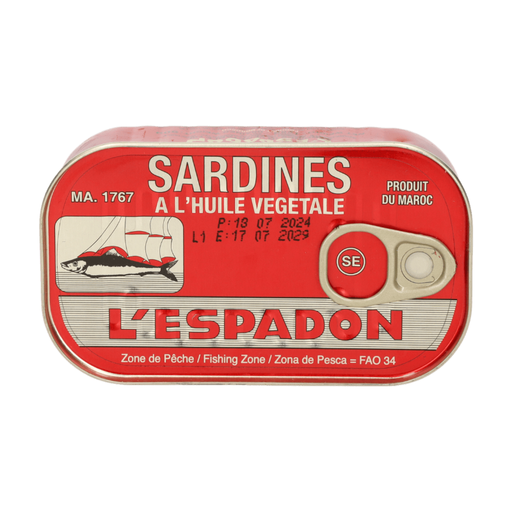 Image unavailable
Worth considering if you want to stock up on 125 g tins of sardines in oil. Compare sugars per 100 g on the same basis and follow the storage instructions on the tin.
No: check the ‘of which sugars’ value on the tin you choose. The Connétable and Auchan sardines in water reviewed list 0 g and less than 0.5 g per 100 g respectively, but these values don’t apply to all sardines in water.
No: it doesn’t replace comparing the nutritional information and ingredients for each recipe. The DGCCRF notes that nutrition claims are governed by Regulation (EC) No 1924/2006.
Choose tins with a drained quantity that suits the portions you have planned. Also check the storage instructions once opened: the Auchan sardines in water reviewed say to refrigerate and consume within 48 hours or two days.
Compare values given per 100 g on the same product basis. The DGCCRF says that this makes comparisons easier; check in particular whether the figures are for the whole product or the drained product.