
Livraison le jour même ou le lendemain

Qualité garantie

Débloquez vos offres de bienvenue: Livraison GRATUITE | Jusqu'à -80 % | 30 jours d'essai gratuits à JoyPlus
Téléchargez l'application
Buying everyday products online lets you quickly compare groceries, home equipment, car accessories and gardening tools. But a well-presented product page isn’t always enough to tell whether an item will really suit your household.
Three common pitfalls keep cropping up:
To make a choice that genuinely matches your needs, it’s far better to base your decision on measurable criteria rather than a simple marketing claim.
For a fridge-freezer, the net capacity tells you far more than a vague overall volume. A 174 L model can work well for one or two people, or even a small household of three, whereas a 467 L or 525 L appliance will be better suited to larger families or bulk shopping.
Also remember to measure:
A compact model that’s 54 cm wide can fit more easily into a small kitchen. On the other hand, a four-door fridge needs enough clearance and room to move around comfortably.
The terms No Frost, Total No Frost and Low Frost don’t all mean the same thing in everyday use. No Frost significantly reduces frost build-up and usually does away with manual defrosting of the freezer. Low Frost cuts down on ice accumulation, but you may still need to defrost it from time to time.
The European energy label, graded from A to G, lets you compare appliances based on their annual consumption in kWh. The noise level in dB(A) is also worth paying attention to if the appliance will be in an open-plan kitchen or a studio flat. Bear in mind, though: actual energy use doesn’t depend solely on the energy class. How often you open the doors, the room temperature and how full the appliance is all affect how it runs.
For your online grocery shopping, check the ingredients list, allergens, net weight and storage instructions. For example, BEGHIN SAY icing sugar contains 97% sugar and 3% maize starch, in a 500 g pack. Kellogg’s Frosties state they contain gluten from barley and have a sugar content of 37 g per 100 g.
In the garden, a cover designed to protect plants from frost needs to be breathable enough to let air circulate and allow light and water through. For sun-protective clothing, look at the fabric composition, size guide and washing instructions rather than just the headline UPF rating.
The options below cover several common needs when buying everyday products online. The features listed are taken from the information available on the product pages.
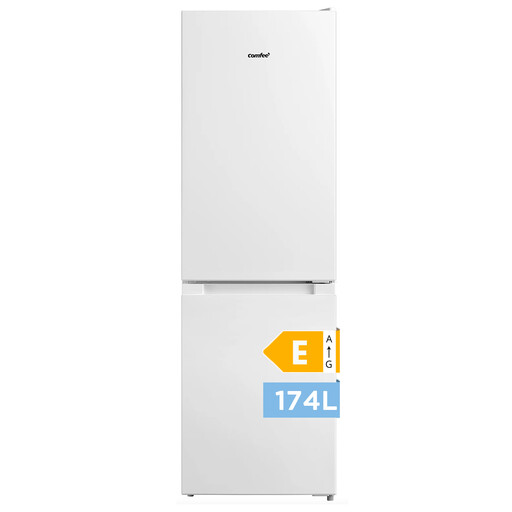
Why this choice suits this profile: At 150 cm tall with a total capacity of 174 L, this model is ideal for a small household or a second home, without taking up too much space.
The capacity, the 115 L/59 L split and the stated noise level of 39 dB(A) are all clearly listed, making concrete comparisons easy.
Low Frost technology, reversible door, LED lighting and a four-star freezer compartment.

Why this choice suits this profile: Its dedicated compartments and smart features are designed for households that want more flexible day-to-day organisation.
The product page clearly separates the 235 L fridge from the 125 L freezer and states an annual energy consumption of 271 kWh.
Total No Frost, My Zone and Humidity Zone compartments, holiday mode, Wi-Fi and a stated noise level of 35 dB(A).

Why this choice suits this profile: This roll is suitable for vegetable patches, shrubs and plants exposed to temperature drops or cold winds.
The product page specifies the material – UV-stabilised polypropylene – and the permeable structure of the fleece. This level of detail is often missing from models with vague specifications.
16 m² coverage, allows air, light and water to pass through, and provides physical protection against some birds and insects.
We’ve put together a comprehensive, real-time selection of products that meet these demanding criteria and European safety standards.
A well-structured search can cover several household needs at once:
Start by checking its annual energy consumption in kWh, then estimate the cost based on your electricity tariff. A smaller appliance can also lower your bills if it genuinely matches your habits. There’s no point paying for features you’ll never use.
It depends on maintenance, installation, ventilation and how often you use it. Follow the instructions in the manual, leave enough space for air to circulate and check the door seals regularly. No Frost technology reduces the need for manual defrosting, but you still need to clean the inside of the appliance.
Look at the technical specifications, dimensions, ingredients, safety warnings, storage conditions and the contact details of the manufacturer or the responsible party based in the European Union. Then compare this information with how you’ll actually use it, rather than relying on a general claim.