
Livraison le jour même ou le lendemain

Qualité garantie

Débloquez vos offres de bienvenue: Livraison GRATUITE | Jusqu'à -80 % | 30 jours d'essai gratuits à JoyPlus
Téléchargez l'application
Kimchi has taken the culinary world by storm, becoming a staple for lovers of Korean cuisine and gastronomic adventures. Whether as a side dish, a kick to fried rice, or out of sheer curiosity, the options to buy kimchi online have become vast. The problem? This abundance can quickly turn into a headache, leading to purchases you'll regret. Our mission: to help you see clearly, avoid the most common pitfalls, and find the kimchi that's truly right for you.
Navigating the jungle of Korean kimchi isn't always easy. Here are the most frequent mistakes that could spoil your tasting experience.
To get it right, keep these three criteria in mind before you check out.
The packaging says a lot about the type of kimchi you're about to buy.
A quick look at the composition is essential.
fish (anchovy, bonito), shellfish (shrimp), or soy. If you are vegan, look for the "vegan" label or ensure these ingredients are absent.The word "kimchi" is actually a generic term. The most well-known type is Baechu-kimchi, made from napa cabbage. It can be sold whole (pogi-kimchi) or pre-cut (mat-kimchi), which is much more convenient for immediate consumption. But there are a myriad of other varieties: radish kimchi (kkakdugi), which is delightfully crunchy, or stir-fried kimchi (bokkeum-kimchi), already cooked and seasoned, ready to be added to your dishes.
To guide you, here are a few recommended options, each suited to a specific user profile.
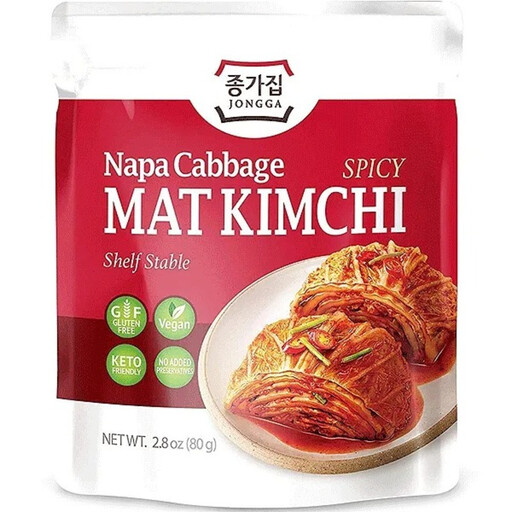
Why it's the right choice : Perfect for a first taste. The 80g format is an ideal single serving to get an idea without investing in a large jar. Chongga is a benchmark brand, guaranteeing a balanced and accessible flavour for everyone.
This shelf-stable pouch protects you from the sometimes very sour taste of an over-fermented kimchi. Its flavour profile is consistent, and the small format prevents waste if it's not to your liking.
Convenience : Already cut (*mat*) and can be stored at room temperature before opening. Trusted Brand : Chongga is a guarantee of quality and authentic, consistent flavour.
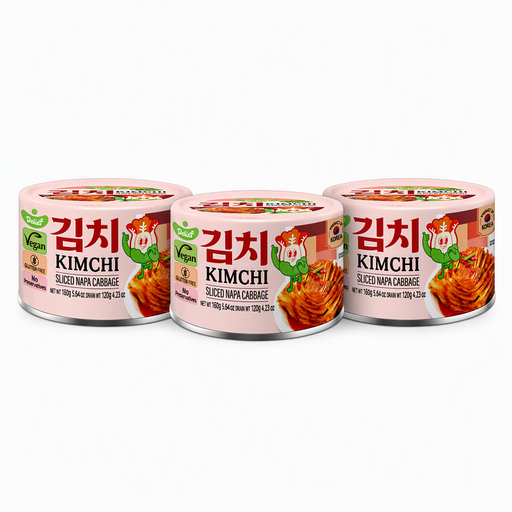
Why it's the right choice : The perfect ally for those who always want kimchi on hand for cooking. The can is easy to store and ensures immediate availability for whipping up a stew, soup, or stir-fried noodles.
This product fully embraces its role as a canned kimchi. It doesn't try to imitate the crunch of fresh kimchi, which prevents any unpleasant surprises. Its softer texture is actually a real asset for cooking.
Shelf-Stable : Can be stored for months in a cupboard. Designed for Cooking : Its flavour and texture are perfect for hot dishes, where it releases its full taste.
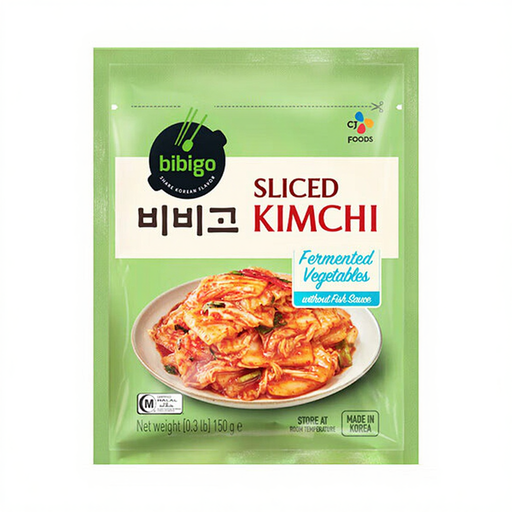
Why it's the right choice : Specially designed for a plant-based diet, this kimchi from the Bibigo brand guarantees an authentic flavour without any animal-derived ingredients. It offers peace of mind for vegans or those allergic to seafood.
It directly addresses the "hidden ingredients" pitfall. The composition confirms in black and white the absence of fish sauce or shrimp, eliminating any risk for the informed consumer.
100% Vegan : Formulated without any animal products, with an umami flavour recreated through plant-based alternatives. Smart Format : The 150g pouch is easy to store and offers a convenient quantity.
We've curated a complete selection of products that meet our strictest quality criteria.
It's all about fermentation and texture. Fresh kimchi (sold in the refrigerated section) is a "living" product: its fermentation is ongoing, its flavour evolves, and it's very crunchy. Conversely, canned kimchi has been sterilised. Its fermentation is stopped, its texture is softer, and its taste is stable, making it ideal for cooking.
Regardless of its original packaging (can, pouch, jar), opened kimchi must be stored in the refrigerator in a tightly sealed container. This helps preserve its freshness and slows down fermentation for fresh versions. For optimal quality, it is advisable to consume it within a few weeks of opening.
Absolutely. In Korea, kimchi is a banchan (side dish) served with almost every meal. Rich in probiotics, it fits perfectly into a balanced diet. As with anything, moderation is key, but a small daily portion, either as a side dish or an ingredient, is perfectly fine.