
Livraison le jour même ou le lendemain

Qualité garantie

Débloquez vos offres de bienvenue: Livraison GRATUITE | Jusqu'à -80 % | 30 jours d'essai gratuits à JoyPlus
Téléchargez l'application
A leak on a motorhome roof, a gutter that lets water through, or a window seal that peels away can quickly damage the surrounding materials. Butyl aluminium waterproof tape forms a flexible barrier against moisture and can be used on many surfaces: metal, glass, wood, PVC, or certain roofing membranes.
Not all rolls are created equal, however, and they don't all meet the same needs. A poorly chosen width, an unprepared surface, or an imprecise product description can turn a quick repair into a wasted purchase. Here are the criteria to examine before choosing your butyl sealing tape.
A narrow tape might be enough for a small crack, but it could require several overlapping strips on a roof or at a gutter joint. Conversely, a very wide strip can be tricky to position in a corner or around a pipe.
Always check the three dimensions:
Some product listings also show different measurements in the title and the description. Compare the stated dimensions carefully before placing your order.
The term waterproof adhesive tape alone isn't enough to guarantee a repair will hold. The adhesive must remain flexible enough to accommodate expansion, vehicle vibrations, and movement of the surface.
The composition also plays a role. A tape made from butyl rubber, combined with a reinforced aluminium foil, can offer extra protection against water, ultraviolet rays, and temperature fluctuations. However, these performance levels also depend on surface preparation and application conditions.
Even a butyl strip designed for outdoor use should not be applied to a wet, greasy, or dusty surface. Moisture trapped beneath the tape can reduce adhesion and cause the edges to lift.
To repair a motorhome roof, a boat, or a house, choose a sufficiently dry period. After application, the product sheets for the models featured recommend protecting the area from rain for 24 hours.
Butyl forms a flexible adhesive mass, suitable for sealing and repairing small leaks. A PET aluminium foil coating, possibly reinforced with polyester or a non-woven fabric, can improve mechanical strength and limit direct exposure of the butyl to the elements.
For application on an EPDM roof, a window, or a gutter, check the stated compatibility with the surface. The products featured mention compatibility with metal, glass, wood, fibreglass, PVC, and EPDM. This indication doesn't replace testing on an inconspicuous area, especially if the surface is painted, porous, or already treated.
Here's a simple method for choosing the right width:
For a roof or caravan repair, allow for overlap on each side of the damaged area. The strip shouldn't just cover the visible hole; it must also extend sufficiently onto a clean, stable part of the surface.
The first TAPEBEAR model states a usage range of –40 °C to 80 °C, as well as UV resistance. The third model lists the same values in its product sheet. These figures correspond to the information provided for the products and do not guarantee identical results in all conditions.
For permanent outdoor installation, also consider:
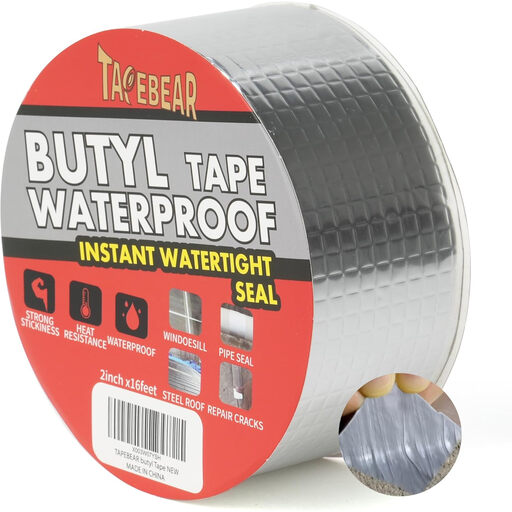
Why this choice suits this profile: Its stated width of 50 mm is suitable for small household repairs, windows, pipe joints, or occasional work on a motorhome.
The product sheet states a composition of pure butyl with PET aluminium foil and an anti-ageing film, rather than a simple thin adhesive film.
Roll of 50 mm by 5 m, stated thickness of 39.37 mils, and claimed compatibility with metal, wood, glass, and PVC.
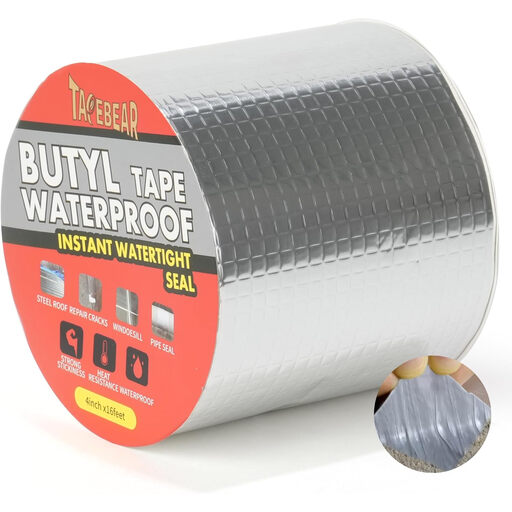
Why this choice suits this profile: Its width of 100 mm is ideal for repairs that need more generous coverage, particularly on roofs, awnings, and exposed joints.
Its coverage area reduces the need for multiple overlapping strips, which are often responsible for creases and water ingress.
The product sheet mentions PET aluminium reinforcement, a non-woven fabric, and an anti-ageing film, along with a stated thickness of 39.37 mils.
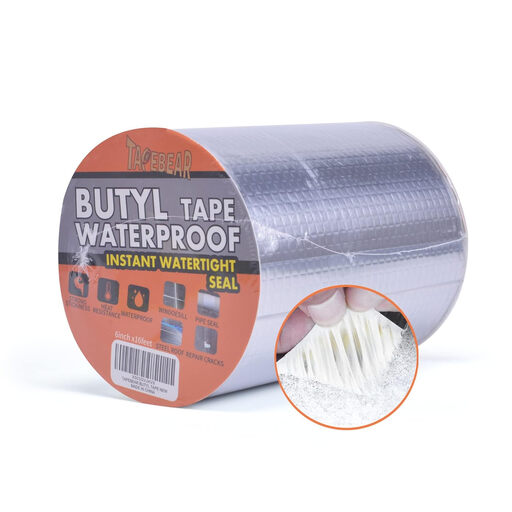
Why this choice suits this profile: Its stated width of 150 mm is suitable for large areas to cover, such as ponds, gutters, roofs, and regular maintenance work.
Its width reduces the number of joins needed on a large crack. However, check the exact length shown on the page before purchasing: the title and the description provided show different measurements.
Claimed compatibility with PVC, EPDM, glass, wood, and metal, with protection against water, UV, heat, and ageing.
To seal a PVC pipe, avoid covering a leak on a fitting under high pressure without first identifying the cause. On a boat, roof, or ventilation system, also check the condition of the surface around the area to be repaired.
We have compiled a comprehensive, real-time updated list of products that fully meet these strict selection criteria and European safety regulations.
Some products claim compatibility with EPDM, but it's best to check the technical data sheet and test on a small area. The membrane must be clean, dry, and free from any incompatible treatment.
The lifespan depends on UV exposure, temperature variations, the quality of the surface, and preparation. A tape with an aluminium coating and an anti-ageing film is presented as suitable for outdoor use, but this does not guarantee an identical lifespan in all installations.
No. The product sheets for the featured models recommend application on a clean, dry surface, followed by protection from rain for 24 hours. If urgency requires intervention, dry the area first and plan a supplementary repair when conditions are more favourable.