
Livraison le jour même ou le lendemain

Qualité garantie

Débloquez vos offres de bienvenue: Livraison GRATUITE | Jusqu'à -80 % | 30 jours d'essai gratuits à JoyPlus
Téléchargez l'application
A car key that won't respond, a kitchen scale that dies mid-weighing, or a watch that's stopped on the morning of an important meeting… These everyday frustrations have one thing in common: a dead button cell battery. While replacing the battery seems simple, choosing the right one from a multitude of options can quickly become a headache.
As a product expert at Joybuy, my mission is to help you make sense of it all. Together, we'll break down the essential criteria for making the right choice and, most importantly, avoiding mistakes that cost you time and money.
The battery market is a jungle of promises and nearly identical packaging. To avoid getting lost, here are the three most common mistakes to steer clear of.
To ensure you never make a mistake again, focus on these three key points. They guarantee compatibility, performance, and safety.
The alphanumeric code engraved on the battery is THE first piece of information to check. It defines its dimensions and chemistry. For the most common lithium batteries:
Thus, a CR2032 battery measures 20 mm in diameter and 3.2 mm in thickness. A CR2025 battery has the same diameter but is only 2.5 mm thick. This difference, though minimal, is crucial for ensuring a perfect contact within the device's compartment. For everyday devices, the most common references are CR2032, CR2025, and CR2016.
Almost all modern devices (remotes, car keys, smart devices) run on a 3V lithium battery. This technology offers significant advantages:
Alkaline batteries (often coded LR, like the LR44) deliver a lower voltage (1.5V). They are typically found in older or less power-hungry devices, such as some calculators or entry-level watches. When in doubt, always check the voltage required by your device.
Child safety has become a priority for responsible manufacturers. Two innovations stand out:
These features are a true guarantee of peace of mind for powering toys, thermometers, and other objects within children's reach.
Instead of an endless list, here is our curated selection, designed to meet specific needs and sidestep the pitfalls we've just covered.
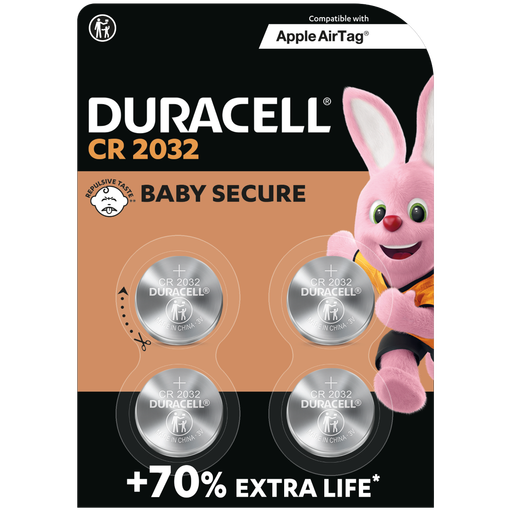
Why we chose it: This is the gold standard for families. It's even recommended by Apple for its AirTags—devices that can easily end up in children's hands.
It counters the risk of ingestion with double protection: tamper-proof "double-blister" packaging and a bitter-tasting coating (Bitrex) directly on the battery.
Dual safety features (packaging + coating). Its 10-year storage guarantee ensures that spare batteries will always be ready to use.
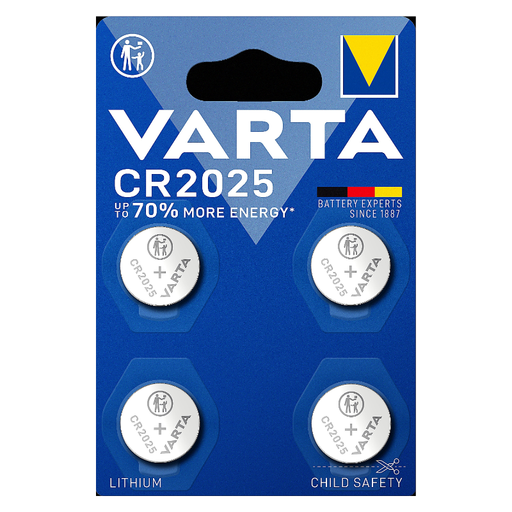
Why we chose it: To power everyday devices (car key battery, remote control battery, scales, etc.) with the peace of mind that comes from a brand renowned for its reliability.
This 4-pack of Varta batteries steers you clear of obscure and unreliable brands. You're investing in a stable power supply and renowned manufacturing quality, without paying for superfluous features.
The perfect balance of quantity, price, and the reliability of a major German brand. The 4-pack format is ideal for keeping a small stock on hand without worrying about the batteries expiring.
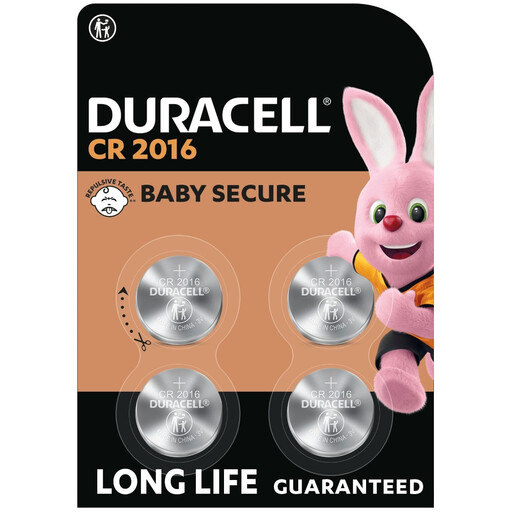
Why we chose it: Perfect for building a backup stock for various devices (watch battery, glucose meter, etc.) without the fear of finding dead batteries at the bottom of a drawer.
It sidesteps the "too-good-to-be-true" trap of bulk packs that expire too quickly. The 10-year storage guarantee ensures that every battery in the pack will deliver its full power, even years after purchase.
Guaranteed power even after 10 years in storage. As a bonus, it also includes child safety technology for complete peace of mind.
Explore our full selection of products that meet these quality criteria and current safety standards.
The main difference is their thickness. The CR2032 is 3.2 mm thick, while the CR2025 is 2.5 mm thick. Although their diameter (20 mm) and voltage (3V) are identical, this 0.7 mm difference is crucial. Using a battery that's too thin (a CR2025 in a CR2032 slot) can cause a poor connection and malfunctions. Conversely, a battery that's too thick simply won't fit in the compartment.
It's important to distinguish between shelf life (before use) and service life (in operation). A quality 3V lithium battery, like those from Duracell or Varta, can be stored for up to 10 years in its original packaging while retaining most of its charge. Its service life, however, depends entirely on the device's power consumption: from a few months for a heavily used toy to several years for a watch battery.
Batteries and accumulators should never be thrown in the bin with household waste, as they contain harmful heavy metals. French regulations require them to be collected and recycled. You can drop off your used batteries at dedicated collection points found in most supermarkets, DIY stores, electronics retailers, and local waste-recycling centres (déchèteries).