Anyone keeping an eye on added fats
If you regularly prepare lunch, how much you add and what you’re using it for matter just as much as choosing between butter and oil. Manger Bouger recommends using small amounts of these fats.


For fats added to your lunch, Manger Bouger recommends choosing rapeseed, walnut or olive oil, and using them in small amounts. If you’d like to use butter, choose it according to how you plan to use it and compare the fat content per 100 g. A product containing 40% or 60% fat still needs to be portioned carefully.
If you regularly prepare lunch, how much you add and what you’re using it for matter just as much as choosing between butter and oil. Manger Bouger recommends using small amounts of these fats.
A tub of butter with 40% fat or a product with 60% fat may catch your eye if you’re comparing fat content per 100 g. Check the ingredients and the suggested use on the packaging too.
Whether you need butter for a recipe or to serve at the table, check whether you’re buying a block or a tub, then look at the net weight. Products listed by Carrefour and E.Leclerc are sold by weight in grams, including 250 g and 500 g formats.
Start with how you’ll use it: as a fat added during cooking, as a spread, or as a block for a recipe. If your shopping list says “4 pint” or a 2 L bottle, first make sure you know which product and quantity you need before comparing these formats by weight in grams.
| Criteria | What to check | Who is it for? |
|---|---|---|
| Added fat | Choose butter or oil according to what you’re making, then measure how much you use. Manger Bouger recommends choosing rapeseed, walnut and olive oils. | If I make lunch often, I want to be able to measure what I add without treating butter as an essential ingredient. This would be a priority for around 38% of consumers. |
| Butter for spreading | Compare the fat content per 100 g, the ingredients and the suggested use. Carrefour Classic' at 60% and Auchan at 40% have different fat contents. | For my toast, I want to keep a product with a buttery taste while comparing its fat content. Around 37% of consumers would make this their priority. |
| Butter for a recipe | Check the fat content, the type of packaging and the net weight, and make sure the suggested use suits your recipe. | When a recipe calls for butter, I look for a suitable block rather than choosing a tub based only on its fat content. This would be the main criterion for around 25% of consumers. |
Products containing 40% or 60% fat have less fat per 100 g than butter with around 82% fat. However, Manger Bouger recommends using added fats in small amounts.
Compare the figures per 100 g and decide how much you’ll use, even if you choose a lighter butter.
Auchan describes its 40% product, sold in a tub, as suitable for bread or crispbread. Its block of unsalted butter, with around 82% fat, is listed for cooking and serving. These suggested uses don’t guarantee the same result in a recipe.
Before adapting a recipe, check the suggested use of the butter you plan to buy.
In a factsheet dated 20 June 2025, the DGCCRF states that there is no general requirement to label the origin of products sold in France and the European Union.
Read the origin information that is actually provided. Don’t assume where the milk comes from based only on the retailer’s name or the look of the packaging.
Président offers butter in blocks, rounds and butter dishes, as well as products with different fat contents.
The range includes unsalted butter with 60% fat in a 250 g format.
Auchan offers standard unsalted butter, products with 60% fat and a lighter butter with 40% fat.
E.Leclerc’s range includes unsalted butter with different fat contents, including 60% and 82%.
These two 1 L bottled oils are plant-based alternatives for preparing lunch; they are not butter. Manger Bouger recommends choosing rapeseed and olive oils among added fats, always in small amounts. If you specifically need “4 pint” or 2 L, check the quantity you want before choosing a bottle.
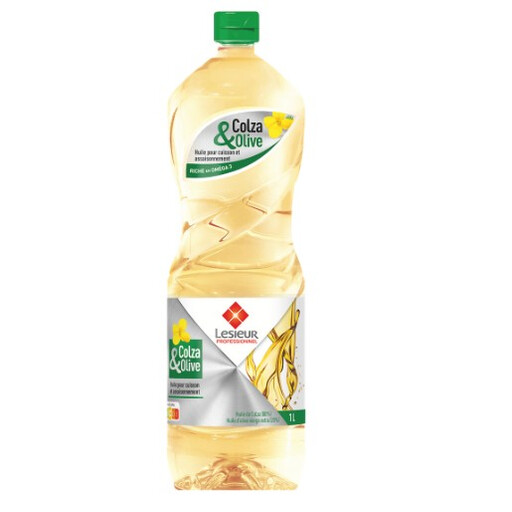 Image unavailable
Worth considering if you’re looking for rapeseed and olive oil to prepare lunch. The bottle shown contains 1 L; measure how much oil you use.
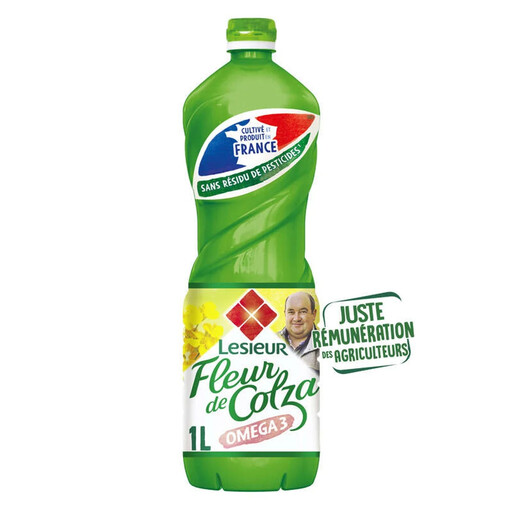 Image unavailable
Worth considering if you’re looking for rapeseed oil rather than butter for preparing lunch. The listed size is 1 L; measure how much you add.
No, not in Manger Bouger’s dietary guidance. Although butter is made from milk, it is high in fat and low in calcium, so it isn’t counted as a dairy product in this guidance.
No. Choose a product to suit what you’re making. Auchan describes its 40% tub as suitable for spreading on bread or crispbread, while its standard block of unsalted butter is also listed for cooking. Check the suggested use before adapting a recipe.
Follow the storage instructions for the product you’ve bought. Président recommends keeping its butter in the fridge at between 4 and 6 °C. For other products, check the packaging.
No. Don’t assume a product is French unless this is stated. In its factsheet dated 20 June 2025, the DGCCRF explains that there is no general requirement to label the origin of products sold in France and the European Union. Check the information on the butter you choose.