What should you look for?
First, work out how much butter you need in grams and how you’ll use it. Then choose between unsalted and lightly salted butter. If you’re serving it as it is or adding it at the end, also check any details about its texture and origin.
| What to consider |
What to check |
Who is it for? |
| Pack size and storage |
The net weight, pack format and storage instructions on the packaging. |
If I’m cooking several winter dishes, I want a quantity I can use without buying a pack that’s too large for how often I cook; around 40% of consumers would prioritise pack size and storage. |
| Unsalted or lightly salted |
Whether the product is salted and how the recipe is already seasoned. |
For mash or a gratin that’s already seasoned, I prefer to control how much salt I add; around 30% of consumers would prioritise the choice between unsalted and lightly salted butter. |
| Texture and origin |
Details about texture and, if it matters to you, the designation shown on the product. |
On toast or added at the end, I look for butter with a texture and origin that suit my preferences; around 30% of consumers would put these characteristics first. |
Joybuy product for cooking
If you’re cooking winter dishes with ghee, this Joybuy product is clarified butter in a tin. It isn’t a direct substitute for a block of unsalted or lightly salted butter in recipes where the distinction matters.
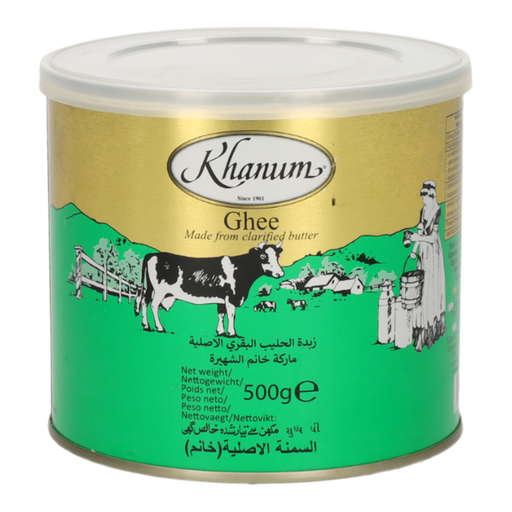 Image unavailable
Khanum Butter Ghee, 500 g tin
Worth considering if you want to cook your winter dishes with ghee rather than block butter. The tin contains 500 g; check the label if the salt content is important for your recipe.
View on Joybuy
Frequently asked questions
Can you choose butter based on a quantity of “4 pint”?
Not unless you first work out how much butter you want by weight. The Président, Carrefour and Auchan products featured are sold in grams, in tubs, blocks or multipacks. Decide on a target weight or number of blocks before comparing products.
Should you use unsalted or lightly salted butter in mash, a gratin or a sauce?
Unsalted butter lets you control the salt in the recipe separately. Choose lightly salted butter if you prefer its salty flavour, then adjust the rest of the seasoning accordingly. Check which version you’re buying, particularly if you switch between cooking and serving butter at the table.
How should you store butter after shopping?
Follow the storage temperature and any instructions for after opening shown on the packaging. When transporting chilled food, ANSES recommends keeping the journey short and using an insulated bag if necessary. The maximum temperature of +8 °C shown on one Auchan listing doesn’t apply to all butter.
What does the date on the packaging mean?
If the packaging says “use by”, this is a use-by date that you should follow, as explained by the Ministry of the Economy. Also check the storage conditions and any instructions for after opening: the printed date doesn’t replace them.
Do you need a PDO to choose butter to serve at the table?
No. A PDO can help you look for a particular origin and documented characteristics, but your choice also depends on salt content, pack size and storage. The National Institute of Origin and Quality describes Charentes-Poitou butter, for example, as having a fine, creamy texture, and says it’s available unsalted or salted.


