
Livraison le jour même ou le lendemain

Qualité garantie

Débloquez vos offres de bienvenue: Livraison GRATUITE | Jusqu'à -80 % | 30 jours d'essai gratuits à JoyPlus
Téléchargez l'application
Switching from pre-ground coffee to freshly ground beans is a game-changer for any coffee enthusiast. The aroma that fills the room, the richness of the flavours on your palate… the experience is taken to a whole new level. But the coffee grinder market can be overwhelming. Between manual and electric models and different types of burrs, it's easy to get lost.
As the Head of Product Recommendations at Joybuy, my mission is to help you make sense of it all. This guide will demystify the burr coffee grinder and point you toward the model that perfectly suits your habits and needs—all without the unnecessary marketing jargon.
Before diving into our selection, let's review the essential criteria for making the right choice.
The choice between a manual coffee grinder and an electric coffee grinder is primarily a matter of your routine and personal preference.
The grind size is a crucial factor in the quality of your coffee. A grind that's too fine for a French press will clog the filter and result in a bitter taste; a grind that's too coarse for an espresso will produce a watery, body-less coffee.
A good coffee bean grinder should offer a wide range of grind settings. Look for a model that allows you to easily switch from a very fine grind (like flour, for an espresso coffee grinder) to a very coarse grind (like coarse salt, for a French press or cold brew). Conical burrs, often made of stainless steel, are renowned for their versatility and ability to produce a consistent grind, regardless of the chosen fineness.
The quality of the materials directly impacts the grinder's durability and performance. Stainless steel or ceramic burrs are a guarantee of longevity and precision. A body made of quality metal or aluminium ensures the device remains stable during grinding.
Capacity is another important criterion. If you only prepare coffee for yourself, a small-capacity grinder (around 20-30g) will suffice. For family use or when entertaining guests, a model capable of grinding enough for 8 to 12 cups will be more suitable.
Here are three models that cater to different profiles, selected for their performance, design, and value.
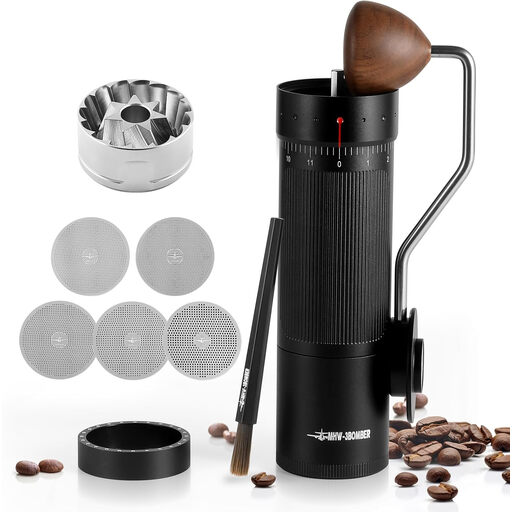
Why it stands out: This manual grinder goes beyond simple grinding. It comes with five precision sieves (from 300 to 850 microns) that allow you to filter out the finest particles (the "fines"). The result is a remarkably uniform grind, which translates to a cleaner, less bitter cup of coffee. Its external adjustment system is also very intuitive.
Pros:
Who is it for? The discerning coffee enthusiast, the home barista who loves to experiment with different brewing methods (pour-over, French press, espresso), and anyone seeking absolute control over their grind.
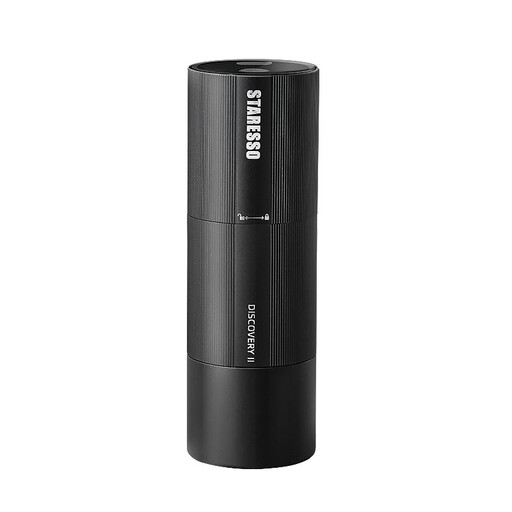
Why it stands out: The STARESSO D6E PLUS combines the quality of a burr grinder with the convenience of a portable, electric device. Its all-metal body gives it great durability, while its USB-C rechargeable battery makes it perfect for the office, travel, or camping.
Pros:
Who is it for? The modern nomad, for the office or the traveller who refuses to compromise on the freshness of their coffee. It's the ideal solution for those who want an electric coffee grinder without the bulk of a classic kitchen model.
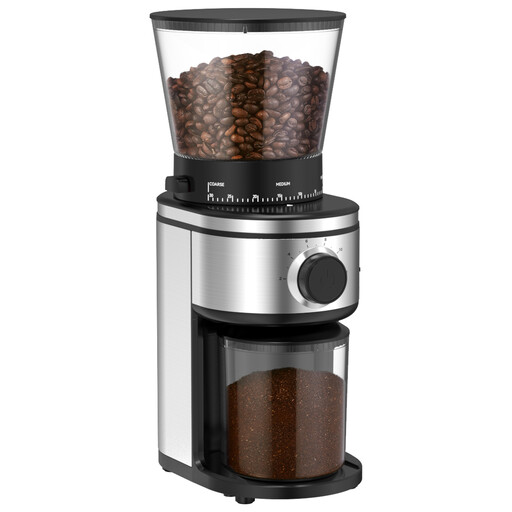
Why it stands out: Designed for simple and effective daily use, the Ollygrin BG702 is an excellent kitchen grinder. With 30 grind settings and the capacity to grind enough coffee for 2 to 12 cups, it easily adapts to the needs of a family or a regular coffee drinker.
Pros:
Who is it for? Those looking for a reliable and convenient solution for their daily coffee routine. It's perfect for supplying the family's drip coffee maker or French press, hassle-free.
This selection is, of course, just a glimpse of the possibilities that burr grinders offer. Every coffee lover has unique needs, and many other models might be right for you.
To discover a wider range, whether you're looking for manual, electric, or specialised models, feel free to explore our complete category.
? Discover all our coffee grinders and burr mills
A blade grinder works like a blender: it chops the coffee beans unevenly. This leads to an inconsistent extraction, with some particles over-extracting (bitterness) and others under-extracting (sourness). A burr coffee grinder crushes the beans between two abrasive surfaces (the burrs), producing a uniform-sized grind. This consistency is essential for achieving a balanced and flavourful cup of coffee.
We recommend avoiding water, especially on steel burrs, to prevent rust. The simplest method is to use a small brush (often included) to remove ground coffee residue after each use. For a deeper clean, some grinders can be disassembled. You can also run a few uncooked (not instant) rice grains or specialised cleaning pellets through the grinder to absorb residual coffee oils.
The effort required is moderate. Grinding a 15-20g dose of coffee typically takes between 30 and 60 seconds, depending on the grind fineness and the grinder model. Many users find this action to be a soothing ritual that is an integral part of the pleasure of making coffee. It's a small investment of time for a big reward in flavour.